Spain NIF Code: Obtaining the Tax Number for a Company
Discover how to obtain the tax identification number (CIF/NIF) for your company in Spain. Complete guide on procedures, documents, and obligations.

International Mobility Expert
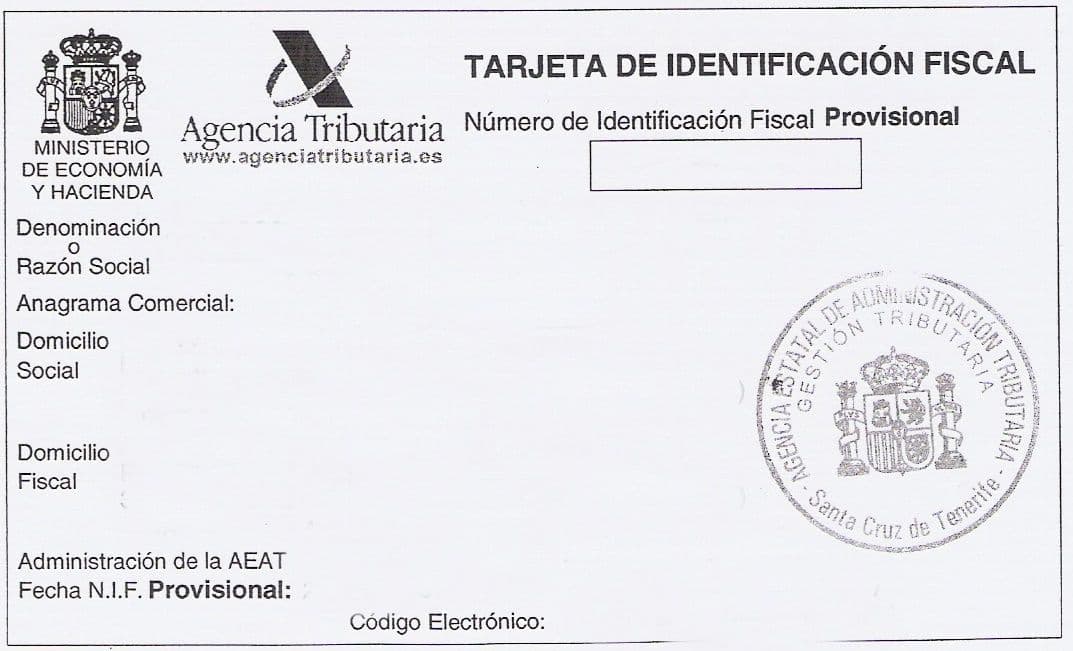
The CIF(Código de Identificación Fiscal) was the former name of the tax identification number assigned to Spanish companies. Since 2008, the term NIF(Número de Identificación Fiscal) is now used for companies. It is a unique identifier (usually a letter + 8 digits) used for all tax and commercial operations of the company. In practice, this NIF serves as the Spanish equivalent of the French SIREN/SIRET and integrates the intra-community VAT extension. Tax legislation (Law 58/2003) requires that any natural or legal person engaged in business activity must have a NIF. Formerly called CIF, this tax number now serves to identify the company with the Agencia Tributaria (tax administration) for all its relations with the State.
Introduction to the Tax Identification Number in Spain
Tax identification in Spain is an essential step for any person or entity wishing to conduct business or carry out administrative procedures in the country. Whether you are an individual, a company, a resident or a non-resident, it is essential for taxpayers to have a tax identification number appropriate to their situation. The main numbers used include the DNI (Documento Nacional de Identidad) for Spanish citizens, and the NIE, foreigner identification number for foreigners. Each of these codes plays a specific role in identifying individuals and companies with the Spanish tax administration. In this article, we guide you through the various procedures and specificities related to this Spanish NIF, to facilitate your relations with Spanish authorities and better understand the Spanish tax system.
Who Needs a CIF/NIF for Companies?
Any entrepreneur or entity conducting business activity in Spain must have a NIF. This includes:
- Commercial companies (SA, SL, etc.) or business entities: they all have a legal obligation to obtain a NIF for tax operations. When applying for a NIF for certain companies, the share capital must be declared to attest to the financial structure of the entity.
- Civil partnerships: this type of company must also obtain a NIF and comply with legal obligations regarding the designation of representatives and the declaration of share capital.
- Foundations: as legal persons, foundations must obtain a NIF for their tax identification and management of their administrative procedures in Spain.
- Self-employed workers (autónomos): an individual entrepreneur uses their personal NIF, which corresponds to the DNI for Spanish citizens or the NIE (foreigner identification number) for foreigners, for their activities. They do not obtain a separate NIF (see below).
- Associations and other organizations conducting economic activities (associations, foundations, mutuals, etc.) must also have a NIF to invoice, declare their income and pay their taxes.
- Foreign branches and subsidiaries in Spain (or non-resident investors): any foreign entity conducting transactions with Spain must apply for a NIF and have it activated. For example, in the case of a non-resident investor wishing to purchase real estate in Spain or open a bank account, obtaining a NIF is essential to identify the purchaser during the transaction.
The NIF is also essential for all business and residency procedures, particularly for people residing in France who wish to invest or work in Spain. In this context, residence in France may require the presentation of supporting documents during Spanish administrative procedures, for example for tax registration or property purchases.
In summary, any taxpayer, legal or natural, making sales or providing services for commercial purposes in Spain (or in the EU) is subject to the NIF tax obligation.

The Tax Identification Code (CIF) and Its Specificities
The CIF, or Código de Identificación Fiscal, was the tax identification code assigned to companies and legal entities in Spain until 2008. This number, which still appears on many official and historical documents, consisted of an initial letter indicating the legal form of the entity (for example, "A" for public limited companies, "B" for limited liability companies, "G" for associations, etc.), followed by seven digits and a final control letter. Each letter corresponded to a specific type of entity, thus allowing rapid identification of the legal nature of the company. This tax identification code system facilitated the control and management of companies by the Spanish tax administration. Today, although the NIF has replaced the CIF for companies, the structure of the CIF remains an important reference for understanding the evolution of tax identification in Spain.
How to Obtain a CIF for Your Company from the Tax Administration
To register a new company and obtain its tax number (NIF/CIF), you must follow the procedure with the Agencia Tributaria:
- Initial census declaration (form 036). When creating the company, the legal representative submits form 036 ("Declaración de alta en el censo de empresarios, profesionales y retenedores") to apply for the provisional NIF. You must check the box for "Solicitud de NIF". This step must be done before any commercial activity and immediately following the signing of the articles of incorporation. It is often necessary to make an appointment with the tax administration to file the application or obtain information about the procedure.
- Provisional NIF. The tax administration assigns a provisional NIF within approximately 10 days of receiving the application. This provisional NIF allows you to start your activity (or proceed with filing the articles) while awaiting administrative completion.
- Obtain the definitive NIF. Once the company's articles of incorporation are signed before a notary and registered with the Spanish Commercial Register, you must provide a copy of the deed and proof of registration to the AEAT. By submitting a modification declaration (form 036 again) accompanied by these official documents, the administration then issues the definitive NIF. Notaries can often carry out this procedure online on behalf of the company during incorporation. Some documents must be transmitted in PDF format during the online procedure.
In the list of documents to be provided, it is imperative to present each required official document: articles of incorporation, proof of registration with the Commercial Register, duly completed form 036, and identification document of the legal representative (DNI or passport). These documents are mandatory and serve as legal proof for identification and obtaining the tax number.
In summary, you first obtain a provisional NIF via form 036, then provide the official documents (articles, registration) to receive the definitive NIF. This procedure is free and official through the AEAT.
Documents Required to Obtain the CIF
At the time when the CIF was still in use, obtaining this tax identification code required the submission of several essential documents to the Agencia Tributaria. Companies had to provide their articles of incorporation, the deed of incorporation signed before a notary, proof of the registered office or tax domicile in Spain, as well as detailed information on the legal representatives of the entity, with an identity card when relevant to verify their identity. For a company, these documents also serve to attest the legal personality of the entity, while non-residents must attach a declaration specifying the reason for their application; depending on the file, a birth certificate or proof of date of birth may also be required. These documents allowed the tax administration to verify the legal existence of the Spanish company and ensure the compliance of the declared information. Although the CIF has been replaced by the NIF, the list of documents to be provided remains similar for any new tax identification number application, thus ensuring the transparency and reliability of administrative procedures in Spain; prepare all supporting documents in advance to avoid delays.
Processing Times for Obtaining the CIF
Processing times for obtaining the CIF varied depending on the nature of the application and the volume of cases processed by the Agencia Tributaria. As a general rule, several weeks, or sometimes even a few months, were required to receive the tax identification code after submitting the complete file. This duration could be influenced by the complexity of the information to be verified or by the time of year. Today, these timeframes apply to obtaining the NIF for entities, with procedures tending to become digital and accelerated, while maintaining rigorous control of the information provided.

Activation of the CIF for Intra-Community VAT
To invoice without VAT to European customers (intra-community supplies), a Spanish company must activate its NIF as a NIF-IVA (intra-community VAT number) by registering with the register of intra-community operators (ROI):
- Registration with the ROI (Registro de Operadores Intracomunitarios). Complete form 036 again by checking box 582 ("Alta en ROI") and indicating in box 584 the expected date of your first intra-community operation. This formality must be completed before the first intra-community supply. It often takes around 15 days to obtain the NIF, depending on the file and the administrative workload.
- Obtaining the NIF-IVA. Once the ROI is validated, your company receives an official NIF-IVA that allows it to issue invoices with VAT exemption (intra-community supplies) as long as the customer has a valid intra-community number. Indeed, the administration requires the Spanish company to register with the ROI if it makes intra-community acquisitions or supplies.
- VIES verification. In practice, the European VIES system is used to check the intra-community VAT numbers of partners. The VIES tool of the European Commission allows online validation of the validity of a NIF-IVA provided by a customer/supplier. Note: if VIES indicates that a number is not valid, it is often because it has not been activated for intra-community transactions.
In summary, after the initial registration (036), the company must request the activation of its tax number as an intra-community VAT (ROI/NIF-IVA) to be able to invoice without VAT in the EU.
Where to Find the CIF of a Spanish Company?
To verify or find the CIF/NIF number of an existing company, here are some official solutions:
- Central Commercial Register (RMC): the central register of companies (Registro Mercantil) allows you to obtain online data on registered companies. For example, the "Estatutos de las sociedades" section of a company profile includes the company's CIF. You can obtain a simple note, which includes the NIF, company name and articles of the company.
- European Union VIES portal: If you know the intra-community VAT number of a company, VIES allows you to verify that it is active and correctly assigned.
- Official websites and directories: there is no comprehensive free public database of CIFs, but certain official documents (official gazette of notices, BORME, etc.) or Spanish institutional portals allow you to search for a company by name and access its information. For example, the Registro Mercantil offers an "Registro Online" service to obtain basic data (name, NIF, etc.) of a company.
In practice, combining official sources (RMC) and European tools (VIES) is the safest way to confirm the CIF/NIF of a Spanish company.
CIF and Freelancers (autónomos) Non-Residents
Self-employed workers operating under their own name (autónomos) do not have a separate CIF like companies. Their personal NIF(from their DNI for Spanish citizens, or NIE for foreigners) serves as their tax number. In other words, an autónomo simply uses their own national NIF for all their invoicing and declarations. For example, if they are a Spanish national, their NIF coincides with their DNI number. If they are a foreigner, it is their NIE that serves as their NIF. There is therefore no separate procedure to obtain a "CIF": the NIF of a natural person is sufficient.
Regulations Relating to the CIF
The tax management of companies in Spain is governed by Royal Decree 1065/2007, which establishes the general rules for tax management and inspection. This text defines the procedures that companies must follow for their tax obligations and their relationship with the administration.
Although the CIF (former company identification number) has been replaced by the NIF, the principles of the royal decree continue to apply, ensuring the consistency and legal security of tax procedures. Companies must therefore comply with these rules to guarantee the validity of their NIF and the proper management of their tax obligations.
Your administrative plan to leave for Spain
Generate a personalized calendar of all your procedures for your expatriation for free.
Your data is protected and secure