How to Obtain a Work Visa for France: Complete Guide 2026
Everything you need to know about the French work visa: eligibility, work permit (autorisation de travail), application process, salary thresholds, and family reunification.

International Mobility Expert
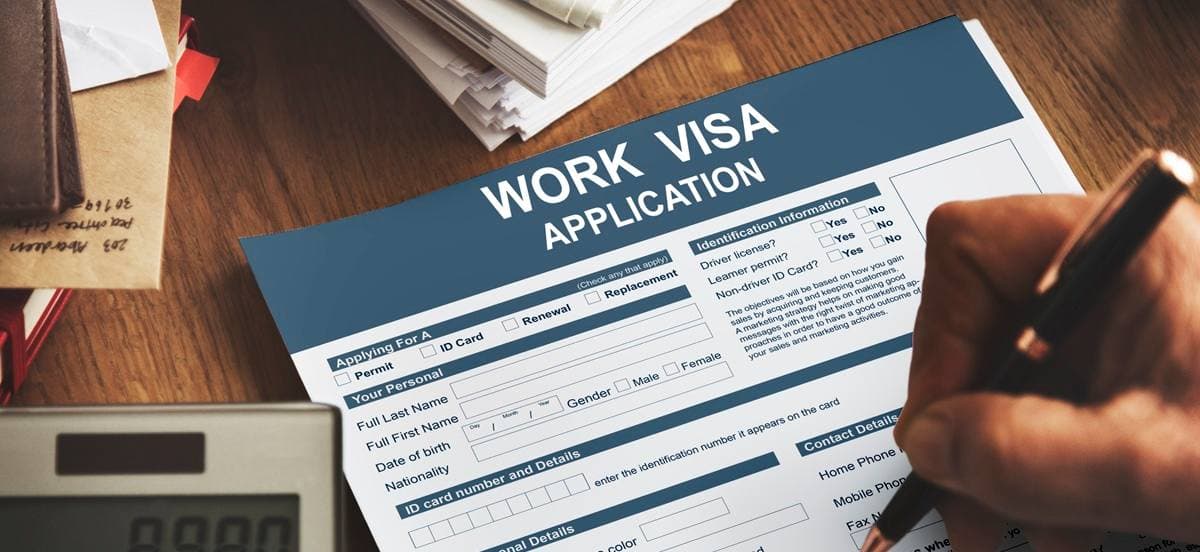
France is one of the world's most attractive destinations for professionals, offering a high quality of life, robust labor protections, and a dynamic economy. However, for non-European citizens, navigating the French work visa system can be complex. Whether you are a high-skilled executive, a young professional, or a seasonal worker, understanding the specific requirements and the sequential steps of the application is crucial for a successful relocation.
Overview: Working in France as a Non-EU National
France welcomes foreign talent, but foreign nationals from outside the European Union (EU) or European Economic Area (EEA) generally need official permission to work. EU, EEA and Swiss citizens enjoy free movement: they can live and work in France without a visa or work permit.
All other foreign nationals must secure both a French work permit (also known as work authorisation) and an appropriate visa. In practice, France's system involves two parts: first an employer applies for a work permit (autorisation de travail), then you apply for a long-stay work visa (often a "visa de long séjour valant titre de séjour" or VLS-TS). Only this visa - once validated - allows you to legally take up employment in France.
Important Note
Short-stay visas cannot be extended en France, so if your job offer is longer, plan for the full work permit process. Non compliance with these procedures can result in fines, bans, or visa refusal, so it's crucial to follow the official process. In summary, all non-EU nationals need a French work visa for employment, except in limited cases such as short events or specific cultural/sporting engagements.
France's Work Visa System (short-term vs long-term)
- •Short-stay work visa (up to 90 days): For brief visits like business meetings, training or short contracts. Valid 90 days within 180 days, no renewal. Useful only for short projects.
- •Long-stay work visa (over 90 days): Required for any longer employment. This visa ("visa de long séjour") is a long stay visa equivalent and serves as a substitute for a residence permit for certain foreign nationals. Upon arrival, when validated, it doubles as a residence permit. It bears a category (e.g. Salarié, Talent, Vacances-Travail) that indicates your work status.
- •Work authorization: In all cases, where a specific work permit is required, the foreign employee needs a separate work authorization approved by French labor authorities. However, many visa and residence permit types already embed work authorization (Talent passport, "vie privée et familiale" card, Working Holiday visa, etc.) and do not require a separate work permit application by the employer. Often the work authorization is integrated into your visa/residence permit, but the employer must still apply for it first when required.
Besoin d'aide pour votre autorisation de travail en France ?
Notre équipe d'experts vous accompagne dans toutes les démarches pour obtenir votre autorisation de travail en France.
Plus de 200 autorisations obtenues
Who Needs a Work Visa (non-EU vs EU citizens)
- •EU/EEA/Swiss nationals: Can work in France freely. No visa or permit required.
- •Non-EU nationals (including UK post-Brexit): Must obtain a French work permit and visa for employment. There are exemptions from the work permit requirement (not the visa requirement) for stays of 3 months or less in specific fields, including: sporting, cultural, artistic and scientific events; conferences, seminars and trade shows; film/audiovisual production; modeling; personal domestic workers accompanying their employer to France; IT/management/finance/architecture/engineering audit and consulting under a service or intra-group agreement; and occasional teaching by invited lecturers.
These exemptions apply to the work permit only; a short-stay visa may still be required depending on nationality. However, these categories are narrow, so most foreign hires need the standard process.
Types of French Work Visas
France offers different visa types depending on your job and nationality. Below are the main categories for employed foreigners:
- •Salaried Employee Visa: The standard long-stay visa for most foreign workers hired by a French company. It is tied to a formal employment contract (fixed-term or indefinite). The "Salarié" visa applies to permanent contracts (CDI), while a "Travailleur temporaire" visa applies to fixed-term contracts (CDD). These are two distinct permit categories. It allows for paid employment in France. The visa often reads "salarié" or "travailleur temporaire" and is valid up to one year (depending on contract length). After arrival you apply for a residence permit in the salarié/travailleur temporaire category, which is renewable annually as long as you are employed. This visa requires the employer to obtain a prior work authorization.
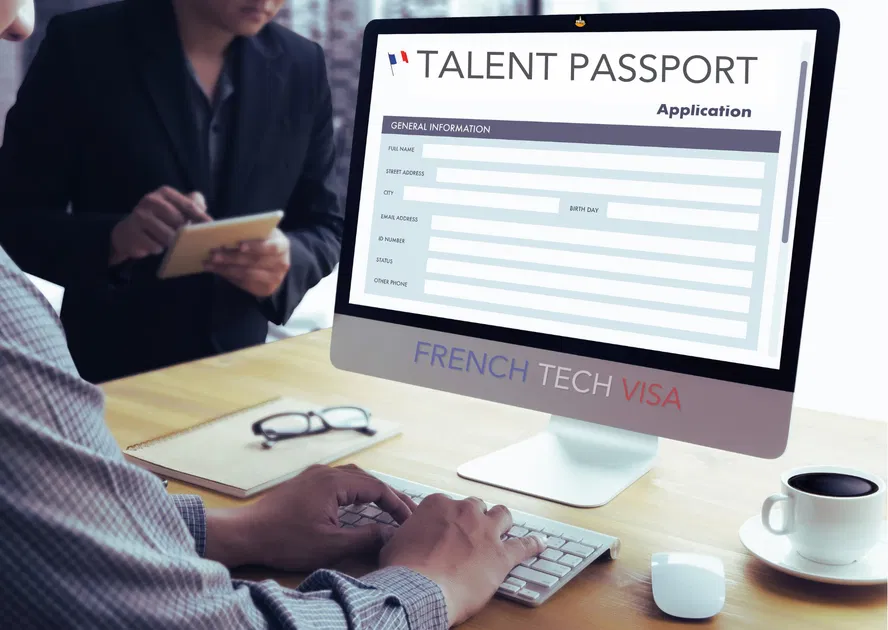
- •Talent Passport Visas: A suite of special visas for high-skilled workers, executives, researchers, entrepreneurs and certain skilled categories. Examples include the EU Blue Card, Passeport Talent – Qualified Employee, Talent Jeune Entreprise Innovante, and others. These visas often allow longer stays (up to four years) and have simpler renewals. Holders of Talent passport visas do not require a separate work permit - their residence card itself serves as work authorization for the activity that justified its issuance. They also offer easier family accompaniment: spouses and children can get a special "Talent - Famille" visa and have immediate work authorization. (These categories are complex; each has its own salary/education thresholds and rules. A detailed guide is usually provided separately.)
- •Working Holiday Visa: Available to young nationals of eligible nationalities with bilateral "Vacances-Travail" agreements (e.g. Australia, Canada, Argentina, New Zealand, Japan, South Korea, etc.). The eligible age range varies by bilateral agreement: it is 18–35 for some countries and 18–30 for others. This long-stay visa lasts one year (non-renewable) and is labeled "vacances travail". Under this visa, the employer is exempt from applying for a work permit. It allows holders to tour France primarily, with permission to take up occasional work to fund the trip. It is issued before arrival (apply via consulate or visa center in your country). Only certain nationalities and age ranges qualify, and work under this visa is meant to be secondary to the travel purpose.
General Requirements for a France Work Visa
Regardless of visa type, there are common requirements when applying for a French work visa. Applicants must demonstrate their professional qualifications, such as relevant skills, educational background, and work experience. You’ll also need to provide supporting documents, including employment contracts and other paperwork, when applying for a work visa.
Note that changes in your employment situation, such as changing jobs or visa types, may affect your eligibility or the required documents.
Job Offer / Employment Contract in France
You must have a confirmed job offer from a French employer. Typically this means a signed employment contract (either fixed-term or indefinite) stating the job duties, salary, and duration. There is no universal minimum duration of 3 months for fixed-term contracts under French labor law; the minimum duration depends on the type of contract and applicable collective agreement.
The contract must also clearly outline your professional activity in France, as this is essential for establishing your eligibility for a work visa. French labor law governs working hours and minimum wages, so your contract must respect those. The contract itself is a key document: it must be submitted to the French authorities and later to the consulate when you apply for the visa.
Key point
Employer's Approval: Labour Market Test
Before you can apply for the visa, your employer in France must request a work permit on your behalf. This is done via an online application exclusively through the ANEF platform (administration-etrangers-en-france.interieur.gouv.fr). The application is no longer submitted to the DREETS/DIRECCTE directly. The application includes details of the company and job, and the employer must justify hiring a foreigner.
The employer must first advertise the position for at least 3 consecutive weeks within the 6 months preceding the work permit application with France Travail or APEC to verify whether a suitable French/EU candidate is available. This process is called the "opposabilité de la situation de l'emploi" (labour market test). If the job is not on France's official shortage list ("métiers en tension"), the labor office will verify this recruitment effort.
Jobs on the shortage list skip this test. Additional exemptions from the labour market test apply, notably for: foreign graduates who obtained a master's degree or equivalent in France in the current year, provided the job is related to their training and the salary is at least €2,734.55 gross/month (as of January 1, 2026); and nationals of countries covered by certain bilateral agreements.
If approved, the work permit is sent by email to both the employer and the foreign employee. This work permit is needed to obtain the visa.
Minimum Salary or Qualifications
French work visas generally require that you be paid at least the minimum wage (SMIC -approximately €1,823.03 gross/month as of 2026, per official Service-Public data) or the salary specified in any relevant collective bargaining agreement, if higher. However, special visa categories have higher thresholds:
- •For the European Blue Card and some Passeport Talent categories, salary thresholds vary and should be verified on the official France-Visas or Welcome to France portal, as they are updated regularly.
- •For other talent visas (e.g. Talent - Qualified Employee), the threshold should be verified on official sources for the applicable year, as it is indexed and updated.
- •If you are being hired as a recent graduate (with a master's degree), the authorities may waive the labor market test and the minimum salary is €2,734.55 gross/month as of January 1, 2026, per Service-Public.fr.
Valid Passport, Photos, and Visa Application Form
You’ll also need all the standard visa application documents:
- •A valid passport with at least 3 months’ validity beyond the end date of the requested visa, at least 2 blank pages, and issued within the last 10 years.
- •Two passport-size photos meeting biometric requirements.
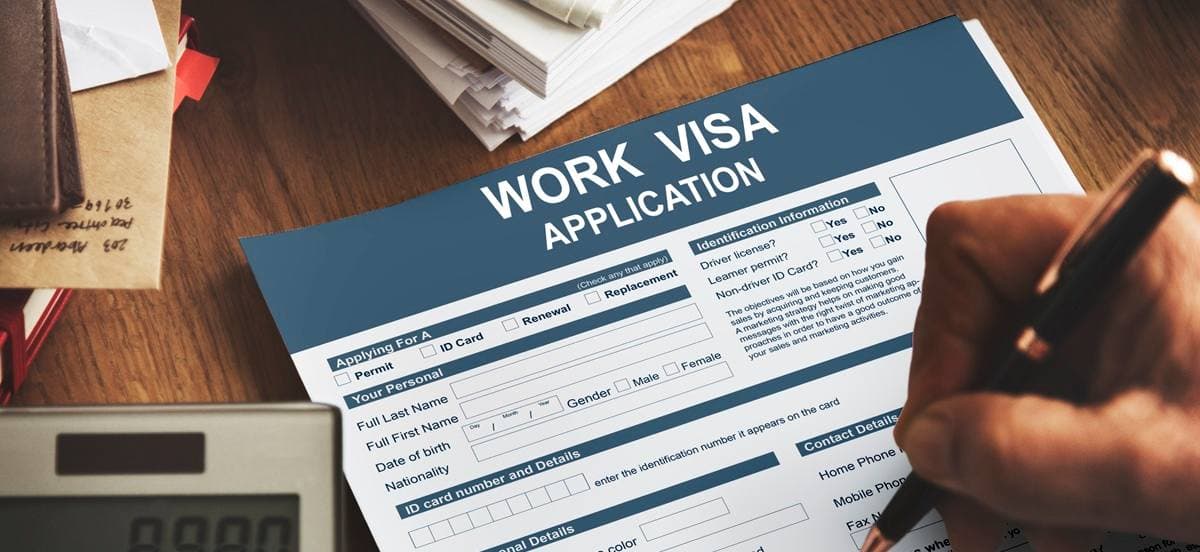
- •The long-stay visa application form (Cerfa form) completed and signed, available on the France-Visas website.
- •Health insurance requirements vary by consulate. Check the specific requirements for your consulate and visa category on France-Visas.
- •Visa fee payment (€99, non-refundable even if the application is denied).
Note on the work permit cost
Besoin d'aide pour votre visa talent pour la France ?
Notre équipe d'experts vous accompagne pour obtenir votre passeport talent et vous installer en France.
Plus de 100 passeports talent obtenus
Application Process
The process is sequential: first the employer must obtain a work permit, then you get the visa, then you finalize your status in France. The main steps are:
- Employer Obtains Work Authorization: Your French employer submits the application online exclusively via the ANEF platform, at least 3 months before the anticipated start date. The labor ministry reviews and issues an approval sent by email if the job meets requirements. This can take several weeks to a few months. You cannot get a work visa without this authorization (except in exempt cases).
- Apply for Visa at the French Consulate: Once the work permit is granted, book an appointment at the French consulate or visa center in your home country. Submit your visa application along with all required documents: your passport, visa form, work permit approval, employment contract, health insurance certificate, photos, and any other requested papers. Pay the visa fee. Note: medical insurance is required for stays in the Schengen area. The consulate will process the file and usually stamps your passport with a long-stay visa (VLS-TS) marked for work (e.g. "Salarié" or "Travailleur temporaire"). This visa is typically valid for up to 12 months (matching your contract). Wait time varies by location, but plan for a few weeks.
- Arrival in France: Complete Formalities After Entry: Upon arrival in France, validate your visa within 3 months online via the ANEF portal (administration-etrangers-en-france.interieur.gouv.fr). You will pay the applicable validation tax and receive a confirmation certificate that makes your visa legally equivalent to a residence permit for its full duration. Before it expires, you must apply for a physical Carte de Séjour at the local Préfecture, at least 2 months before your visa expires. Book a prefecture appointment and bring: passport, validated visa, contract/employer attestation, recent pay slips, proof of address in France, and insurance. The prefecture will process and issue a residence card, usually valid 1 year (or a multi-year card if you have Passeport Talent). This card is what legally confirms your right to work and reside in France. Repeat renewal before expiration to continue staying.
If your employment or permit ends and you do not obtain a new status, you may be required to leave France.
Application Fees and Costs
When applying for a French work visa, it’s important to budget for both the visa application fee and additional costs related to your residence permit. The standard fee for a long-stay work visa is €99, which must be paid in the local currency at the time you submit your visa application form at the French consulate or visa center. This fee is non-refundable, even if your application is denied. The specific work permit application itself is free of charge for both the employer and the employee.
In addition to the visa fee, both the employer and the foreign employee should be aware of a mandatory tax that applies when a residence permit is issued for the first time. This tax is paid by the employer to the “Direction Générale des Finances Publiques” (DGFiP) and is typically declared with the company’s VAT return the following year. The amount can vary depending on the type and duration of the work contract. This cost is separate from the visa application fee and is required for the foreign employee to legally work and reside in France.
Understanding these costs in advance helps both the employer and the employee plan for a smooth transition to working in France. Always check the most up-to-date fee information on the official France-Visas website or with your local French embassy before starting your application.
Processing Times
The processing time for a French work visa can vary depending on several factors, including the type of visa, the complexity of your case, and the current workload at the French embassy or consulate handling your application. Generally, it is recommended to begin your visa application process at least six months before your intended start date in France to allow for any unforeseen delays. Welcome to France recommends that the employer submit the work permit application at least 3 months before the anticipated employment start date.
After your employer submits the work permit application, both the employer and the foreign employee will receive an email confirmation. No guaranteed processing time is specified in official sources; actual timeframes vary by prefecture and caseload. Once you have the approved work permit, you can proceed with your visa application at the French embassy or consulate in your home country. The time required for the consulate to process your work visa can range from a few weeks to several months, depending on your location and the time of year.
To avoid complications or delays, make sure all required documents are complete and up to date, and monitor communications from both the employer and the French authorities throughout the process. Planning ahead is essential to ensure you can enter French territory and start your new job on schedule.
Duration and Renewal
Visa/Permit Validity
- •Standard Work Visa: Usually issued for 1 year (matching your contract). After arrival and validation, it is renewed annually as long as you remain employed.
- •Seasonal Worker: If hired as a seasonal worker, the permit is valid for the duration specified in the seasonal contract. The exercise of seasonal work is limited to 6 months per calendar year. A new work permit must be requested for each new employment contract.
- •Passeport Talent / Blue Card: These can last 2–4 years, depending on category. For example, the French Blue Card is valid up to 4 years or the length of the contract. These visas often lead to multi-year residence permits.
- •Working Holiday: Valid exactly 1 year, non-renewable.
- •Short-Stay (90-day): Valid up to 90 days, not renewable.
Always check the visa sticker in your passport; it will show the duration and category.
Renewal Process
To extend your stay beyond the visa’s expiry, you must renew your residence permit. For most work visas, apply to the ANEF platform about 2 months before expiration. If you are continuing the same employment, the process is straightforward: submit a renewal application with your existing contract (or a new contract) and updated documents (latest payslips, recent tax notice, proof of address, etc.).
There is usually a fee (around €225 for a one-year card). If approved, you’ll receive a new Carte de Séjour, generally for another year (or more for Talent cards). Verify the current amount at the time of application. Make sure to remain lawful: do not wait until after expiration.
Changing Employers or Job Position
This is correct and confirmed by official sources: a new work permit must be requested for each new employment contract, regardless of whether the current permit is still valid. Do not start working for the new employer until that authorization is approved. In practice, this means you may need to pause or time the job switch. Some visa holders (like those on a Talent passport) have more flexibility, but official notice of any change is still required.
For a simple promotion or raise within the same company, often no new permit is needed, but you should still notify the Prefecture at renewal. If you completely change career paths, you may even need to switch visa categories, which could involve a change-of-status application. In short: always involve the authorities before making employer/job changes to avoid illegal work periods.
Refusal of Visa Application
If your French work visa application is refused, you will receive a written notification from the French authorities outlining the reasons for the decision. It is important to carefully review this notice, as it will help you understand any issues with your application and guide your next steps.
You have the right to appeal a visa refusal. The first step is to submit an appeal to the Commission for Appeals Against French Entry Visa Refusals within two months of receiving the refusal notice. If the Commission upholds the refusal or if the relevant ministers confirm the decision, you may then file a further appeal with the Administrative Court of Nantes, also within two months. Additionally, a hierarchical appeal can be made to the Minister for Foreign Affairs.
For refusals related to residence permits, you can file an internal appeal with the prefect, a hierarchical appeal before the Minister in charge of Immigration, or an administrative appeal before the competent administrative court, again within two months of notification. If the prefecture does not respond within 2 months, this constitutes an implicit refusal, and the 2-month appeal window runs from that date.
Understanding the appeal process and ensuring your visa application is complete and accurate from the start can help minimize the risk of refusal and increase your chances of successfully obtaining a French work visa.
Bringing Family Along
Eligibility for Spouse/Children
France allows foreign workers to be joined by their family under certain conditions. Typically, legally married spouses (or PACS partners) and dependent children under 18 can come to France. The main applicant’s visa category determines how easily family can join:
- •Talent/ICT Visa Holders: If you hold a Passeport Talent or an ICT visa, your family can apply for an "accompanying family" long-stay visa (marked "Talent – Famille" or "Salarié détaché ICT – Famille"). They can get their visas at the same time as yours or soon after. Once in France, they receive multi-year family residence permits that allow the spouse to work immediately without any additional steps.
- •Other Work Visas: For standard salaried visas, the spouse/children cannot immediately get work visas. Instead, after 18 months of your legal residence in France, they may apply under the family reunification process. This requires submitting an application (usually to OFII) proving your adequate income and housing. If approved, they get long-stay visas to join you. Until family reunification is approved, the spouse does not have work rights in France. Entry on a visitor visa does not confer any work authorization. Children can generally come to study at any time if you have the means to support them.
All family applicants must show proof of relationship (marriage certificates, birth certificates) and that you can support them. Authorities will check that you have sufficient income and suitable housing for your family in France.
Conditions for Family (Work Rights, etc.)
- •Spouse’s Work Rights: A "vie privée et familiale" residence card obtained through family reunification does allow the holder to work as an employee — the employer is dispensed from applying for a separate work permit. The 3-year delay sometimes mentioned does not correspond to current official rules. However, the path to obtaining that card requires going through the full family reunification process (18 months of residence for the sponsor, income and housing checks, etc.).
- •Children: Minor children can enroll in French public schools and do not need a separate work or study permit. If children are over 18 or not dependents, they follow different rules.
- •Family Integration: Family members must also fulfill France’s social integration requirements, such as learning basic French (a language test is usually required when renewing a multi-year permit).
In summary, family accompaniment is easier under Talent schemes, while normal salaried workers must rely on the standard family reunification route after 18+ months in France. Always plan ahead if you intend to bring dependents.
Conclusion - Starting Your Career in France
Obtaining a French work visa involves several coordinated steps, but with preparation it is a smooth process. In summary: secure your job contract, ensure your employer applies for the labor authorization via ANEF at least 3 months before your start date, then apply for the correct long-stay visa with all documents in order. After arrival, validate your visa on ANEF within 3 months, then apply for your Carte de Séjour at the prefecture at least 2 months before your visa expires. Remember to renew your permit before it expires and to reapply for authorization if you change jobs.
Having the right support can make all the difference. Hiliv specializes in guiding professionals through French immigration procedures and settling in. We offer administrative assistance at every stage: from preparing work permit applications and visa dossiers to arranging prefecture appointments. We can also help you find suitable housing and integrate into life in France. With the right partner, you can focus on your new role while we handle the paperwork and practicalities. Bonne chance in your job search, and welcome to France!
Frequently Asked Questions
Can I apply for a French work visa without a job offer?
No, you cannot apply for a work visa without a job in hand. A confirmed job offer and a signed employment contract are mandatory requirements. The contract serves as the basis for the work authorization and visa application.
How long does the whole process take?
Generally, it is recommended to begin the process at least six months before your intended start date. The employer should submit the work permit application at least 3 months in advance. Consular processing can then take a few weeks to several months depending on your location.
What is the minimum salary required?
Standard work visas require at least the minimum wage (SMIC), which is approximately €1,823.03 gross/month as of 2026. However, special categories like the EU Blue Card or certain Talent Passports have much higher thresholds that are updated regularly.
Can my family join me in France?
Yes, legally married spouses and children under 18 can join you. If you have a Talent Passport, they can join immediately with work rights. For standard salaried visas, they usually have to wait 18 months and go through the family reunification process.
What happens if I change employers?
A new work permit must be requested for each new employment contract, even if your current permit is still valid. You should not start working for the new employer until that authorization is approved by the French authorities.
Is there a fee for the work permit itself?
The specific work permit application is free of charge for both the employer and employee. However, a mandatory employer tax is due when the residence permit is issued for the first time, and the employee must pay a visa fee of €99.