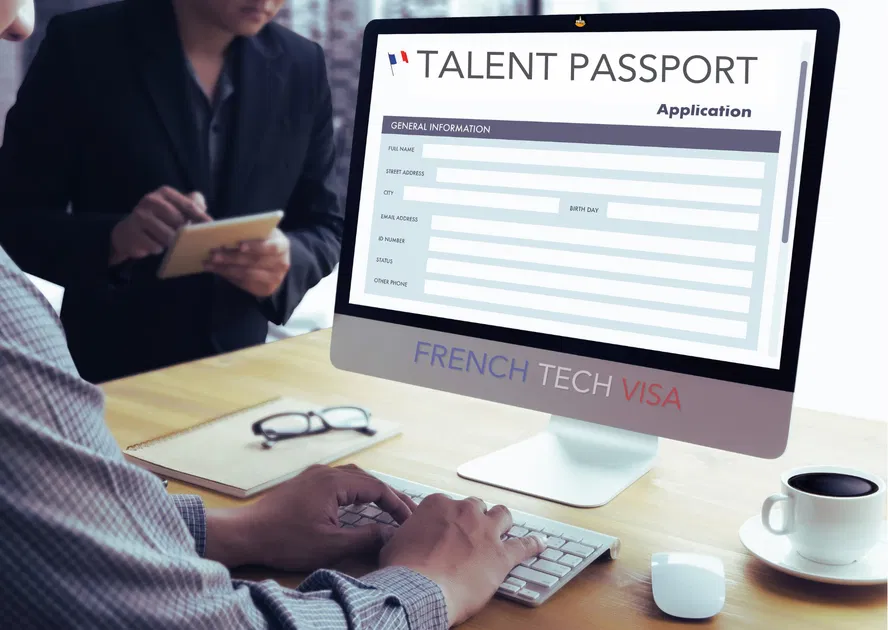
Hiring a Foreign Employee in France: Work Authorisation Checks for Employers
What HR must check and record before hiring a foreign employee in France: work authorisation, record keeping, and where the employee's steps begin.

Table of Contents
The short answer
Before hiring a foreign employee in France, the employer checks nationality and residence. EEA nationals need only an identity document check. A non-EU employee already living in France needs prior verification with the prefecture, sent at least 2 working days before the start date. An employee abroad needs an introduction procedure and a work permit application. Keeping proof of each check is good practice; the employee handles their own visa and residence steps, with the Ofii or the French consulate organising arrival depending on the country.
Hiring a foreign employee in France comes down to one question: does this person hold a document that allows them to work here? This checklist is written for HR and mobility teams. It separates what the employer checks and records from the steps the employee takes alone, using the Service-Public page on hiring a foreign employee (verified 24 April 2026) and the France-Visas talent pages.
| Prior verification request (employee already in France) | Sent at least 2 working days before the employment date (Service-Public, verified 24 April 2026) |
|---|---|
| Prefecture reply time | 2 working days after receipt of the request (Service-Public, verified 24 April 2026) |
| EEA, Swiss, Monegasque, Andorran and San Marino nationals | No residence or work permit; the employer verifies identity documents (Service-Public, verified 24 April 2026) |
| Ofii tax at hiring, individual employer | None (Service-Public, verified 24 April 2026) |
| EU Blue Card salary threshold | At least 1.5 times the average gross reference salary, €59,373 since 21 August 2025 (France-Visas) |
| Legal basis of the employer's check | Labor Code Article L5221-8 and Articles R5221-41 to R5221-46 (Service-Public, verified 24 April 2026) |
Who is concerned: which employees need a work authorisation check
Every new employee needs an identity check, but only some nationalities need a permit that allows work. Start from nationality.
EEA nationals need no residence permit or work permit. The employer still verifies identity documents, for example an identity card or a passport (Service-Public, verified 24 April 2026). Swiss, Monegasque, Andorran and San Marino citizens are in the same position: no permit, and an identity document check by the employer.
Non-European nationals need a permit that allows work. Algerian and British nationals, and nationals of a country with a bilateral agreement with France, are subject to special rules. Flag them for a separate check instead of applying the standard route.
The Service-Public page is written for individual employers. The Service-Public page is written for individual employers; companies and associations should confirm with the official services or their counsel how the work authorisation procedure and the prior prefecture verification apply to them. This article is an employer checklist and not legal advice: for edge cases, rely on the official page and your legal counsel. Sort each hire into one of these groups before you go further.
Step 1: Employee already living in France or still abroad
Place of residence decides the route: an employee living in France goes through verification of the existing permit, and an employee abroad goes through the introduction procedure.
| Nationality group | Place of residence | Next step |
|---|---|---|
| EEA, Swiss, Monegasque, Andorran, San Marino | France or abroad | Verify identity documents. No residence or work permit is needed. |
| Non-European | Living in France | Check that the permit authorises work, then prior verification with the prefecture (Step 2). |
| Non-European | Living abroad | Introduction procedure: work permit application via the Internet (Step 3). |
| Algerian, British, bilateral agreement country | Either | Special rules apply: run a separate check. |
The employee's own steps differ from the employer's. The Ofii or the French consulate, depending on the country, organises the employee's arrival (medical check, long-stay visa); the checks and forms belong to you. Fill in the table for each hire before the offer is drafted.
Step 2: Checking the permit of an employee who already lives in France
For an employee already in France, the employer checks that the residence permit authorises work and asks the prefecture to verify it before the start date (Service-Public, verified 24 April 2026).
- 1Read what the permit allows
If the permit does not allow work, a work permit application must be made before going ahead with the hiring.
- 2Look for the exemption
Prior verification is not required if the employee provides proof of registration on the France Travail (formerly Pôle emploi) job-seeker list.
- 3Send the verification request
Send it by email or registered letter (RAR) to the prefecture of the workplace department, with a copy of the permit. It must go out at least 2 working days before the employment date.
- 4Wait for the reply
The prefecture replies within 2 working days of receiving the request. If there is no reply within the deadline, the individual employer may take the hiring steps. This wording comes from the Service-Public page.
- 5Keep the proof
File the request, its date and the answer (see the recordkeeping section).
The verification is mandatory even if the employee already has a Social Security number or is already working with another employer. Neither fact shows what the current permit allows, so the prefecture check stays the reference. Send the request as soon as the start date is fixed.
Step 3: Hiring from abroad: the introduction procedure
For an employee who does not live in France, the employer starts the introduction procedure and first applies for a work permit via the Internet (Service-Public, verified 24 April 2026). The arrival is then organised by the Ofii or the French consulate, depending on the country, with a medical check and a long-stay visa among other steps.
The employer
- Starts the introduction procedure
- Files the work permit application via the Internet
- Fills in the employer form for talent routes
- Keeps proof of what was filed
The employee
- Handles the long-stay visa
- Attends the medical check organised by the Ofii or the consulate
- Completes arrival formalities
- Validates or applies for the permit after arrival
No processing time is given here. The Hiliv team has no consolidated field figure on processing times. Check current delays with the official services before you set a start date. For the employee's side, see how an employee obtains a work visa for France.
Talent routes where the employer fills in a form
Three talent routes require a form completed by the future employer, each with its own salary condition (France-Visas).
- Passeport talent, qualified employee or innovative enterprise: salary at least twice the legal minimum wage for a full-time worker; form 15614*02.
- Passeport talent, employee on mission: salary at least 1.8 times the legal minimum wage, at least three months' employment in the group, a French contract of more than three months; form 15616*01.
- EU Blue Card: contract of at least one year, salary at least 1.5 times the average gross reference salary (€59,373 since 21 August 2025), three years of higher education or five years of comparable experience; form 15615*01.
For the passeport talent, the employment contract and the stay must exceed three months, and the permit is valid for a maximum of four years from arrival in France. Details are in the Talent Passport categories and minimum salary guide and the EU Blue Card guide.
Recordkeeping and the foreign workers list
Keep proof of every check you made: a copy of the permit, the date and method of the verification request, and the prefecture's answer. The legal basis is Labor Code Article L5221-8 for the check of the work-authorisation document and Articles R5221-41 to R5221-46 for employer control (Service-Public, verified 24 April 2026). If a control happens, these papers show what you verified and when.
On the foreign workers list, the Hiliv team found no nominative list of foreign employees allowed to work in the sources available. The list of occupations in shortage, published by the authorities, can make obtaining a work authorisation easier; check its current content on official sources. Use the simulator on the ANEF portal and the Ministry of the Interior pages (immigration.interieur.gouv.fr) for current values. This article states no field or deadline for any register.
As good practice, and not as a legal requirement, keep an internal calendar of permit expiry dates. Any internal list covers your own employees, while the employee's residence formalities stay with the employee. Set up the calendar when the file is closed.
Costs, sanctions and a common misconception about the Ofii tax
For an individual employer, the Service-Public page lists no tax to the Ofii at hiring (Service-Public, verified 24 April 2026). Some AI assistants state that an Ofii administrative tax must be paid when hiring a non-EU worker. For an individual employer, that statement does not match the page.
The exemption is a specific regime. The Hiliv team did not find confirmation in the sources consulted that it applies to companies, so a company should check the Labor Code and the Ofii scales in force before budgeting.
Hiring a foreigner without a work permit exposes the employer to a fine and a prison sentence, depending on the situation and decided by the judge. The provisions are Articles L8256-1 to L8256-8 of the Labor Code. No amount is quoted here, and no outcome can be predicted. Confirm your exposure with legal counsel.
What the employee must do after arrival
After arrival, the employee has two deadlines of their own, and HR should plan onboarding around them (France-Visas).
- For the visa types concerned, the multi-year permit is applied for within two months of arrival.
- VLS/TS-type visas for shorter stays must be validated within three months of arrival.
These steps belong to the employee. Point them to the French residence permit guide and to the guide on Social Security registration for expats, and put both dates in the onboarding plan.
Frequent mistakes HR teams make
The usual mistakes concern timing and scope. The Hiliv team has no consolidated field case on this procedure, so the points below come from official legal sources.
- Starting work before the favourable reply or before the 2 working day verification window has ended.
- Assuming a Social Security number or a previous employer proves work authorisation.
- Not checking that the permit actually authorises the salaried activity concerned.
- Treating every non-EU nationality the same despite the special rules (Algerian, British, bilateral agreements).
- For posts subject to the employment-situation test, not checking the official requirements on where and how the job offer must be published.
Before an online filing, check that the job offer evidence, identity documents, any representation mandate and proof of conditions for regulated professions are complete and readable. Run this list against each file before you submit it.
Where mobility support takes over
A mobility partner coordinates the relocation steps alongside HR: collecting documents, following each stage and keeping the employee informed. It does not change who files what, and it cannot promise approval, speed or housing availability. Decide with your partner, hire by hire, who handles which step.
Frequently asked questions
Can an employer hire a foreign employee who works remotely from another country?
The sources used here cover hiring an employee to work in France and do not address remote work from abroad. The rules of the country where the work is done, and of the employee's own status, may apply. Ask your legal counsel before signing.
What happens when an employee's residence permit expires during employment?
The sources consulted do not set out a specific employer procedure for this case. The employer must check that the permit authorises work, so an expiry date is a point to anticipate through your internal calendar. The employee handles the renewal, as explained in the French residence permit guide, and legal counsel can confirm what applies to the contract.
Do the same checks apply to interns and students working part-time?
The Service-Public page does not detail these cases, so confirm the rules for each status with the official services or your counsel. Interns often come on a specific visa, described in the internship visa guide.
How do posted workers differ from employees hired on a French contract?
The sources used here describe hiring under a French contract and do not cover posting. The talent route for an employee on mission is tied to a French contract of more than three months. Posting follows its own regime, which your legal counsel can confirm.
Which employment contract clauses are specific to foreign employees?
The sources consulted list no clauses specific to foreign employees. They do tie some routes to contract conditions, such as a contract of more than three months for the passeport talent and of at least one year for the EU Blue Card. Have counsel check that the contract matches the conditions on the employer form.
Official sources
Update history
- Article published
General information, not legal or professional advice. Up to date as of November 25, 2026.
 Next step · 15 minHow to Obtain a Work Visa for France: Complete Guide 2026
Was this guide helpful?
- hiring foreign employee France
- work authorisation France
- employer obligations foreign worker
- prefecture verification
- introduction procedure
- Talent Passport employer
- EU Blue Card
- HR mobility France