French Residence Permit (Titre de Séjour) – Obtaining & Renewing Your Carte de Séjour
Complete guide to obtaining and renewing your French residence permit (titre de séjour). Requirements, documents, process, and tips for non-EU citizens.

International Mobility Expert

A titre de séjour (residence permit) is the official French document (carte de séjour) that allows non-EU/EEA/Swiss nationals (that is, citizens of countries outside the European Union, European Economic Area, and Switzerland) to live in France long-term. Citizens of San Marino are an exception and do not require a residence permit for stays longer than three months. Algerian citizens are subject to a specific legal regime for residence permits, distinct from other non-EU nationals.
In practice, it is a credit-card‑sized card issued by local prefectures. You need a titre de séjour when you plan to stay in France longer than 90 days. For example, if you arrive on a long-stay French visa (longer than 3 months), or if you remain in France after your visa expires, you must obtain a carte de séjour. Essentially, any foreign national (non-European) living in France for study, work, family, or private life beyond the initial visa period will require this permit. For Algerian nationals, the rules are governed by the 1968 Franco-Algerian Agreement, and their application process and documentation requirements may differ from those of other non-EU nationals.

European nationals (including citizens of the European Union, European Economic Area, Switzerland, and San Marino) do not need a residence permit for stays longer than three months, while non-European nationals must follow different procedures. Family members of a European citizen have specific application processes for residence permits, which differ from those for non-European nationals. A French visa is required for entry into France, but a residence permit is needed for a long-term stay.
What is a Titre de Séjour?
Definition: Residence Permit for Non-EU Citizens
The French residence permit (carte de séjour) formally confirms your legal right to reside in France. For many non-EU nationals, the French long stay visa (VLS-TS) is a common entry route, allowing initial entry and stay in French territory for 4 months to 1 year. It is distinct from a visa: a visa is a passport stamp issued abroad allowing entry, while the titre de séjour is the plastic card you receive after arrival to stay longer. The terms titre de séjour and carte de séjour are often used interchangeably.
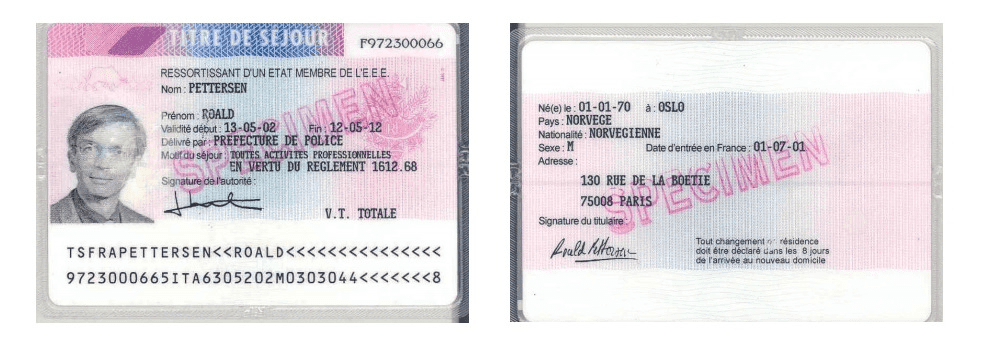
The VLS-TS serves as both a visa and a residence permit (residence permit VLS TS) for its validity period. A visa holder must validate their VLS-TS upon arrival in French territory to obtain full residency rights. The residence permit allows legal stay and work within French territory. The card will include your personal details, photo, validity dates, and the category of stay (e.g. étudiant for student, salarié for worker, etc.). Without it, non-EU citizens cannot legally live or work in France beyond short visits.
Types of Carte de Séjour
France offers several types of residence permits (carte de séjour) to accommodate the diverse situations of non-EU nationals wishing to stay in France for an extended period. The most common types include:
- Carte de Séjour Temporaire: This temporary residence permit is typically valid for one year and is designed for those who have a specific, short-term reason to stay in France, such as work, study, or family visits. It is renewable as long as you continue to meet the eligibility criteria.
- Carte de Séjour Pluriannuelle: For those seeking greater stability, the carte de séjour pluriannuelle is a multi-year residence permit, usually valid for up to four years. It is often granted after holding a temporary card and demonstrating ongoing compliance with the conditions of your stay in France. This card is ideal for non-EU nationals who have established a more permanent life in France, such as employees on long-term contracts or family members.
- Carte de Séjour “Vie Privée et Familiale” (Private and Family Life): This permit is for non-EU nationals who have strong family ties in France, such as being married to a French citizen or having children enrolled in French schools. It allows you to live and work in France while maintaining family life.
- Carte de Séjour for Employees or Temporary Workers: Issued to those with a valid work contract in France, this residence permit is typically valid for the duration of the employment contract and can be renewed if the work relationship continues.
- Carte de Séjour for Students or Trainees: Designed for foreign students or interns, this card is typically valid for the length of the academic program or internship.
Each type of carte de séjour is tailored to a specific situation, and the validity period is determined by your reason for staying in France. Whether you are coming for work, study, or to join family, there is a residence permit suited to your needs as a non-EU national.
Need help with your residence permit?
Our team of experts assists you with all procedures to obtain or renew your residence permit in France.
More than 300 residence permits obtained
Eligibility for a Carte de Séjour
To qualify for a carte de séjour, foreign nationals must meet several key requirements set by the French administration. First, you must hold a valid passport and have entered France legally, often on a long stay visa (visa long séjour). Your application must demonstrate a legitimate reason for your stay—such as employment, studies, or family ties.
You will need to provide proof of sufficient financial resources to support yourself during your stay in France. This can include bank statements, employment contracts, or proof of scholarship for students. Health insurance is also mandatory; you must show evidence of coverage, either through the French social security system or a private insurer.
Depending on your situation, additional supporting documents may be required. For example, if you are applying on the basis of family life, you may need to submit a birth certificate, marriage certificate, or a medical certificate. The French administration will review your application and may request further documentation to verify your eligibility.
Eligibility Summary
In summary, non-EU nationals who have entered France on a long stay visa and can provide the necessary documents—proof of identity, financial means, health insurance, and a valid reason for staying—are generally eligible to apply for a carte de séjour.
When Do You Need One?
You typically need a carte de séjour in France if any of the following apply:
- Long stays over 90 days: If your authorized stay in France exceeds 90 days (and you are not EU/EEA/Swiss), you must switch from a visa or visa-exempt entry to a residence permit. In certain circumstances, such as holding a Talent Passport or being enrolled in specific study programs, the standard application process may not apply.
- After visa expiration: If you entered France on a Visa de Long Séjour valant Titre de Séjour (VLS-TS) or other long-stay visa, once that visa’s validity ends (usually 1 year), you need to apply for a carte de séjour to remain.
- Change of purpose: Even if you initially had a short-term visa, if your status changes (e.g. you find a job, get married, or start studying longer), you may need to regularize your stay with a carte de séjour.
The application process for a residence permit typically begins upon arrival in France, and it is crucial to start the necessary procedures within the required timelines to comply with immigration rules.
Obtaining Your First Carte de Séjour
Getting your first carte de séjour is the crucial next step after arriving on a long-stay visa. The process varies slightly by visa type and location, but the core steps are the same: validate your visa with OFII if required, prepare a complete application with supporting documents, and submit it at the local prefecture or sub prefecture nearest to your residence (either via the online ANEF portal or at an office appointment).
The application process typically involves gathering all the documents required by the prefecture, submitting your dossier at the prefecture or sub prefecture, paying the necessary fees including a stamp duty, and following up on your application's progress. For certain categories, such as the talent passport, there is a distinct application process with specific eligibility criteria. It is essential to ensure you have all the documents requested by the prefecture to avoid delays or complications.
Need help with your residence permit?
Our team of experts assists you with all procedures to obtain or renew your residence permit in France.
More than 300 residence permits obtained
Upon Arrival with a Long-Stay Visa: OFII vs. Direct Prefecture
Upon arrival in France, the process for obtaining your residence permit begins immediately. After you arrive in France on a long-stay visa (VLS-TS), check the wording on the visa sticker. If it has the mention “carte de séjour à solliciter”, you should apply directly at the prefecture for a carte de séjour (residence permit) within 2 months of arrival, without using OFII. This usually happens with work or specialized visas, including for certain categories such as talent passport holders and seasonal workers, who may have a specific carte de séjour application process. Otherwise, you typically need to validate your visa through OFII (the French Office of Immigration and Integration) within three months of entry.
- OFII visa validation: Most visa holders must validate their visa online via the official portal (ANEF) or by completing an OFII registration form and attending an OFII appointment. Once validated, your visa becomes your residence authorization for its duration (usually 6–12 months). You will receive a certificate or stamp confirming OFII completion.
- Direct prefecture application: Some visas (like the talent passport, seasonal workers, or certain employee visas) specify that you should go straight to the prefecture instead of OFII. In this case, make an appointment (or apply online) to obtain your carte de séjour.
Astuce Hiliv
Documents Required for First Issuance
When applying for your first residence card, it is essential to gather all the documents required by the prefecture. While requirements can vary by prefecture, typical documents include:
- Passport and Visa: Your valid passport and the long-stay visa sticker. If you validated your visa with OFII, include that certificate or activation slip.
- Proof of Legal Entry/Stay: Copy of the stamped entry date in your passport (to confirm you entered with the visa) and any OFII validation.
- Application Form: A completed application form (obtained from the prefecture or online).
- Photos and ID: Recent passport-sized photos and copies of passport identity pages.
- Proof of Residence: Documents showing your French address, such as a rental lease, rent receipt (quittance de loyer), recent utility bill, or an official attestation of accommodation.
- Proof of Financial Means: Evidence you can support yourself (for visitors), or a work contract and recent pay slips (for workers), or enrollment certificate and transcripts (for students).
- Health Insurance: Proof of French health insurance or coverage (attestation of Social Security registration or private insurance).
- Birth/Marriage Certificate: If applying under a family reason (e.g. spouse or child of a French resident), provide family documents.
- Fiscal Stamp (Timbre Fiscal): Prepay the administrative fee, which is a stamp duty required for the application. For a first carte de séjour, this is usually €25. You can buy the electronic tax stamp at timbres.impots.gouv.fr or a tobacconist.
Receiving the Physical Card
After submitting your dossier, the prefecture will review it. You will typically receive an accusé de réception or récépissé at the end of your appointment or by mail. This temporary receipt extends your legal status (usually for up to 3–6 months) while your card is processed. In many places, cards are issued in about 1–3 months after a complete application (times vary by region).
Once approved, the prefecture will contact you (often by letter, email, or SMS) to schedule an in-person appointment. At this appointment, you will provide your biometric data: the prefecture will take your fingerprints and affix your photo onto the card. After that, you can collect the physical card.
Need help with your residence permit?
Our team of experts assists you with all procedures to obtain or renew your residence permit in France.
More than 300 residence permits obtained
Family Life and Residence Permits
If you are a family member of a French national or a foreign national legally residing in France, you may be eligible for a residence permit that allows you to join your loved ones and build your family life in France. The Carte de Séjour “Vie Privée et Familiale” (Private and Family Life) is specifically designed for non-EU nationals who can demonstrate a genuine family relationship, such as being a spouse, child, or parent of someone already living in France.
To qualify, you must provide evidence of your family ties—such as marriage or birth certificates—and show that you have sufficient financial resources to support yourself without becoming a burden on the French state. The application is reviewed by the relevant French office or, if you are applying from abroad, by the French consular authorities. They may request additional documents to confirm your relationship and financial situation.
Renewing a French Residence Permit
Renewing your carte de séjour or resident card (carte de résident) involves an application process similar to the first issuance, but with updated documents. The renewal application process requires you to submit your documents to the prefecture, and it’s important to start early and follow the prefecture’s rules for renewals. Note that a stamp duty is required as part of the renewal fees.
When to Start the Renewal
Begin your renewal well before the current permit expires. According to official sources, you must apply at the earliest 4 months (120 days) before expiry and at the latest 2 months (60 days) before the end date. Missing the window can incur penalties: renewing after the card expires often triggers a late fee (around €180) and can jeopardize the process. As one guide notes, “do not wait until the last moment”.
Renewal Documents
When renewing, it is crucial to gather all the documents required for your specific permit type to avoid delays or complications. Bring all the standard ID materials again, plus evidence that you still meet the permit’s requirements. Key items usually include:
- Current Carte and Passport: Your expired (or soon-to-expire) carte de séjour and passport.
- Residency Proof: Updated proof of address (rent contract, recent bills, etc.).
- Activity Documentation: Evidence that your stay purpose continues. For a working permit, include your work contract and recent payslips (typically the last 3 months). For a student, provide a current enrollment certificate or school transcripts. If you hold a vie privée et familiale card, include any new family documents or justification. Essentially, the documents mirror your original purpose but updated.
- Financial Proof: Continue to show sufficient means. This might mean updated bank statements, tax forms, or employer letters.
- Social Security/Insurance: Proof that you still have health coverage (Social Security or equivalent private insurance).
- Photos: New passport photos meeting French standards.
- Fiscal Stamp (Stamp Duty): Pay the required stamp duty for renewal. This is higher than the first-time fee. For most one-year or multi-year permits, the renewal stamp duty is €225 (though some student, trainee, or family permits may be lower, typically €75).
Where to Apply: Prefecture or Online
France has moved many residence permit procedures online. Today, most renewals can be initiated via the ANEF portal. Log in and select “demande ou renouvellement de titre de séjour,” then follow instructions. You will upload copies of your documents and submit your request. Renewal applications can also be submitted at your local prefecture or sub-prefecture, depending on your location.
However, not all prefectures or sub-prefectures have fully eliminated in-person applications. In some areas, you still make an appointment at the nearest prefecture or sub prefecture to drop off documents. Either way, be sure to confirm the procedure: check the website of your prefecture or the Government’s service-public.fr pages.
Processing Times and Receipts
After filing your renewal, if your dossier is complete and submitted within the required timeframe, you will receive an "attestation de prolongation d'instruction" (API) - a temporary document that legally extends your stay while your application is processed. This API must be presented alongside your expired card and allows you to work and access services.
Processing times vary. Prefectures have been improving but delays are common. A typical range is 4 to 12 weeks for a decision. Some busy departments might even take longer. You can usually check status on ANEF or by contacting the prefecture.
Changing Status or Category
Your visa or carte de séjour is tied to a specific purpose (student, worker, visitor, private life, etc.). If your life situation changes — for example, you finish studies and start work, marry a French citizen, or switch to self-employment — you must change your permit category accordingly. This is formally a changement de statut.
- Before your current permit expires, apply for the new category at the prefecture (or via ANEF) designated for your desired status.
- Gather category-specific documents: Supply all evidence relevant to the new status (job contract, employer’s work authorization request, proof of family ties, business plans, etc.), along with your old carte and standard identity/address proofs.
- Fee and form: Pay the appropriate timbre fiscal for the new permit category and fill out the corresponding application form.
- Submit early: The change must be requested within the validity of your current permit, ideally several months before it expires. Late requests can lead to fines or a short-term, less favorable permit.
For example, if you move from a student to an employee status, your employer must obtain a work permit on your behalf (via the Groupe de travail in France), and you then apply to exchange your student card for a salarié card. Check our guide on changing from student to employee status.
Lost or Stolen Carte de Séjour
Losing or having your carte de séjour stolen is serious but recoverable with the right steps. Act quickly to protect your status and get a replacement.
What to Do: Police Declaration and Duplicate
First, report the loss or theft immediately. Go to the nearest police station or gendarmerie and file a déclaration de perte or déclaration de vol. The authorities will give you an official receipt or report. This is crucial proof of the incident.
Next, apply for a duplicate (duplicata) of your residence card. France now allows this via the online ANEF system. Log in and select “duplicata de titre de séjour (perte/vol)” and fill out the application.
- Your police report or declaration (récépissé of complaint).
- A copy of your lost card (if you have one), or at least your passport and any other identity papers.
- A recent proof of address (just as with a normal application).
- New passport photos via the French e-photo service.
- Payment of the duplicate fee (which matches the renewal fee for your permit category).
Return Visa if Traveling While Waiting
If you lose your carte de séjour or it expires while you are out of France, returning can be complicated. In such cases, you need a visa de retour (return visa) to re-enter France. This is a special short-term visa issued by a French consulate that allows you to come back while your situation is resolved. For example, if you have reported a lost carte de séjour but must return home temporarily, you must get a visa de retour; otherwise, you can be denied boarding.
Frequently Asked Questions
Do EU/EEA/Swiss Citizens Need a Carte de Séjour?
No. Citizens of the European Union, European Economic Area, Switzerland, and San Marino enjoy free movement and do not need a titre de séjour to live in France. They can enter France with a valid national ID or passport and stay indefinitely under EU law. For stays longer than 3 months, they must simply carry proof of resources and health insurance.
What is the difference between a Visa and a Carte de Séjour?
A visa is an entry stamp issued by a consulate abroad allowing you to enter France. A carte de séjour (residence permit) is a physical card issued in France that authorizes you to live there long-term (over 90 days). For many, the VLS-TS acts as both for the first year once validated online.
How and when should I renew my residence permit?
You should apply for renewal between 4 months and 2 months before your current permit expires. The process is now largely online via the ANEF portal. Missing the deadline can result in financial penalties (late fees) and complicate your stay.
What should I do if I lose my Carte de Séjour?
First, file a declaration of loss or theft at a police station. Then, apply for a duplicate card online via the ANEF website using the police report. If you are abroad when this happens, you will likely need a 'visa de retour' to re-enter France.
How much does a residence permit cost?
Fees vary by permit type. For a first issue, it is often around €25. For renewals, the stamp duty is typically €225 for most permits (Visitor, Employee), though students often pay less (around €75). You pay this using electronic tax stamps ('timbres fiscaux').
Can I change my status (e.g. from Student to Employee)?
Yes, this is called a "changement de statut". You must apply for the new category (e.g., employee, talent passport) before your current permit expires, providing specific documents like a work contract or proof of family ties. This effectively starts a new application cycle.
What If I Leave France for a Long Period?
Lengthy absences from France can affect your residence status. For short-term carte de séjour (1‑year or multi-year), an absence of more than 6 consecutive months may be considered as breaking your residency, and the prefecture could deny renewal. For a Carte de Résident (10-year card), a continuous absence of 3 years or more will invalidate it.
Is There a 10-Year Card?
Yes. France offers a Carte de Résident de 10 ans, often simply called the "10‑year card." This is a long-term resident card, which serves as a permanent residence permit. It is usually granted after 5 years of continuous lawful residence in France under the general rules (or after 3 years if you are married to a French citizen).
Conclusion – Staying Legally in France Made Easier
Navigating French immigration formalities can be complex, but understanding each step makes it manageable. Start early, gather all required paperwork, and use the official online portals (ANEF) where possible. Remember to validate your visa, apply for the carte de séjour in time, and keep documentation updated for renewals. If your situation changes or you face issues like loss of documents, take prompt action as outlined above.
Need help with your residence permit?
Our team of experts assists you with all procedures to obtain or renew your residence permit in France.
More than 300 residence permits obtained
If you need extra support, Hiliv offers professional assistance. Their team can guide you through each stage of the application or renewal process, ensuring all forms are filled correctly and documents are in order. With Hiliv's help, you can make the residence permit journey smoother and focus on settling into life in France.