Social Security France: CPAM registration - Step-by-Step for expats
Complete guide to CPAM registration in France for expats: who needs to register, required documents (ID, visa, birth certificate), employer-assisted vs. individual registration, and how to get your social security number and Carte Vitale.

International Mobility Expert
Expats living in France long-term must have health insurance coverage. In many cases this means joining the French public health insurance system administered by CPAM (Caisse Primaire d'Assurance Maladie), although some residents may remain covered by another system (for example with an S1 form or through certain international agreements).
Need help with your administrative procedures in France?
Our experts accompany you in all your visa, residence permit and installation procedures in France.
Enrolling in this system is mandatory for long-term residents and ensures you can receive medical treatment with much of the cost reimbursed. Typically, if you're working for a French employer, your company will handle the registration on your behalf. If not (for example, if you are self-employed, a student, or unemployed), you'll need to apply for coverage yourself. This guide will walk you through who needs to register, how to register (step-by-step), and what benefits you gain once you're part of the French health insurance system.
What is the CPAM? (Health insurance system in France)
The CPAM (Caisse Primaire d'Assurance Maladie) is the local branch of France's national health insurance fund. CPAM stands for Caisse Primaire d'Assurance Maladie, the local branch of the French national health insurance system, managing health coverage, and issuing health insurance cards such as the Carte Vitale.
Key Institution
In practical terms, CPAM coverage works by reimbursing patients for costs like doctor's visits, prescriptions, hospital stays, and more. For most standard medical services, the CPAM typically covers about 70% of the approved cost, while patients pay the remainder (called the co-payment).
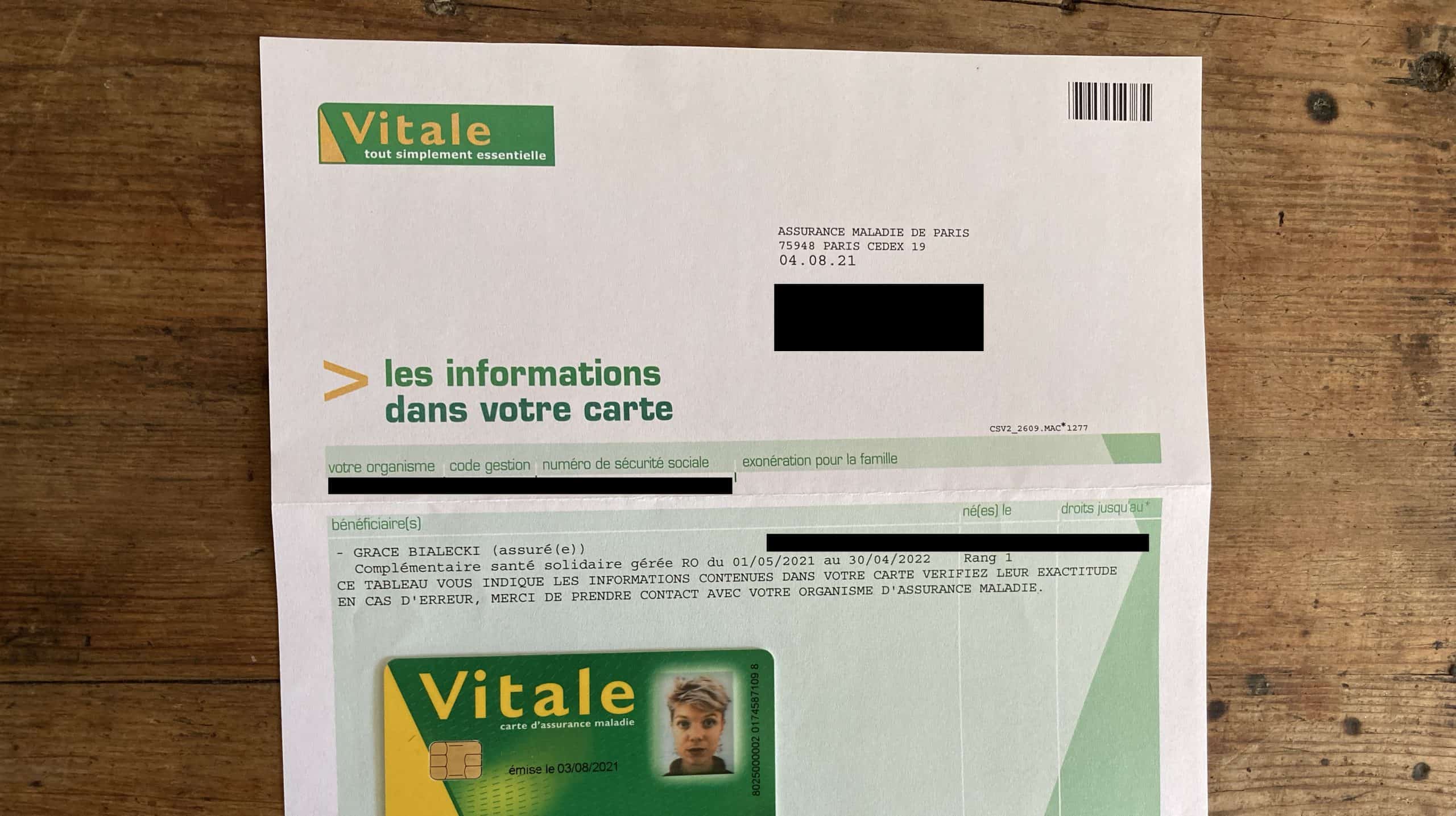
Many residents also choose to purchase a private “mutuelle” (top-up health insurance) to cover the remaining portion, but the CPAM is the essential foundation that everyone must have to benefit from France's healthcare system. Being registered with CPAM will eventually grant you a national social security number—the French social security number is essential for obtaining the Carte Vitale and accessing healthcare reimbursements—and a Carte Vitale (the green smart card used for healthcare in France). In short, CPAM is the French equivalent of the public health insurance. It is the core institution responsible for administering France's public health insurance system and is vital for accessing subsidized healthcare as an expat in France.
Who needs to register
If you are an expat planning to live in France, you likely need to register with CPAM. French law requires anyone residing in France long-term (beyond short tourist visits) to be covered by health insurance, and the public system is the usual route. You may qualify to register for French social security and health coverage if you are employed, self-employed, a student, or a long-term resident meeting the residency requirements. Here's who should register for French social security and CPAM:
- ✓Employees in France: If you are employed by a French company (on a French contract), you must be enrolled in the French social security system. This is usually automatic – your employer will initiate the registration process for you – but you will need to provide them with certain documents. Every salaried worker in France contributes to and benefits from the Assurance Maladie via CPAM.
- ✓Self-Employed and Freelancers: Self-employed individuals (including micro-entrepreneurs and company owners) are also required to join the social security system. When you register your business or freelance activity in France, you will be affiliated with the appropriate social security fund. As of 2020, the self-employed are part of the general scheme, which means your health insurance is handled by CPAM as well. In practice, registering your business with URSSAF or the Sécurité Sociale des Indépendants (SSI) will set up your social security account, but you should ensure you receive your health insurance enrollment. If you're an entrepreneur moving to France, be prepared to fill out the necessary forms so that you and your family are covered by CPAM.
- ✓International Students: Students from abroad who come to study in France must register for health insurance. International students studying in France generally register with the French public health insurance system. Registration is free for students and allows them to access healthcare reimbursements during their stay. Students from EU/EEA countries who hold a valid European Health Insurance Card (EHIC) may rely on it temporarily, but many still register to ensure continuous coverage. Non-EU/EEA/Swiss students typically need a student visa to study in France and register for health insurance.
- ✓Long-Term Residents and Family: Expats moving to France for reasons other than work or study - for example, to join a spouse/family or to retire in France - also need to register for health coverage. If you are a non-working spouse or adult dependent of someone working in France, you no longer automatically get coverage as an attachment to your partner (each adult should have their own health insurance membership now). You will apply to CPAM on your own behalf. Retirees or others settling in France without a job can obtain public health insurance through a scheme called PUMA (Protection Universelle Maladie), which grants healthcare rights to those who have been stable residents in France for at least three months. In other words, people who can demonstrate stable and regular residence in France for at least three months may apply for health coverage through the Protection Universelle Maladie (PUMa), subject to eligibility conditions.
Who doesn't need to register? If you're only in France for a short stay (e.g. a few weeks or months as a tourist or on a short assignment), you generally would not register with CPAM – instead you'd rely on travel insurance or an EHIC (for EU citizens) during your visit. Additionally, some seconded employees or those on temporary assignment may remain covered by their home country's system (for example via an S1 form or other bilateral agreement), in which case they would submit that documentation to CPAM rather than fully “registering” from scratch. But for the majority of expats living in France, especially those working, studying, or settling here, registering for French social security health coverage is mandatory and highly recommended for your own protection.
Employer-Assisted registration (DPAE and form S1106 to CPAM)
If you are moving to France for a job - congratulations! Your French employer will play a big role in getting your social security and CPAM health coverage set up. Employers in France are legally obligated to register their employees with the social security system. This process ensures that you, as an employee, have a social security number and health insurance coverage from the start of your employment.
Here's how employer-assisted registration works:
- ✓DPAE - Pre-employment Declaration: On hiring you, the company will file a DPAE (Déclaration Préalable à l'Embauche), which is a pre-hiring declaration to the URSSAF (the social security contributions collection agency). This DPAE notifies French authorities that you will be working and contributes to opening your social security rights. It's typically done before or immediately when you start your job. As an employee, you usually don't have to do anything for the DPAE – it's handled by HR or your employer's accountant – but it's good to be aware of it. The DPAE includes basic information like your identity and start date. The DPAE notifies French authorities of the start of your employment and helps initiate your affiliation with the social security system. If you do not yet have a French social security number, additional administrative steps may still be required with CPAM to finalize your health insurance registration.
- ✓Submitting Form S1106 to CPAM: In addition to the DPAE, your employer (or you, under their guidance) must submit an application for health insurance coverage to the CPAM. The standard paperwork for this is often the form S1106 (also called “Demande d’ouverture des droits à l’assurance maladie” – Application to open health insurance rights). This form, along with supporting documents (see the next section for the list), is sent to your local CPAM office. The purpose is to officially register you in the Assurance Maladie system so that you are covered for healthcare. In many cases, the employer’s HR department will help you fill this form out or will even fill it on your behalf and ask you for signatures and documents. Don’t be surprised if HR asks you for items like your birth certificate or passport shortly after you start work – that’s to complete your social security registration. In addition, your employment contract may be required as part of the documentation to verify your employment status for registration with CPAM.
- ✓Local CPAM Office: The registration form is submitted to the CPAM office corresponding to your residence. France’s CPAM is organized regionally, so if you live in Paris, for example, your forms go to a specific CPAM in Paris; if you live in Lyon, they go to CPAM du Rhône, etc. Your employer will know where to send it, but you should make sure you’ve provided your current French address accurately. If you just moved and only have a temporary address, use that (you can update it later). The CPAM will assign you a social security number if you don’t already have one, or confirm your existing number if you’ve had one from a previous stay (or from being a dependent earlier).
- ✓Social Security Number Linking: Once these forms are processed, all of your social security contributions and benefits will be linked to your new social security number. Both you and your employer contribute to French social security through payroll – this funds not only health insurance but also pensions, unemployment insurance, etc. Having that number is crucial; it’s your identifier in the system. If you were never covered in France before, this process creates your number. If you already had a number (for instance, if you studied in France before or are a dual national), the same number will be reactivated.
- ✓Special Cases (Talent Visas, Foreign Employers): If you’re in France on a special permit like the Talent Passport (for qualified workers, entrepreneurs, researchers, etc.), there may be a slightly different procedure – often these cases are handled centrally. For example, talent passport holders and their families are often advised to contact the CPAM in Paris (CPAM de Paris), which has a dedicated service for expats under special visas. They can process your application and handle formalities such as reimbursing fees or work accident coverage for these categories. Also, if you are working for a foreign company with no French office, but you are based in France, that company must still register you for French social security. They will usually go through a dedicated URSSAF office for foreign employers (URSSAF Alsace handles foreign firm registrations). In either case, the key point is that being employed in France entitles you to French health insurance coverage, and there are mechanisms to ensure you get enrolled even if your employer is not a typical French entity.
Overall, if you are an employee, your main task is to provide the necessary information and documents to your employer or CPAM when asked, and the company will do the heavy lifting to register you. It’s a good idea to follow up if you don’t receive any confirmation after a few weeks – you should at least get a temporary social security number or attestation (certificate) that you’re in the system. But rest assured that by law, employers in France must make sure you’re affiliated with social security from day one.
Required Documents (ID, visa, proof of address, etc.)
Whether your employer is registering you or you’re applying on your own, you will need to gather several important documents for the CPAM application. Having these ready will make the process smoother. Here is a checklist of the common documents required to register for French social security and health insurance:
- ✓Proof of Identity: A copy of your passport photo page or national ID card. (For French nationals or EU citizens, a national ID is sufficient; for others, your passport is used.)
- ✓Visa or Residence Permit: If you are not an EU/EEA/Swiss citizen, you must provide a copy of your long-stay visa or residence permit (titre de séjour) that shows you are legally allowed to reside in France. This could be a visa sticker in your passport (if you arrived recently and it functions as a residence permit) or the actual residence card. It proves the legality of your stay.
- ✓Birth Certificate: An official birth certificate is typically required to generate your permanent social security number. Ideally, provide a full (long-form) birth certificate that shows your name, date and place of birth, and your parents’ names. If the document is not in French, you should also include a certified translation into French by an approved translator. (Some CPAM offices accept documents in English, but officially a French translation may be needed. Check with your local CPAM if in doubt.) This document is used by INSEE (the national statistics institute) to verify your civil status before issuing a permanent number.
- ✓Marriage Certificate (if applicable): If you are applying under a married name or you are including a spouse in any way, you might need to provide a marriage certificate (with a certified translation if not in French). For example, if your passport is in your maiden name but you use your married name, this document helps link your identities. Also, if you are a dependent spouse applying for coverage, the marriage certificate proves the family tie.
- ✓Proof of Address in France: A recent proof of domicile is required to show that you reside in France and to determine which CPAM office is appropriate. This could be a utility bill (electricity, water, internet) or a rental contract (lease) in your name, dated within the last 3 months. If you just arrived and are staying with someone, a signed attestation d’hébergement (a statement from the person you’re staying with, plus a copy of their ID and their own proof of address) will do. The address proof must be for a residence in France.
- ✓French Bank Account Details (RIB): A Relevé d’Identité Bancaire (RIB) from a French bank account in your name. The CPAM asks for your bank details so that any reimbursements (repayments of medical costs) can be paid directly into your account via bank transfer. If you don’t yet have a French bank account, reimbursements are typically paid by bank transfer to a SEPA bank account provided through your RIB. (In the interim, CPAM might hold your reimbursements or issue checks, but a RIB simplifies things.)
- ✓Employment Information: [If you are applying as an employee], include proof of your employment. This might be a copy of your work contract and/or your first payslip (bulletin de salaire). The contract shows that you have begun employment in France, and a payslip confirms that social contributions are being taken. Many CPAM offices will accept the work contract as evidence if you have no payslip yet. These documents aren’t needed if your employer is handling everything, but if you are sending in the application yourself (which sometimes happens if the employer asks you to do it), attach these to prove your status.
- ✓Proof of Student Status: [If you are a student], you should provide a certificate of enrollment from your French educational institution (often called a certificat de scolarité or an enrollment attestation). This shows you are an admitted student for the current academic year. The student registration portal will ask for this. If you’ve just registered at the school, they can usually issue an enrollment letter or email confirmation that you can use.
- ✓Form S1 (for EU/EEA/Swiss retirees or seconded workers): [If applicable] If you are coming from another EU country and are already covered by your home country’s social security (for example, you’re a retiree receiving a pension from your home country or a worker seconded to France), you might have a portable health coverage certificate called “S1.” An S1 form (issued by your home country’s health insurance institution) allows you to register in France without paying into the French system, as your coverage is paid by the home country. The S1 is issued by your local health insurance fund in your home country, which provides official documentation of your healthcare coverage for use in France. If you have an S1, include it in your application to CPAM instead of the S1106 form. (You would not fill out the standard application in that case; CPAM will register you based on the S1.) This mainly applies to EU citizens or Britons covered under the Brexit withdrawal agreement. If you’re unsure, you likely don’t have an S1 – it’s something you’d explicitly apply for from your home system.
- ✓Dependents’ Documents: [If you are also registering family members], you’ll need documents for them too. For a child, you would provide the child’s birth certificate and fill out a separate form to attach a minor to your account (plus your family record book or other proof of parentage). Children under 16 can be linked to one or both parents’ CPAM coverage. For a spouse who is not working, they should actually apply for their own coverage (as adult dependents are no longer automatically covered), so they’d use their own S1106 form and documents, including your marriage certificate as mentioned. Each situation can vary slightly, so check with CPAM if in doubt.
Important
In some cases, a provisional certificate may be issued to quickly verify your affiliation with the French social security system or for university registration.
Having all these pieces ready will make your registration smoother and faster. The CPAM will contact you if anything is missing, but providing a complete dossier upfront speeds up getting your numéro de sécurité sociale and Carte Vitale.
Registering as an Individual (self-employed, unemployed, students)
If you don’t have an employer handling the process, you will need to register yourself with CPAM. Don’t worry - it’s quite manageable if you follow the steps. This applies to various situations: you might be self-employed, a job-seeker, a stay-at-home spouse, or an international student. In all cases, the goal is to formally apply for membership in the French health insurance system so that you start receiving coverage.
The core of the self-registration process is filling out the application form and submitting it with your documents to the CPAM. Here’s how to proceed:
1. Obtain the Right Application Form: For most cases, the form you need is Cerfa S1106 – titled “Demande d’ouverture des droits à l’assurance maladie” (Application for opening of health insurance rights). This is the standard registration form for PUMA/CPAM. You can download it from the Ameli website (the official health insurance site) – it’s often available in French (and sometimes there is an English guidance note). You can also pick up a paper copy at a local CPAM office. Note for students: If you are an international student, you will typically register through a special online portal instead of using a paper S1106 form. The dedicated student website (details below) essentially captures the same information in digital form. You must register online on this platform and submit all required documentation, such as your residence permit or health insurance card, depending on your nationality and residency status. For retirees or others, an S1106 is appropriate. (If you are an EU citizen with an S1 form from your country, use that rather than S1106 as noted earlier.)
2. Fill Out the Form Completely: Whether online or on paper, provide all requested information. This includes your personal details (name, date of birth, nationality, address in France, contact info) and your situation (are you working, unemployed, student, etc.). Be truthful and complete. On form S1106, you will indicate if you are employed or not. If you have a spouse who’s already insured or if you’re joining someone in France, there are sections to note that (for example, “Are you accompanying a family member who is already insured in France?”). Don’t leave blanks – if something doesn’t apply, mark it “N/A” or cross it out. Sign and date the form where indicated. If you downloaded a PDF, you’ll need to print it to sign (or possibly use an electronic signature if submitting online).
3. Prepare Your Supporting Documents: Refer to the Required Documents list above and collect everything relevant to you. Make sure you have copies made and translations attached as needed. It’s a good idea to double-check your copies are clear and legible. If you are submitting online (for example, as a student or via a digital portal), you will be scanning or uploading these – ensure the files are not too large and are good quality scans/photos.
4. Submit Your Application to CPAM: Now it’s time to send everything in. There are a few ways to do this:
- ✓By Mail: You can send your completed form and copies of documents by postal mail to your local CPAM office. Every department has a primary CPAM mailing address (often listed on Ameli’s website under “Addresses and contacts”). For example, if you live in Paris, you’d mail it to CPAM de Paris at their specific address. It’s recommended to send it via certified mail (Courrier Recommandé) with tracking, so you have proof of delivery.
- ✓In Person: You can also choose to visit a CPAM office in person and hand in your application at the front desk or information point. Larger CPAM offices may have staff who can quickly review your dossier to ensure it’s complete. If language is a barrier, some offices might have English-speaking personnel, but not always. You can bring a French-speaking friend or request an interpreter if needed. In many offices, there are secure drop boxes where you can deposit your application in an envelope if you don’t need to speak to someone.
- ✓Online: Some categories of applicants can apply online:
- Foreign employees (those on work visas or newly arrived workers) now have an online portal: for instance, the Ameli website has an “immatriculation des travailleurs étrangers” service (foreign workers registration) where you can fill out your details and upload scans of your documents electronically. This can speed up the process.
- International students must use the dedicated website etudiant-etranger.ameli.fr. This site is available in French, English, and Spanish and walks you through creating an account, inputting your information, and uploading documents. It’s user-friendly and designed specifically for students enrolling in health insurance.
- Other scenarios: If you are self-employed, generally your health insurance affiliation happens through your business registration portal (e.g., auto-entrepreneur URSSAF portal). But if for any reason it didn’t, you could use the general online service or just mail the S1106. Choose the method most appropriate for you. Online submission can be faster and you get a confirmation immediately. Mailing is fine but keep the receipt. In person can give peace of mind if you want human confirmation that all is in order.
5. Confirmation and Follow-Up: After submission, CPAM will process your application. This may take a few weeks. If you applied online (like students), you might get a provisional social security number and a certificate (attestation) right away online - for example,after submitting their documents, students may receive a provisional social security number while their file is being verified. This provisional social security number allows you to access healthcare benefits while you wait for your permanent number and Carte Vitale. If you applied by mail or in person, CPAM typically will send you a letter to acknowledge your registration request, sometimes providing a provisional number at that stage. Keep an eye on your mailbox (and email, if you provided it). If a month passes with no news, it’s advisable to call your CPAM or visit to inquire. Sometimes files get delayed if any document is missing; they will usually send a letter asking for the missing piece. Provide any additional info promptly if asked.
By following these steps, you will have successfully applied for French social security health coverage. The heavy lifting is essentially done once your application is in. Next comes the waiting and then the benefits – getting your actual social security number and Carte Vitale, which we’ll cover below.
Applying Online vs. In-Person at CPAM
Let’s talk a bit more about the difference between applying online and applying in person/by mail, as expats often wonder which is better or faster.
Online Application:
The French health insurance administration has modernized in recent years, offering online portals for new enrollees:
- ✓International Students: You have a one-stop website (etudiant-etranger.ameli.fr) where you create an account and upload your documents. It’s designed for ease: you fill an online form (which asks for the same info as paper Form S1106 would) and attach scans of your passport, visa, school enrollment proof, etc. The advantage is that you get a temporary social security number issued on the spot (visible in your account) once you complete the process. You can also download an attestation de droits (a PDF certificate proving you are enrolled) soon after. This means you have proof of coverage early, which is useful if you need to visit a doctor before your physical card arrives.
- ✓Employees/Working Expats: There is an official online service for foreign residents who need to register (often used by those on work visas who need to apply for themselves or by employers on behalf of employees). The link is provided on Ameli’s site (for example, “immatriculation travailleurs étrangers” portal). Through this, you submit your personal data and upload documents like ID and visa. This can speed up getting your number because everything is transmitted electronically to CPAM.
- ✓Ease of Use: These websites are available in multiple languages (often English is available or at least an English guide). They eliminate mailing delays. However, you must ensure your scanned documents are clear. After submission, you might still receive postal mail from CPAM if they need something or to send your permanent number, so always provide a current address even in an online form.
- ✓Digital Security: The official CPAM/Ameli online platforms are secure. You’ll generally create a personal account. Keep track of your login details, as you may use the same account later to access your “Compte Ameli” (once fully registered) where you can see reimbursements and manage your profile.
In-Person or Mail Application:
- ✓By Mail: This is the traditional route. It works well if you prefer paper or if online access is difficult for you. The downside is the time – postal submissions might take a week or more to reach, and processing might be a bit longer. Still, many expats do this and receive their attestation by mail in a few weeks. When mailing, send copies (never your original passport or one-of-a-kind document) and include everything in one envelope. It’s wise to use registered mail so it’s traceable. You typically won’t get a confirmation until CPAM processes it and sends you a letter back.
- ✓Visiting CPAM Offices: Going in person can be reassuring because you can sometimes get immediate feedback. Some CPAM offices, especially in major cities, operate on a ticket system where you wait to speak with an agent. You can explain you need to “s’inscrire à l’assurance maladie” (register for health insurance) and hand them your documents. Even if the agent doesn’t fully process it on the spot, you’ll know it’s handed in. They might check the form and let you know if anything is missing. Be prepared for potential language barriers; consider asking if an English-speaking staff member is available (“Y a-t-il quelqu’un qui parle anglais ?”) or bring a translator. Due to demand, sometimes CPAM offices can be busy, so you might wait – try to go early in the morning on a weekday for shorter lines. Some offices require making an appointment in advance for non-urgent matters.
- ✓Follow-Up: One advantage of being in person is that you can ask how long it might take or how you will receive your number. They might give you a timeline or a reference number. After your visit, you’ll still get official letters in the mail for your temporary and then permanent number.
Which is better? Online is generally faster and more convenient if you’re comfortable using it. In-person can be helpful if your case is complex or you want confirmation that everything is correct. Many students and workers report success with the online portals. If you start online but encounter issues (for example, some international students have faced website glitches or difficulties uploading), you can always fall back to mailing your documents or visiting CPAM.
Finally, note that CPAM also has phone support. You can call the CPAM helpline at 3646 (within France) – when you hear the French menu, you can say “English” and in many cases, an English-speaking agent or an option will be provided. This can be useful to check on the status of your application or ask questions about the process.
After Registration (receiving your numéro de sécurité sociale and Carte Vitale)
Once you’ve successfully submitted your application and it’s been processed, you will enter the French social security system and receive the two key things that come with that: your social security number and your Carte Vitale. Here’s what to expect:
- ✓Social Security Number (Numéro de Sécurité Sociale): This is a unique 13-digit number that identifies you in the French system. If this is your first time in France’s system, a temporary number may be assigned initially. Temporary social security numbers often begin with 7 (for women) or 8 (for men) as the first digit (whereas permanent numbers start with 1 or 2). Don’t worry about the format too much, but know that a provisional number grants you the same healthcare rights as a permanent one. CPAM will usually send you an “attestation de droits” – a paper certificate stating that you are now covered and showing your social security number (temporary or permanent). This certificate is very important: you can use it to prove your coverage at doctor’s offices or pharmacies before your physical card is ready. Keep it in a safe place, and you might even carry a copy with you until your Carte Vitale arrives.
- ✓Verification Process: The reason a number might be temporary is that CPAM may still need to verify certain information, particularly your birth certificate details, with the national records. The French national statistics office (INSEE) handles the creation of permanent social security numbers for people born outside France by confirming birth date, place, parentage, etc. This process can take a few weeks or a couple of months. During this time, you are fully covered; it’s just an administrative step. You do not need to do anything special during this verification, except perhaps provide additional info if CPAM specifically requests (in most cases, if you supplied a proper birth certificate and translation, you won’t hear anything until the permanent number is issued).
- ✓Permanent Number Assignment: After verification, your status will be updated to a permanent social security number. This permanent number is also known as the definitive number, and it is required for creating an Ameli account and requesting a Carte Vitale. Often, your provisional number will turn into the permanent one (with a different first digit and a proper control key at the end). CPAM will send you another letter or update your attestation to reflect the permanent number. At this point, you have an official numéro de sécurité sociale that will stay with you for life. This number is important beyond healthcare – you’ll use it for various things like getting a mutuelle insurance, enrolling in certain services, or if you start working (your payslips will show this number). If you ever leave France and return years later, you’ll use the same number.
- ✓Receiving the Carte Vitale: The Carte Vitale is the physical green smart card that serves as your health insurance card. Once your permanent number is ready, CPAM will initiate the process to get your Carte Vitale issued. In many cases, you will receive a letter asking you to confirm some details and provide a passport-style photo for the card. The letter often includes a paper form called “photo token” or instructions to upload a photo online via the Ameli account system. Follow the instructions: you might either mail back the form with a physical photo attached or upload a digital photo if that option is given. After they receive your photo and finalize the card, the Carte Vitale will be mailed to your address. This could be a few weeks after your permanent number is confirmed.
- ✓Using the Carte Vitale: Once you have the card, using it is simple. Present your Carte Vitale whenever you visit a doctor, pharmacy, lab, or hospital in France. The card contains a microchip that stores your insurance information (including your name, number, and the CPAM scheme details). Healthcare providers will insert the card into their system to automatically send your treatment details to CPAM for reimbursement. This means you typically won’t have to fill out claim forms – the process is electronic and efficient. For example, at a general doctor’s visit, instead of paying the full fee and later mailing a claim for reimbursement, you pay only the part of the fee not covered by insurance (if the doctor uses the “tiers payant” system for the insured portion) or you pay the full fee and the doctor’s office sends the info to CPAM so that reimbursement is deposited into your bank account within a few days. Pharmacies almost always take the Carte Vitale – you often just pay the small co-payment or nothing at all if you have full coverage, and the rest is billed directly to CPAM.
- ✓Benefits of Being Registered (What coverage you get): With your social security number and Carte Vitale, you are now officially covered under the French Assurance Maladie. This entitles you to:
- Reimbursement of healthcare costs: As mentioned, roughly 70% of standard medical costs are reimbursed (the percentage can be higher for certain services or if you have certain long-term illnesses which are covered 100%). For instance, if you see a doctor who charges the standard €25, CPAM will reimburse €17.50 of that cost. If you buy medications, each is reimbursed at a rate between 15% and 100% depending on the medicine’s category (most essential medicines are 65% or more).
- Coverage for hospital treatments: If you are hospitalized, the CPAM covers a large portion of the costs (around 80% of standard hospital fees, and in many cases more, leaving a daily hospital charge called “forfait journalier” which a mutuelle can cover).
- Maternity and paternity care: The public insurance covers prenatal care, childbirth, and postnatal care extensively (often 100% in the later stages of pregnancy).
- Preventive care: Some preventative services (like certain vaccines, health screenings) are covered fully or partially.
- Access to French healthcare facilities and doctors: France has an excellent healthcare system with a wide network of public and private providers. Being in the system means you can access care anywhere in France with the assurance that part of the cost is covered.
- No up-front payments in many cases: Thanks to the Carte Vitale and the tiers payant (third-party payment) arrangement, you often do not have to pay the insured portion of costs up front. For example, at the pharmacy, typically you only pay whatever isn’t covered by CPAM (which, if you have a good mutuelle, could be nothing).
- Option to add Complementary Insurance: With a social security number, you can now easily sign up for a mutuelle (complementary health insurance) if you wish, which can reimburse the remaining costs that CPAM doesn’t cover. Many employers provide a mutuelle for employees; if not, you can purchase one individually. They will ask for your social security number to link it with CPAM records.
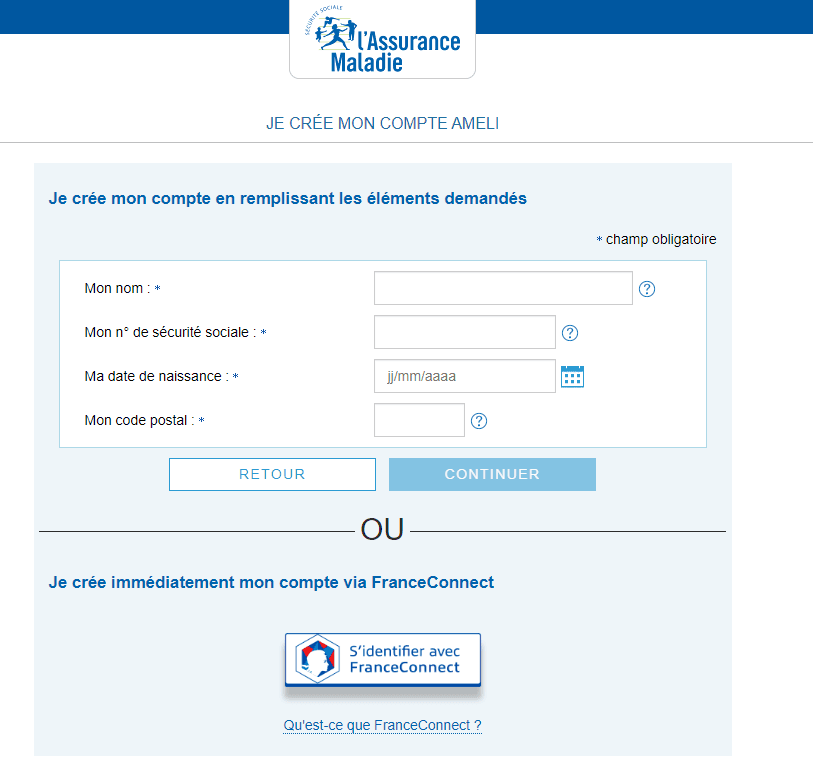
- Ameli Account: After you have your social security number (even a temporary one), you can create an account on ameli.fr, which is the official online portal for insured individuals. Through your Compte Ameli, you can track reimbursements, download your attestation, order a new Carte Vitale if needed, update your address, and even communicate with CPAM via secure messaging. Setting this up is highly recommended for convenience. (You may need to wait for your permanent number to do this; sometimes the temporary number isn’t accepted for online account creation until it’s confirmed in the system.)
- Updating and Maintaining Coverage: Once a year, it’s recommended to update the data on your Carte Vitale. You can do this at self-service kiosks available in most pharmacies or at CPAM offices – it takes a few seconds to insert your card and have it refreshed with any changes (like updated rights or new mutuelle information). Always keep CPAM informed of major changes: if you move to a new address, change jobs, get married/divorced, or have a baby, you should update your information via Ameli or by informing your CPAM so that your coverage remains correct.
- If Problems Arise: If your Carte Vitale is lost or stolen, don’t panic – you can request a replacement via your Ameli account or by calling CPAM. In the meantime, your coverage still exists; you can use your attestation paper to prove your rights and get reimbursed manually if needed. If you ever encounter a delay in getting your card or number, stay persistent: sometimes bureaucratic backlogs happen, but every legal resident is entitled to this coverage, so it will come through.
By completing your CPAM registration, you’ve unlocked one of the biggest benefits of living in France: access to high-quality healthcare at a fraction of the cost you might pay elsewhere. The process requires some paperwork and patience, but the payoff is peace of mind. With your social security number and Carte Vitale in hand, you can visit doctors and specialists, purchase medicines, and even get emergency care knowing that the French social security (Assurance Maladie) will cover a large portion of the expenses. This is a huge relief for expats, especially if you come from countries without universal health coverage.
In summary, joining the French social security system via CPAM is a must-do for expats. To recap: determine if you need to register (most likely yes, if you’re staying long term), follow the steps to apply (either through your employer or on your own with form S1106 or the student portal), provide the necessary documents, and submit your application. After a bit of waiting, you’ll receive your social security number and Carte Vitale, opening the door to France’s excellent healthcare network. With this, you can enjoy your new life in France with one less worry, knowing you’re covered if you get sick or need medical care. Welcome to the French healthcare system – you’re in good hands!
Dependents and Family Members (Adding Spouses and Children)
Ensuring your entire family is protected by the French healthcare system is a key part of settling in France. When you register for French social security, you can also add your dependents—such as your spouse and children—so they too can benefit from the public health system’s extensive coverage.
To add a spouse, you’ll need to provide a marriage certificate as proof of your relationship. If your marriage certificate is not in French, a certified translation is usually required to meet the standards of the local CPAM office. For children, a birth certificate is necessary, and again, a certified translation may be needed if the document is not originally in French. Children under 16 can typically be attached to a parent’s health coverage. Children over 16 may request their own Carte Vitale while remaining attached to a parent’s health insurance account.
The process involves submitting the relevant documents—such as marriage and birth certificates, proof of residence, and any required translations—to your local CPAM office. This ensures that all family members are officially recognized by the French social security system and have access to health coverage for medical expenses, including routine care and maternity expenses. Remember, it’s important to keep your registration up to date: if your family situation changes (for example, through marriage, divorce, or the birth of a child), notify your local CPAM office promptly. This way, your family’s access to the French health system remains uninterrupted, and everyone can benefit from the security and peace of mind that comes with comprehensive health coverage in France.
Need help with your administrative procedures in France?
Our experts accompany you in all your visa, residence permit and installation procedures in France.
Health coverage and benefits (What your registration entitles you to)
Once you’re registered with the French social security system, you gain access to one of the world’s most comprehensive public health systems. Your registration entitles you to a wide range of health coverage, including doctor’s visits, hospital stays, specialist care, and prescription medications. With your Carte Vitale, you benefit from direct reimbursement of medical costs, meaning much of your healthcare is paid for by the public system, significantly reducing your out-of-pocket expenses.
The French social security system also covers important life events, such as maternity expenses, ensuring expectant mothers receive full support and care throughout pregnancy and childbirth. Preventive care, chronic illness management, and emergency services are all included in your coverage, giving you peace of mind for both everyday health needs and unexpected situations.
For even greater protection, you can opt for top-up insurance (mutuelle), which covers the portion of medical costs not reimbursed by the public system. This is especially useful for dental, optical, or specialist treatments where the public health system may not cover the full amount. By understanding your entitlements and making the most of your registration, you can enjoy the full benefits of the French healthcare system and ensure you and your family are well cared for during your time in France.
Reimbursements and benefits (How to get your medical costs refunded)
Getting your medical costs refunded in France is straightforward thanks to the efficiency of the French social security system. When you visit a healthcare provider, simply present your Carte Vitale. This smart card allows the tiers payant system to work: the provider sends your treatment details directly to the social security system, and the covered portion of your medical expenses is reimbursed automatically - often within a few days - into your bank account.
If you ever need to submit a claim manually (for example, if you forgot your Carte Vitale or saw a provider who doesn’t use the system), you can do so easily through your Ameli account online or by mailing the necessary documents and receipts to your local CPAM office. Always keep all receipts and supporting documents related to your medical expenses, as these are required for reimbursement.
The French social security system typically covers a significant portion of your medical costs, making healthcare affordable and accessible. If you have top-up insurance (mutuelle), it will further reimburse any remaining expenses not covered by the public system, ensuring you’re fully protected. By using your Carte Vitale and Ameli account, you can track your reimbursements, manage your health coverage, and make the most of the benefits offered by the French healthcare system.
Common mistakes to avoid
Navigating the French social security system can be straightforward if you avoid some common pitfalls. One frequent mistake is submitting incomplete or incorrect documents—such as missing a certified translation of your birth certificate or not providing up-to-date proof of residence. Incomplete paperwork can delay your registration process and leave you without health coverage when you need it most.
Another common error is waiting too long to register, which can result in gaps in your health coverage. It’s important to start the registration process as soon as you become a resident in France, and to keep your local CPAM office informed of any changes in your address, employment, or family situation. Failing to update your information can disrupt your coverage and may affect your family members’ access to the health system.
To ensure a smooth registration process, double-check that all your documents are complete, accurate, and, if necessary, certified translated. Keep copies of everything you submit, and promptly respond to any requests from your local CPAM office for additional proof or clarification. By staying organized and proactive, you can avoid unnecessary delays and enjoy uninterrupted health coverage for you and your family.
Important Note
How Hiliv Can Help
Navigating the French administrative system can be overwhelming, especially when dealing with health insurance and social security registration. At Hiliv, we specialize in assisting expats with their relocation to France. Whether you need help with your visa, finding a home, or ensuring your social security registration is handled correctly, our team is here to simplify the process for you.
Need help with your French social security registration?
Our team of experts assists you with all procedures for your French social security affiliation.
More than 800 successful affiliations
Conclusion
Registering with the French social security system is an essential step for anyone living in France, providing you and your family with access to high-quality health coverage and a wide range of benefits. By understanding the registration process, gathering the necessary documents, and following the correct procedures, you can ensure a smooth and successful application.
Once registered, you’ll benefit from comprehensive health coverage, including medical care, maternity expenses, and efficient reimbursements for your medical costs. Staying informed about your entitlements and keeping your information up to date with your local CPAM office will help you make the most of the French healthcare system.
By avoiding common mistakes and taking a proactive approach, you can navigate the French social security system with confidence. Whether you’re an employee, student, or family member, registering for French social security is the key to maintaining your health and well-being while living in France. Take advantage of the benefits, enjoy peace of mind, and experience the security that comes with being part of one of the world’s best public health systems.
Frequently Asked Questions
How long does it take to get a French social security number?
The process typically takes between 4 to 12 weeks. You will often receive a temporary number within a few weeks, which allows you to access healthcare benefits while your permanent number is being verified by INSEE.
Can I see a doctor before I have my Carte Vitale?
Yes. Once your application is processed, you will receive an "attestation de droits" (certificate of rights). You can present this document to doctors and pharmacists as proof of coverage. You will pay upfront and be reimbursed later, or the provider will use the paper form (feuille de soins) to process your claim.
Is health insurance registration free in France?
Registration with the public system (PUMA) is generally free for residents. However, funding comes from social contributions deducted from your salary if you work. If you are inactive and have high capital income, you might be subject to a specific tax (Cotisation subsidiaire maladie).
Do I need a private insurance (mutuelle) in addition to CPAM?
While not mandatory, it is highly recommended. CPAM typically covers 70% of standard medical costs. A "mutuelle" (top-up insurance) covers the remaining 30% and provides better reimbursement for dental, optical, and specialist care.
What should I do if I lose my Carte Vitale?
You should report it lost or stolen immediately through your Ameli account or by contacting your local CPAM. You can then request a new card online by uploading a new photo.