French Citizenship and Permanent Residency – How to Settle Permanently in France
Complete guide on the differences between French citizenship and permanent residency. Learn about eligibility, rights, and how to apply for naturalization or a 10-year resident card.

International Mobility Expert

Becoming French or obtaining a long-term resident card is a major goal for many foreigners. Both statuses allow you to live in France on a long-term basis, but their rights and requirements differ. It's important to understand the differences between French citizenship and permanent residency (the resident card) to choose the path best suited to your situation. To acquire French nationality, you must go through legal processes such as birth in France, descent from French parents, or naturalization.

What are the Differences Between Citizenship and Permanent Residency?
10-Year Resident Card vs French Passport
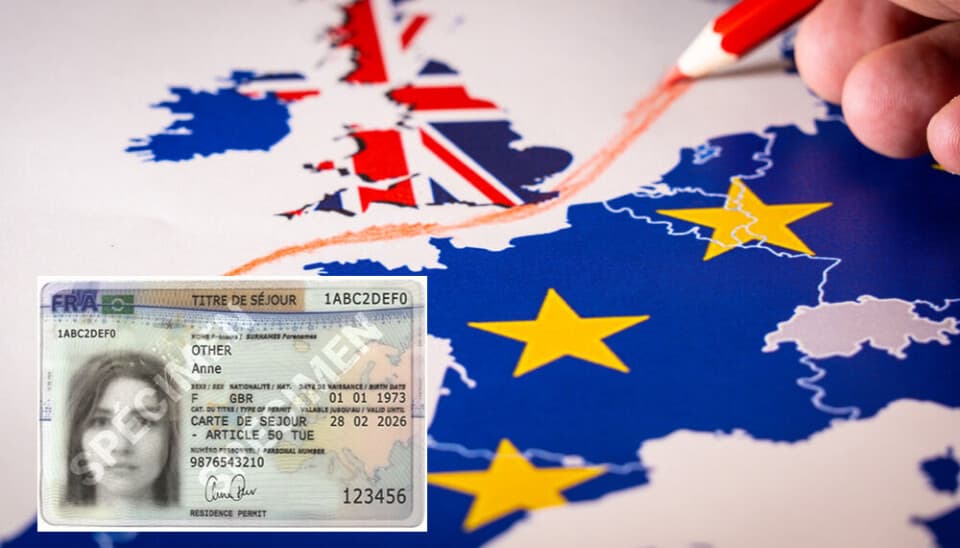
10-Year Resident Card: This is a renewable residence permit, valid for 10 years. It allows you to live and work in France without restrictions (no separate work permit required). This permit must be renewed every 10 years and requires ongoing compliance with certain conditions (residency, integration, financial means, etc.). The resident card is valid for residence and work in mainland France; different rules may apply for overseas departments and regions. For more details on residence permits, check our guide to French Residence Permits.
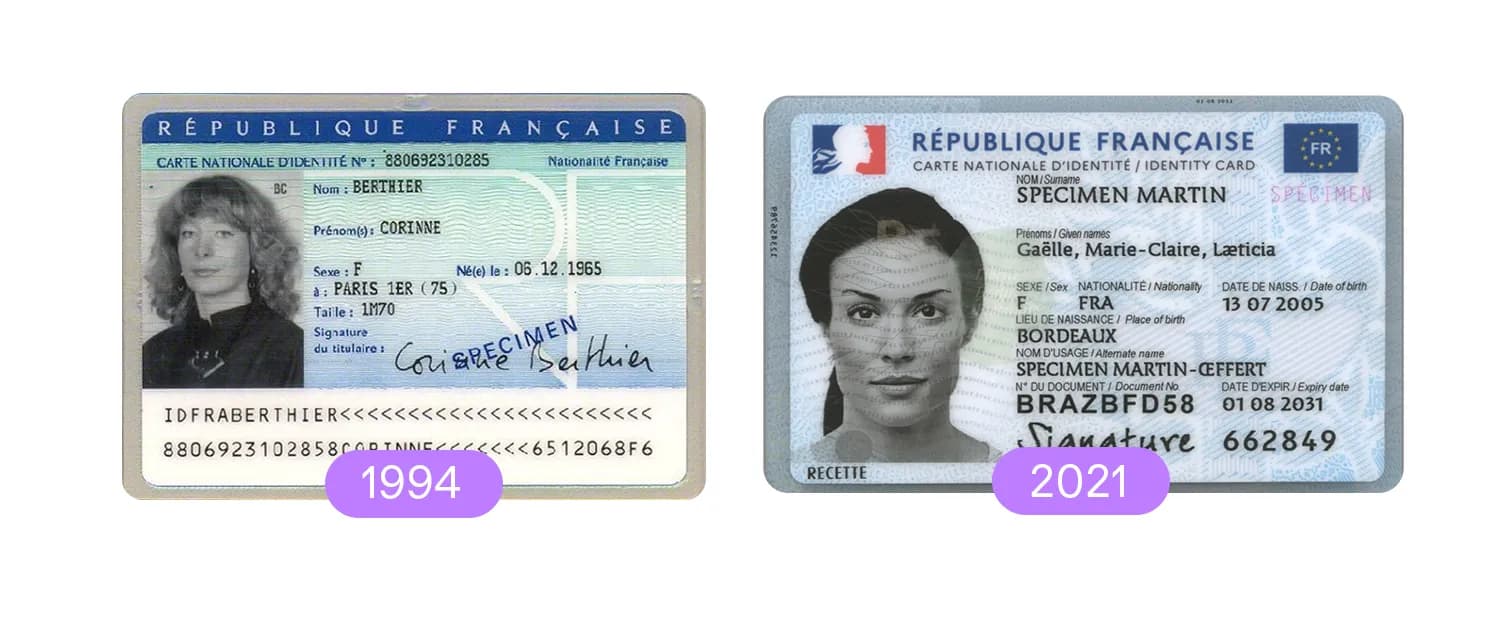
Citizenship (French passport): This means acquiring French nationality. You are issued a French passport and national ID card, granting you all rights of a French citizen by birth. Citizenship is “permanent” and does not require any further renewal of your residence status.
Rights: Permanent Residents vs Citizens
Rights of a Permanent Resident
You can work and live in France indefinitely. You have access to most social rights (healthcare, retirement, benefits, etc.).
- Cannot vote or stand for election in France (except some local EU elections for EU citizens).
- Cannot hold certain public offices.
- Not automatically an EU citizen (no automatic freedom of movement).
- Status can be revoked if you leave France for more than 3 consecutive years (2 years for EU long-term residents).
Rights of a French Citizen
You enjoy full freedom of movement in the EU and access to French consular protection abroad.
- Vote and stand in all elections (local, national, European).
- Right to live/work in any EU country without formalities.
- Subject to citizen obligations (jury service, etc.).
- No longer need to renew residence permits.
Need help with your French visa application?
Our team of experts assists you with all procedures to obtain your French visa, regardless of type.
More than 400 visas successfully obtained
Permanent Resident Status (10-Year Resident Card)
Eligibility Requirements: 5 Years of Continuous Legal Residence
The 10-year resident card can be obtained either as a first residence permit or as a renewal. The general rule is to have lived legally and continuously in France for at least 5 years, with valid visas or residence permits. Several exceptions allow you to apply sooner:
- Spouse of a French citizen: Married for at least 3 years (or 1 year if Tunisian), with proof of effective marital life.
- Parent of a French child: If your child is French, you must have lived in France for 3 years after their birth.
- Other special cases: Refugees, Foreign Legion veterans, or those under subsidiary protection may apply without waiting 5 years.
Applications can be submitted at the prefecture or sub-prefecture depending on your place of residence. You must not be under an expulsion order.
Other Criteria: Integration, Language, Resources
Beyond length of stay, the resident card requires successful integration into French society:
- Language: At least A2 level (B1 mandatory from Jan 1, 2026).
- Republican Integration: Adherence to French principles and values.
- Criminal Record: No convictions incompatible with public order.
- Financial Stability: Stable and regular resources (payslips, tax returns).
Application Process: Applications are increasingly made online via the ANEF portal. You will need to provide your passport, current permit, proof of address, resources, language certificate, and fiscal stamps.
French Citizenship
By Naturalization: General Requirements
Naturalization is a process by which adult foreigners become French citizens by decree. The main requirements are:
- 5 years of residence: Habitual and continuous residence in France (reduced to 2 years for those who completed higher education in France).
- Valid residence permit: You must be legal at the time of application.
- Assimilation: Adherence to republican values and knowledge of French culture/history.
- Language proficiency: B1 level currently (B2 from Jan 1, 2026).
- Professional integration: Stable income and employment.
- Clean criminal record: No serious convictions.
By Marriage: Simplified Requirements
A foreigner married to a French spouse can acquire nationality by declaration. Requirements:
- Married for at least 4 years (5 years if you haven't lived in France for 3 years continuously).
- Still living together (community of life).
- B1 level French.
- No criminal record.
Need help with your French visa application?
Our team of experts assists you with all procedures to obtain your French visa, regardless of type.
More than 400 visas successfully obtained
By Birth or Descent
Right of Soil (Droit du sol): Children born in France to foreign parents automatically acquire nationality at 18 if they have lived in France for at least 5 years since age 11.
Descent (Droit du sang): If one parent is French, the child is French at birth, regardless of where they are born.
Family and Citizenship
Obtaining French nationality not only transforms your own legal status but also opens up new opportunities for your family. As a citizen, your children born in France will be French by birth, and bringing family members to France can be easier under specific family reunification rules for nationals.
Advantages vs. Challenges
Advantages
- Permanent security and stability.
- No more administrative renewals.
- EU citizenship and freedom of movement.
- Consular protection abroad.
Challenges
- Dual Citizenship: Check if your home country allows it (France does).
- Taxation: Based on residence, but check international treaties.
- Obligations: Jury duty and national service (for youth).
Processing Times and Tips for Success
Processing a naturalization application typically takes 18 months to 2 years, sometimes up to 3 years depending on the prefecture. Applying for the 10-year resident card is generally faster (a few months).
Tips to Strengthen Your Application
- Prepare carefully: Ensure all civil status documents are translated and apostilled if necessary.
- Certify your language: Take an official test (TCF, DELF) early. Check our student guide for language tips.
- Show integration: Join associations, keep proof of your social life in France.
- Financial stability: Avoid gaps in employment if possible before applying.
- Cover letter: Explain your attachment to France clearly.
Common reasons for refusal include incomplete files, unstable resources, or criminal records. Always ensure you meet the stability criteria before applying.
Conclusion
Whether you’re aiming for permanent residency or citizenship, start planning your long-term move to France early. A well-structured plan maximizes your chances of success. Don't forget to check if you need to renew your current documents, like your passport renewal, before starting these long procedures.
Frequently Asked Questions about French Citizenship
Can I keep my original nationality if I become French?
Yes, France recognizes dual and multiple citizenship. However, you must check if your country of origin allows it, as some countries require you to renounce your original nationality upon acquiring another.
What is the minimum income required for naturalization?
There is no fixed statutory minimum, but you must prove stable and sufficient resources to support yourself and your household. Generally, earning at least the SMIC (minimum wage) is a good benchmark, though the nature of the contract (CDI vs CDD) also matters.
Do I need to take a language test if I have a French diploma?
If you have a diploma issued by a French authority (e.g., CAP, BEP, Licence, Master) of at least Level 3 (formerly Level V), you may be exempt from the language test. Always check the latest decree as rules can change.
How long does the naturalization interview last?
The assimilation interview at the prefecture usually lasts between 20 to 45 minutes. The agent will ask questions about your personal situation, your motivation, and your knowledge of French history, culture, and values.
Can I apply for a 10-year card directly upon arrival?
Generally, no. You usually need to have resided in France for at least 3 to 5 years with temporary residence permits before qualifying for a 10-year resident card, unless you fall into specific categories (e.g., spouse of a French national after 3 years, parent of a French child, refugee).