Sim Card France: A Guide for Expats on Mobile Phones and SIM Cards
A comprehensive guide to setting up a mobile phone plan in France. Learn about prepaid vs contract SIM cards, coverage, and the best options for expats.

International Mobility Expert
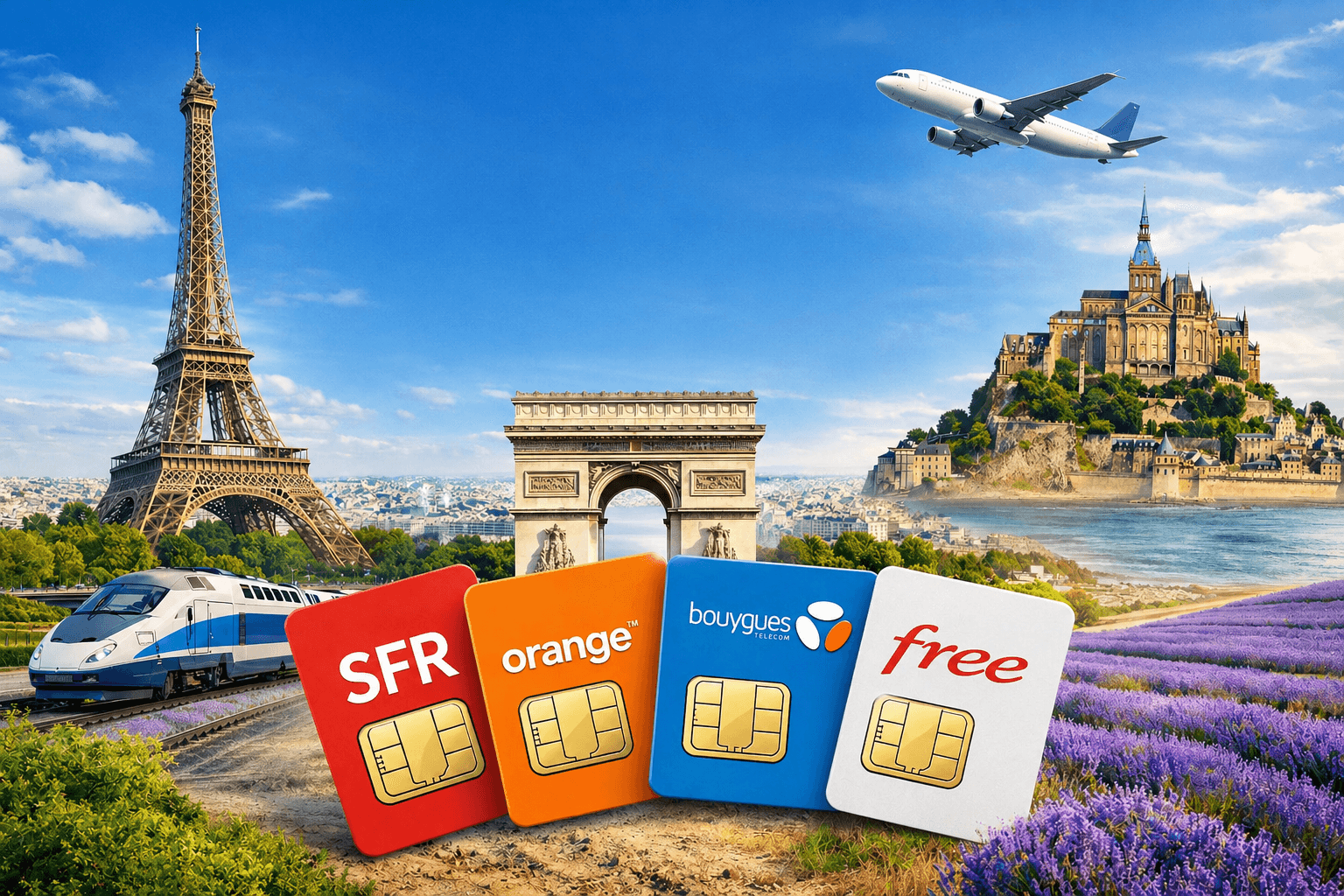
Setting up a French mobile plan is one of the first tasks for newcomers. France has modern GSM networks (4G/5G) with excellent coverage in cities. Most unlocked smartphones (even from the US or Canada) will work here, though you may want to check that your smartphone supports European LTE/5G bands and is compatible with French networks. Thanks to EU rules, arrivals from the EU/EEA can use their home plans in France at domestic rates (no roaming charges for calls, texts or data). Non-EU visitors should compare roaming fees, but often find it cheaper to buy a local SIM. There are many plans and affordable options available for different needs and budgets, including no-contract and low-cost brands.
You can use your home plan or buy a local SIM. Choosing the right SIM card can make your trip more convenient and budget friendly. Having a French SIM card also makes it easier to contact friends, family, and local services during your stay.
Summary
Using Your Phone in France
Most modern unlocked smartphones will work in France, provided they support European 4G/5G frequency bands. Nearly 100% of the population has 4G, and 5G is growing fast (about 3 in 10 active SIMs were on 5G by 2024). In practice you can expect high-speed data in cities and towns, with slower 3G/2G only in remote areas. (Note: major carriers are retiring 2G by 2026 and 3G by 2028, so a 4G/5G phone is future-proof.) Within the EU/EEA, incoming calls and texts are generally free under roaming regulations, but this does not apply to non-EU plans. Outgoing calls and data within the EU cost the same as at home. Always check with your provider about any "fair use" data limits when roaming.
Because most French service is in French, look for stores or kiosks with English-speaking staff. If you do not get a French SIM, you can still use Wi-Fi and apps (e.g. WhatsApp, Skype) to call home cheaply. To call France from abroad, dial your country's international access code, then France's country code (+33), followed by the local number without the leading zero. Light users who mainly rely on Wi-Fi and apps may only need a basic or minimal mobile plan. Emergency numbers (112 or 15/17) work from any phone.
Besoin d'aide pour vos démarches administratives en France ?
Nos experts vous accompagnent dans toutes vos démarches de visa, titres de séjour et installation en France.
Buying a French SIM Card
You can purchase a French SIM card (carte SIM) at many locations:
- Airports: In arrivals halls you’ll find kiosks or machines selling SIMs (Orange, Bouygues, etc.). They’re convenient but usually pricier.
- Carrier Stores: Official shops for Orange, SFR, Bouygues, or Free. Staff can help with activation, but may speak limited English.
- Electronics Stores: Chains like FNAC, Darty or Boulanger sell SIM cards. They often have English instructions.
- Tobacconists & Supermarkets: Small tobacco shops ("tabacs") and some grocery stores stock prepaid SIM kits for all providers. They are usually the cheapest option, though shopkeepers speak little English.
- Online: You can order a SIM or eSIM before arrival via carrier websites or eSIM vendors (e.g. Airalo, Amazon, Orange Travel). An eSIM lets you skip the physical card altogether if your phone supports it. You can choose between a regular SIM and an eSIM depending on your device and preference.
Most prepaid SIMs come in a "trio" size (nano/micro/standard) or as eSIMs. You’ll need a valid ID (passport or national ID) to register the SIM. For prepaid, a French address is not always required for prepaid SIMs, but valid ID registration is mandatory and required by law. Some users may prefer prepaid plans to avoid the need for a French bank account or proof of residency. Once you insert a new SIM, activation can be immediate, but in some cases may take several hours or require identity verification.
To get a French phone number, you simply insert the SIM and follow the tiny instructions. Your new number will start with +33 (France) instead of a leading zero (e.g. a mobile might appear as +33 6 12 34 56 78). The first two digits of the number, known as area codes, indicate whether it is a geographic number (linked to a specific region in metropolitan France), a non geographic number, or a mobile number. Metropolitan France uses a standard numbering plan, while overseas territories have different codes.
A key choice is prepaid vs. contract. Prepaid (pay-as-you-go) is quick and commitment-free; contracts can be cheaper per month but lock you in. Prepaid plans are ideal if you are staying for a few weeks, while contract plans may be better suited for an extended period in France.
| Plan Type | Pros | Cons |
|---|---|---|
| Prepaid (carte prépayée) | No long contract, immediate setup, no credit check. Ideal for short stays. | Rates per unit are often higher; you must top up manually and may expire if unused. |
| Contract (forfait) | Lower monthly cost, generous data/minutes, often unlimited calling/SMS. | Usually 12–24 month term (long term contracts) unless sans engagement (no contract), requires ID, address & bank details. Some plans let you cancel anytime, while others may have cancellation fees or require you to cancel at the end of the contract period. |
Telephone Numbers and Country Code
Understanding how telephone numbers work in France is key to staying connected, whether you're calling locally, across Europe, or back home. France's country code is +33, and you'll use it whenever making international calls to a French number. To dial France from abroad, start with your country's international access code (usually 00 or +), then add 33, and finally the local number—dropping the initial zero. For example, to call a landline in southwest France from outside the country, you'd dial +33 5 followed by the rest of the number (e.g., +33 5 12 34 56 78).
Major Mobile Operators and MVNOs
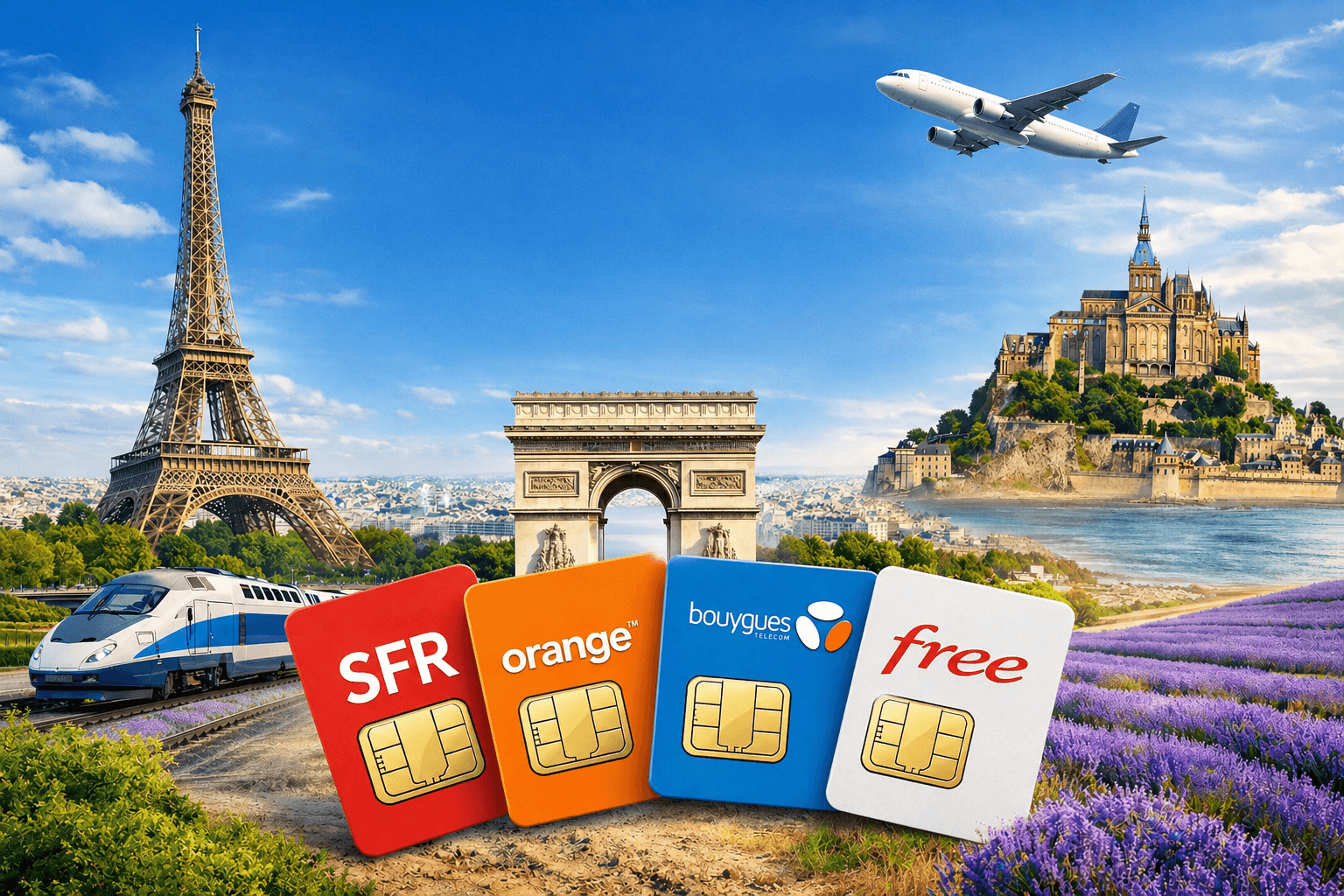
The market is led by four main carriers: Orange, SFR, Bouygues Telecom, and Free Mobile. Orange and SFR each hold roughly 30% of subscribers, while Bouygues and Free each have about 15%. These four operators own the networks and generally offer the best coverage, especially outside big cities. Most providers offer many plans, including bundle deals and promotional offers throughout the year, catering to a wide range of needs.
- Orange: France’s largest network (~30% market share), with excellent 4G/5G coverage nationwide. Orange plans are reliable and customer support is good, but prices can be higher. Orange also provides bundles (internet, TV, mobile). Tourists can consider Orange’s "Holiday" prepaid SIM with a set data/minutes package.
- SFR: (also ~30%) Good all-around network and pricing. SFR often bundles TV/Internet and has its own budget brand RED by SFR (no-contract plans with promotions).
- Bouygues Telecom: (15%) Competitive coverage (almost on par with Orange/SFR in cities) and generally mid-range pricing. Bouygues runs special deals online and offers a B&YOU brand for no-contract plans.
- Free Mobile: (15%) Known for aggressive low prices (e.g. 100+ GB for ~€20/month) and early 5G deployment. Free’s network coverage in the past lagged slightly in very rural areas, but this has improved. Free Mobile primarily operates online, but also offers subscription through self-service terminals in stores and shopping centers.
In addition to these, many MVNOs (Mobile Virtual Network Operators) sell SIMs on the big networks, usually cheaper but with support only via app or phone. Examples: Sosh (Orange’s low-cost brand), RED (SFR’s low-cost), La Poste Mobile (uses Orange network, sold at post offices and tabacs), Lebara/Lycamobile (specialize in low-cost international calls), Prixtel (adjustable data plans), NRJ Mobile, and more. MVNOs can be great value for straightforward plans, and they offer budget friendly and affordable options for travelers, expats, and long-term users. MVNOs use the networks of major operators, but speeds and network priority may differ, especially during peak times.
To compare coverage, check France’s official Mon Réseau Mobile tool (ARCEP) for maps and speed tests. You might find that all networks perform similarly in a given city, but Orange/SFR edges out in remote areas. Making a smart move by comparing plans and coverage from most providers can help you find the best and most cost-effective option for your needs.
Setting Up a Plan
Once you’ve chosen prepaid or a contract, you’ll configure your plan based on usage:
- Data allowances: French mobile plans range from a few gigabytes up to "illimitée" (unlimited). Typical prepaid plans might offer 10–50 GB for a month; contracts often bundle 50–100 GB or unlimited data. Unlimited calls/SMS domestically and in the EU are usually standard. If you stay within France/EU, roaming data is included (subject to fair-use limits – fair-use limits may apply for roaming data usage). Confirm the data cap in fine print (especially if you stream video). For users with higher data needs or long-term stays, contract plans are often more cost-effective in the long run compared to prepaid options.
- Multi-line / Family plans: Pure "family plans" are not as common as in some countries, but you can usually add multiple SIM lines to one account. For example, carriers often let households share data or get discounts when adding a second or third SIM under the same name. These plans make it easier to contact family members and stay connected. Check with Orange or Bouygues for "multi-SIM" offers if you need several lines under one bill.
- Prepaid top-up: For prepaid SIMs, you recharge credit ("recharger") by buying vouchers or using online top-up. Vouchers (5€/10€/20€ etc.) are sold at tobacconists, convenience stores and supermarkets. Scratch the card and follow instructions (usually calling a short code and entering the number). You can also top up via the operator’s website or mobile app with a credit card. After topping up, use the money to add data or minutes as needed (e.g. buying a specific data package).
- Contract billing: Contracts ("abonnements") are paid monthly by direct debit from a French bank or credit card. Carriers usually require a French IBAN. If you don’t have a local bank account yet, consider using an app like Wise or a digital bank (N26, Revolut) which provides a Euro IBAN. This lets you pay your mobile bill as if you had a French account. If you sign a contract, be prepared to show ID, a French address (proof of residence), and a bank statement or credit card.
- Activation and SIM details: Insert the SIM (or scan the eSIM QR code) and follow any on-screen prompts. You should see French signal bars and can test by calling a friend or dialing the balance check number. Incoming calls are free within France and often within the EU, depending on your plan; to check credit or data balance dial the provider’s free code (often explained in the SIM packet or on its website). Most French carriers provide step by step instructions for SIM activation and checking balances, either in the SIM packet or online. Remember: typical "SIM activation fee" is a one-time charge (a few euros) applied to contracts.
Tip for Expats
In summary, prepaid SIM cards are great for short-term stays or if you want no commitments. Contract plans suit longer stays or heavy users who need more data. Read the fine print: look for included EU roaming, check data speeds after any cap, and note that French SIM top-ups often expire after 30/60 days if not used.
Besoin d'aide pour votre demande de visa pour la France ?
Notre équipe d'experts vous accompagne dans toutes les démarches pour obtenir votre visa français, quel que soit le type.
Plus de 400 visas obtenus avec succès
Alternatives
- 1
eSIMs
If your phone supports eSIM, you can buy a digital SIM profile without visiting a store. Providers like Airalo or Orange Travel sell France/Europe eSIM packages (e.g. 10 GB for a month). An eSIM often offers the same networks/data but is easier to get (simply buy online and scan a QR code). It's ideal for travelers or as a backup plan. eSIM technology works with compatible smartphones, allowing you to switch plans easily without a physical SIM card. Keep in mind you still need a compatible device (many newer phones and tablets do).
- 2
International SIM and roaming plans
For very short visits, consider an international or tourist SIM (e.g. Orange Holiday Europe, SimOptions, etc.) or your home carrier's travel add-on. For example, carriers like T-Mobile (USA) or EE (UK) have short-term EU plans. These avoid changing SIMs but usually cost more per GB. Choosing the right SIM card can make your trip more convenient by ensuring you have data and coverage throughout France and Europe. For year-long stays, a local French SIM is almost always cheaper.
- 3
Wi-Fi and apps
France has widespread Wi-Fi (home, cafés, libraries). Using Wi-Fi for data lets you use apps like WhatsApp, Skype, or Zoom for calling/texting without mobile fees. Many carriers support Wi-Fi calling too (calls ring over Wi-Fi as if mobile). This is not a substitute for a SIM, but a nice complement (especially for international calls).
- 4
Fintech & payment apps
Managing money across borders is important. Apps like Wise are popular: they provide a multi-currency account with French IBAN. Some operators accept European IBANs (e.g. Wise, N26), but acceptance may vary. Similarly, N26 or Revolut offer quick Euro accounts for foreigners. Having these makes topping up or paying bills much easier.
- 5
Local phone numbers and forwarding
If you're only partially relocated, you might also forward your old number to your new French one, or use apps like Google Voice/SIP for low-cost international forwarding. But note that French SIMs will always issue a +33 French number. Having a French SIM card makes it easier to contact people in France and abroad, ensuring seamless communication during your stay.
French phone numbers use a ten-digit format, with area code 1 for Paris and the Île-de-France region. The numbering plans differ for French overseas departments, such as Saint Barthélemy and Saint Martin, which have their own country codes and formats. The overseas departments have seen an evolution in mobile phone services, including the adoption of new prefixes and improved connectivity.
By exploring these options, you'll stay connected in France without hassle. In summary: get a SIM from a main operator or MVNO for best coverage, decide on prepaid vs contract based on your stay length, and consider eSIM or Wi-Fi apps as useful supplements. With the right plan, you'll have full access to data and a French phone number at affordable rates. France's telecommunications system is globally recognized, reflecting its important place in the world of connectivity.
Need Help with Your Relocation to France?
Moving to France involves many administrative steps, from setting up a mobile plan and opening a bank account to securing your residence permit.Hiliv provides comprehensive relocation servicesto make your transition as smooth as possible. We can guide you through the entire process, so you can focus on enjoying your new life in France!
Frequently Asked Questions about SIM Cards in France
Do I need an unlocked phone to use a French SIM card?
Yes, your smartphone must be unlocked by your home carrier to use a local French SIM card or eSIM. Most modern smartphones sold in Europe, the US, and Canada are compatible with French 4G/5G networks once unlocked.
Is it better to get a prepaid SIM or a contract (forfait)?
A prepaid SIM is ideal for tourists or short stays (under 3 months) as it requires no commitment or local bank account. A contract (forfait sans engagement) is much cheaper for long-term stays, offering more data for less money, but usually requires a French or EU bank account (IBAN) and a local address.
What documents do I need to buy a SIM card in France?
By law, you must provide an official ID (passport or national identity card) to register any SIM card in France. If you are signing up for a monthly contract, you will also need proof of a French address and your bank details (IBAN) for direct debits.
Can I use my French SIM card in other European countries?
Yes! Under EU "Roam Like at Home" regulations, you can use your French plan’s calls, texts, and a portion (or all) of your data allowance in any other EU/EEA country at no extra cost. Always check your specific plan’s fair use policy for data limits when traveling outside France.
Should I buy a physical SIM or an eSIM?
If your phone supports it, an eSIM is highly recommended. It allows you to buy and activate your plan online before you even arrive in France, saving you time. Physical SIMs are still widely available and necessary if your device does not support eSIM technology.