French Tax Number: A Guide for Expats
What is the numéro fiscal? Who needs a French tax ID, how to get it, and how to use it. Complete guide for expats and newcomers to France.

International Mobility Expert
Moving to France comes with many administrative steps, and one essential item for anyone earning income or owning property is obtaining a French tax identification number, known in French as the numéro fiscal (also referred to as the French TIN, Tax Identification Number, in English). This 13-digit personal tax number is your key to the French tax system, used to file returns and pay taxes. In this guide, we'll explain what the numéro fiscal is, who needs one, how to get it, and how to use it, along with basic facts about filing taxes in France. This information will help expats and newcomers navigate their tax obligations confidently.
Besoin d'aide pour vos démarches administratives en France ?
Nos experts vous accompagnent dans toutes vos démarches de visa, titres de séjour et installation en France.
What is the Numéro Fiscal?
The numéro fiscal (also called the numéro d'identification fiscale) is the French tax identification number (TIN) assigned to individuals for tax purposes. It consists of 13 digits (typically starting with 0, 1, 2, or 3) and is issued by the French tax authority, the DGFIP (Direction Générale des Finances Publiques).
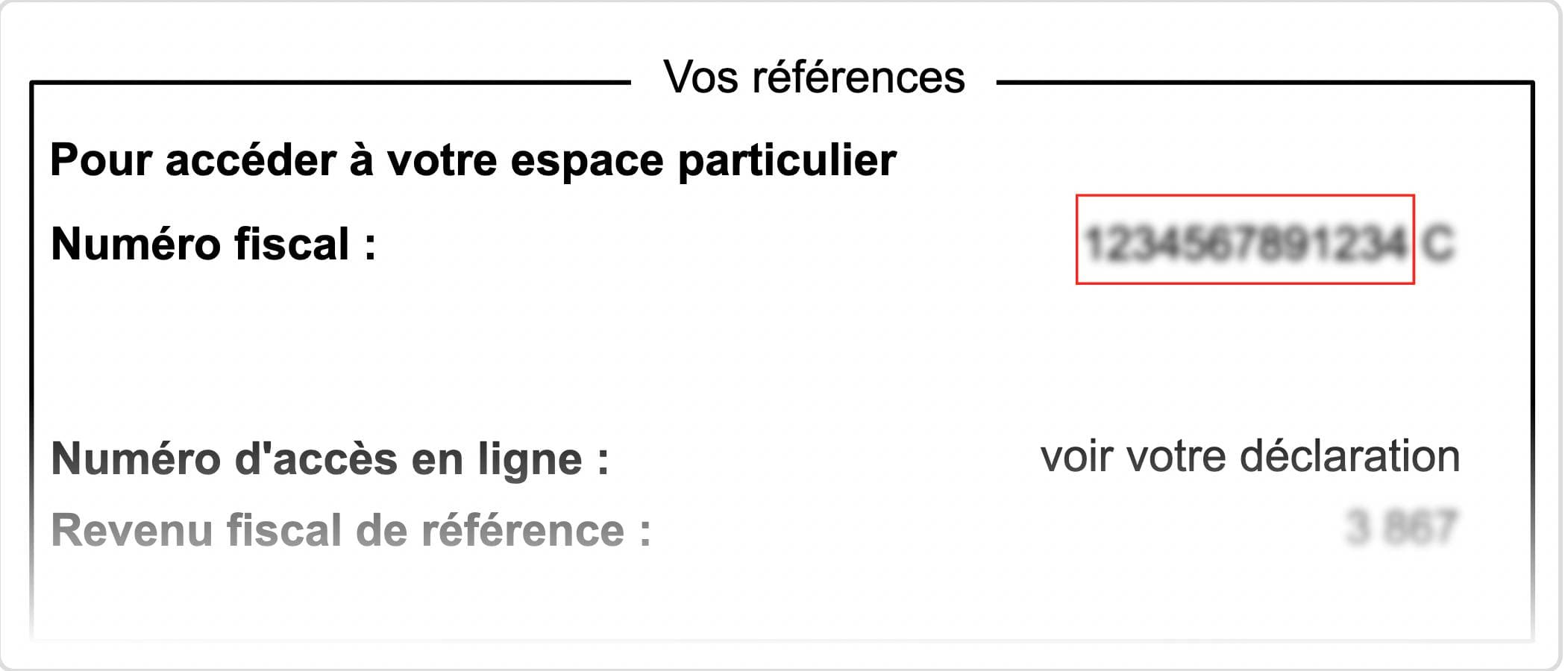
Important: do not confuse it with the "revenu fiscal de référence," which is a figure shown on your tax notice and not an identification number.
This number uniquely identifies you in the French tax system. Think of it as the equivalent of a tax ID in other countries (similar to the NIF/NIE in Spain). It is not the same as the French social security number (numéro de sécurité sociale), which is used for health and social benefits.
Key points about the numéro fiscal:
- ✓It is used for all tax-related procedures in France. You will need it to file income tax returns, pay income and property taxes, and access your online tax portal on the official site impots.gouv.fr.
- ✓The numéro fiscal appears on all major tax documents sent to you, such as your income tax return form, tax assessment notices (avis d'imposition), and local tax bills (e.g. property tax notices). It is usually printed on the first page at the top of these documents.
- ✓Each individual has their own tax number. Even if you file a joint tax return as a married couple or household, each adult has a separate numéro fiscal.
- ✓For French nationals, a tax number is often first assigned when they first file a tax return (often in early adulthood if previously attached to their parents' household).
- ✓Expats and foreigners will obtain one when they enter the French tax system (more on that below).
In summary, the French tax number is your personal tax ID. If you have any tax obligations in France, obtaining this number is a must in order to stay compliant and manage your taxes.
Who Needs a Tax Number in France?
Not everyone who lives in France will automatically have a tax identification number; it is only needed if you have a tax obligation. You should obtain a numéro fiscal if any of the following apply:
- ✓Residents earning income in France: If you reside in France (meaning France is your principal home, main place of work, or center of economic interests under Article 4B of the French Tax Code) and earn any income (salary, self-employed earnings, pension, investment income, etc.), you are required to file a French tax return. In practice, you need a French tax number to declare that income. French tax residents are taxed on worldwide income, so even foreign income must be declared if you are a resident.
- ✓Non-residents with French income: If you live abroad but have income from French sources, you also need to file a French tax return for that income. Common cases include non-residents who work for a French company, receive a French pension, or earn rental income from property in France. A tax number is required to report and pay taxes on these earnings in France.
- ✓Property owners in France: Owning property in France (even if you live elsewhere) will subject you to certain local taxes, such as taxe foncière (annual property ownership tax). When you first become liable for property tax, the French tax authorities will create a tax record for you and issue a numéro fiscal if you do not already have one. This number will be printed on your property tax bills. Anyone who owns real estate in France should have a tax number, since it is needed to pay property taxes or manage the property in the online tax system. The tax number is essential to access your personal tax account (espace particulier) and declare rental income or manage property-related taxes.
- ✓Anyone filing a French tax return: In general, any individual who must file taxes in France will need a numéro fiscal. Even if your employer withholds income tax from your pay (France uses a PAYE system since 2019), most people still need to file an annual tax declaration for the previous year. If it is your first time filing and you do not yet have a tax number, you will be assigned one in the process.
On the other hand, if you are living in France but not earning any taxable income (for example, a dependent spouse with no income, or a student with a very small income below the tax threshold), you may not immediately need a tax number until you have to file a return. However, it is often beneficial to have one if you plan to work, buy property, or stay long-term, as it will eventually be required. If you do not yet have a numéro fiscal, you can still submit your first paper tax return; the tax administration will create and assign your number after processing it.
Note: French banks may request your foreign Tax Identification Number (TIN) under international reporting rules (CRS/FATCA), but they do not systematically require a French numéro fiscal to open a bank account. The numéro fiscal is specifically about taxes. But to fully participate in France's system (especially if you will earn money or own assets), you will end up needing this tax ID.
How to Apply for a Numéro Fiscal (French Tax ID)
There are a couple of ways to obtain your French tax identification number, depending on your situation. If you are new to the French tax system, the process usually involves either automatically receiving it when you file your first tax return or requesting it proactively from the tax authorities. Here's how to get your numéro fiscal:
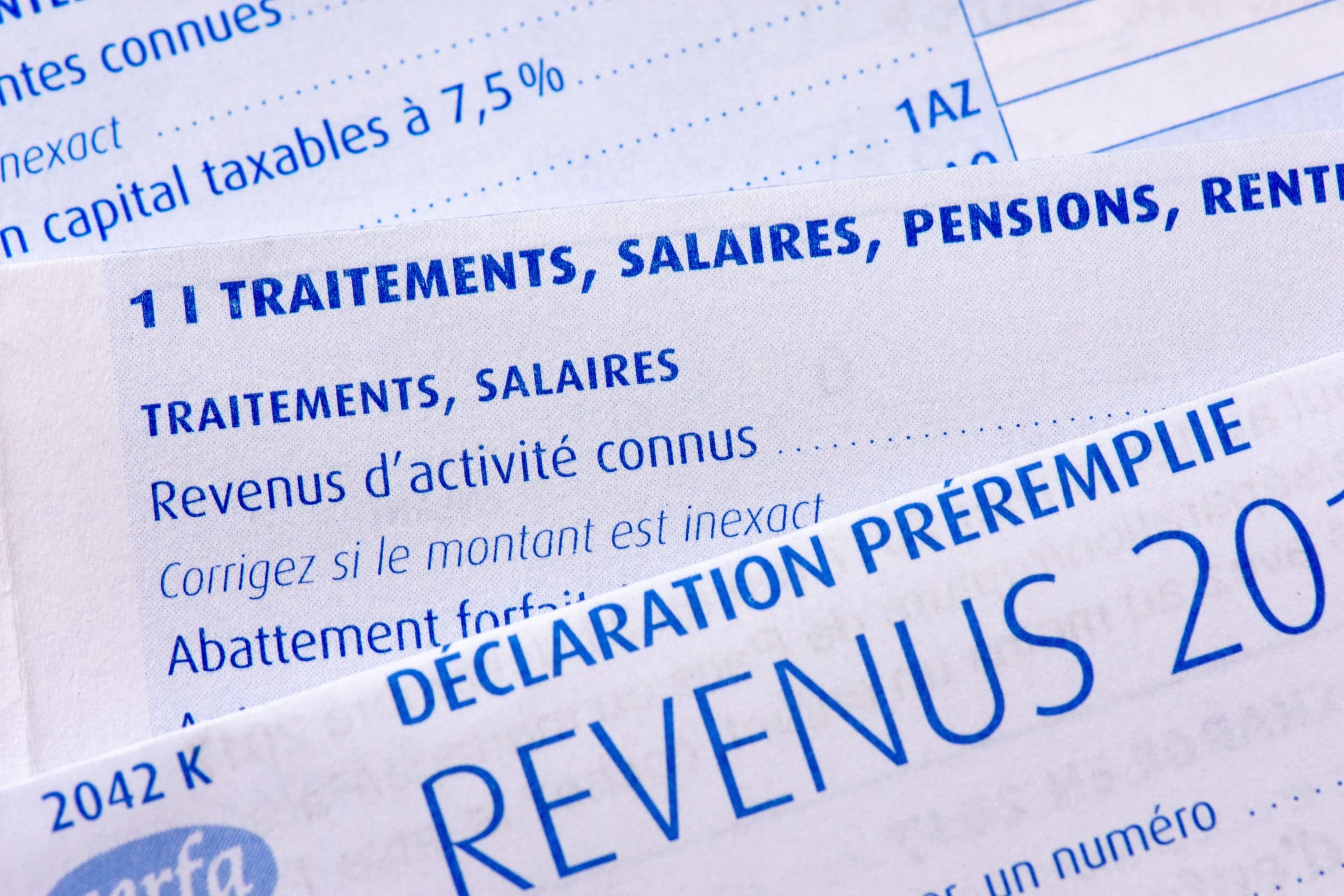
- ✓By filing your first tax return: In many cases, you do not need to apply separately for a tax number; it will be generated for you when you submit your first French income tax return. If you move to France and become a tax resident, you will file your first income tax declaration in the spring of the year following your arrival. This initial return must be done as a paper return (using the tax form called Cerfa 2042 for the main tax return). On that paper form, there is a field for the numéro fiscal which you likely will not have yet; it is fine to leave it blank. Once the tax office processes your first return, they will create your taxpayer account and assign you a 13-digit numéro fiscal. The number will be printed on the tax assessment letter (avis d'impôt) they send you after processing your return.
- ✓Requesting a tax number in advance: If you have not filed a return yet but need a tax ID (for example, to set up online access or to start paying taxes on property or pay-as-you-earn installments), you can apply for a numéro fiscal before the tax return is due. There are two main ways to do this: Online through impots.gouv.fr: go to the official tax website and navigate to the personal account login page. There is an option that says "Vous n'avez pas encore de numéro fiscal ?" (Do not have a tax number yet?). By clicking that, you can start the process of requesting a tax number online. You will typically need to fill out an application form and provide information such as your identity (name, date of birth) and a French address. In some cases, you may need to email additional documents (like a copy of your passport and proof of address) to the tax office to verify your details. For convenience, you can use the direct link to the French tax authority's application portal to begin your request. Once your request is processed and your identity confirmed, the tax authorities will email you instructions to retrieve your new tax number and create your online account; this usually takes a week or two.
- ✓In person or by mail at the local tax office: You can also obtain a numéro fiscal by contacting your local Centre des Finances Publiques (the local tax office for individuals). Many expats choose to do this if they prefer dealing with paperwork in person or if the online method is not working for them. You can submit your first income tax return (form 2042) to the tax office, and they will assign you a tax number during processing. You can drop it off at the office, send it by postal mail, or even email it to the designated email address of the tax center. The form will ask for personal details, including your postal address, and an estimate of your current year's income (this helps them set up an initial withholding tax rate for you). After processing, the tax office will send you your new tax number and instructions to set up your online portal.
Whichever method you use, obtaining the tax number is free. If you are an employee starting work in France, your employer might assist or remind you to get this number (since it is needed to calculate your personalized income tax withholding). Some newcomers choose to request the numéro fiscal as soon as they arrive in France, so that they can have their tax account ready and a proper withholding rate applied, rather than waiting until the first tax return is filed. This can help avoid being put on an emergency "neutral" withholding tax rate, which can be higher than necessary.
Bank Account and Tax ID
Managing your finances in France goes hand in hand with understanding how your bank account and tax identification number (numéro fiscal de référence) are connected. Whether you are a French resident, a non-resident earning income in France, or a property owner, the French tax authorities require you to have a tax ID for a range of financial and tax-related activities.
While your tax identification number is not required to open a bank account in France (banks typically only need your passport and proof of address), understanding your tax obligations is important for managing your finances properly in France.
For non-residents who earn income in France, such as rental income from French property, it is essential to obtain a French tax ID. Non-residents should submit their tax return to the Service des Impôts des Particuliers Non-Résidents (SIPNR) in Noisy-le-Grand, either by mail or by applying online through the French tax authorities' website. Once you have your numéro fiscal, you will be able to create an online tax account (espace particulier), where you can file your income tax return, pay property taxes, and access your tax notices and other official documents.
France's tax administration uses your tax ID (numéro fiscal) to track your tax obligations and ensure compliance. This system helps the tax office match your income, property, and other taxable activities to your personal situation. Note that your social security number (numéro de sécurité sociale) is a separate identifier used for social security purposes, not for tax matters. If you are running a business or need to conduct certain transactions, you may also need to provide a VAT number (numéro de TVA) or a SIREN number, which are used to identify businesses for tax purposes.
To fulfill your tax obligations, you will need to provide your tax ID and proof of address. Note that your tax ID is not required to open a bank account in France. The process of obtaining a tax ID is straightforward: you can apply online via the French tax authorities' portal or contact your local tax office directly. Once your numéro fiscal is issued, you can use it to file your tax return, pay your taxes, and manage your online tax account.
By understanding how your bank account and tax ID are linked, and by keeping your tax documents up to date, you will be well-prepared to meet your tax obligations in France. This not only ensures compliance with the French tax administration but also makes it easier to manage your finances, whether you are a resident, a non-resident, or a property owner in France.
Using Your Tax Number
After you have your French tax identification number, it becomes an important reference for managing your taxes in France. Here are the main ways you will use your numéro fiscal:
- ✓Filing income tax returns: Your numéro fiscal must be included on every income tax declaration you submit. For paper forms, you will write the number in the field provided. Even more importantly, once you have a tax number, you are expected to create an online tax account and file future returns online. To log in to the impots.gouv.fr tax portal (the official government tax website), you use your numéro fiscal as the login username (along with a password you set up). Your tax number is essential for registering, submitting returns, and paying taxes online through the official portal. Each time you file your annual income tax return, whether on paper or online, the tax number identifies you and links the return to your account.
- ✓Paying taxes and viewing tax bills: Your tax number is needed to pay any taxes due. For example, if you owe additional income tax, you can pay through your online account or other payment methods, but you will reference your numéro fiscal so the payment is applied correctly. Similarly, for property taxes like taxe foncière or (formerly) taxe d'habitation, your numéro fiscal is printed on the bills and you will use it to log in and pay those bills online if you wish. Essentially, any tax bill you receive from the French government will list your numéro fiscal. Think of it as your account number with the tax office; it must be included on checks, forms, or electronic payments so that your tax payments are credited to you.
- ✓Accessing your personal tax space: Once you have a numéro fiscal, you should activate your personal space on the tax website. Through this secure online account (often called the "espace particulier"), you can do a lot: file and submit tax returns, see your tax assessments and notices, pay taxes or set up automatic payments, update your address or family status, and even communicate with tax officials via secure messaging. To create this account for the first time, you will usually need three pieces of information from your most recent tax documents: your numéro fiscal (tax number), your numéro d'accès en ligne or online access number (provided on your most recent income tax return), and your revenu fiscal de référence (a reference income figure from your tax assessment notice). If you have never filed a return before, you might not have those additional codes yet; in that case, the system will ask you to verify your identity (often by contacting the tax office or using the FranceConnect identity verification service) to set up the account. Once it is set up, you will use your numéro fiscal and chosen password for future logins. Every adult taxpayer in France has their own online account, even if you are in a joint household.
- ✓Identifying yourself in tax correspondence: Whenever you contact the tax authorities or they contact you, your numéro fiscal is the key reference. If you call or visit the tax office with a question, they will likely ask for your tax number to pull up your file. Likewise, if you send a letter or an email to the tax service, you should mention your numéro fiscal in the subject or header. This ensures your query or document is routed to the correct personal account. Essentially, the numéro fiscal functions as your file number with the French fisc.
One thing to remember is that the numéro fiscal is confidential; you should not confuse it with, say, a publicly searchable business SIRET number. Your tax number is used between you and the tax authority. Do not confuse it with other identification numbers such as your social security number (numéro de sécurité sociale) or business numbers (SIREN/SIRET). Keep it secure and do not share it unnecessarily, to protect your personal tax information. If you ever lose or forget the number, you can usually find it on any old tax notice you have, or you can request it from the tax office (they can send it by email if you verify your identity).
Finally, note that having a numéro fiscal is crucial for staying in good standing with the French tax system. Without it, you cannot properly declare income or pay what you owe, which could lead to issues or penalties if you are required to be paying taxes. Once you have the number and an online account, you will find it much easier to handle your taxes each year in France.
Besoin d'aide pour obtenir votre numéro fiscal français ?
Notre équipe d'experts vous accompagne pour obtenir votre numéro fiscal et vous inscrire auprès des services fiscaux français.
100% de réussite sur les demandes
Tax Filing Basics in France for Expats
Understanding the timeline and basics of French tax filing will help you know when and how to use your tax number each year. Here is an overview of key points:
- ✓Tax year and declaration period: France's tax year runs from January 1 to December 31, the same as the calendar year. Each spring, there is an annual filing season to declare the income from the previous year. Tax declaration forms and the online portal typically open in April. If you moved to France in the past year, you will be filing your first French tax return in April/May of the following year, covering your income since your arrival. For example, if you arrived in 2024 and earned income in France that year, you will declare that income in the 2026 tax filing season.
- ✓Deadlines: The deadline to submit your income tax return in France usually falls in May (for paper submissions) or in May/early June (for online submissions), with exact dates varying by year and by your department of residence. Generally, paper tax returns are due by mid-May. Online filing is staggered by region: for instance, one group of departments might have a late May deadline and others a week later, often extending into early June for the last group. If you are an expat living outside France but filing as a non-resident, your online deadline might be the earliest (often mid or late May). It is important to check the official announcement each year for the precise dates. Missing the deadline can result in penalties or fines, so mark your calendar and file on time. Remember that if you have internet access, French law requires you to file online, unless you are unable to do so for technical reasons or it is your first time filing and you have not received your access codes yet. The first year you might file on paper, but from the second year onward, you will be expected to use your online account with your numéro fiscal to file electronically.
- ✓Pay-As-You-Earn and annual reconciliation: Since 2019, France uses a PAYE system (prélèvement à la source) for income tax. This means if you are employed or receiving a pension, tax is usually withheld from your pay throughout the year. However, you still must file an annual tax return to report all your income and family situation. The tax authorities will then issue an avis d'impôt (tax notice) in the summer showing the final calculation of tax for the year. If your withholdings were too high, you might get a refund, and if they were too low, you will need to pay the balance. Your numéro fiscal is central in all these steps; it links your withholdings, your return, and your tax notice together in the system.
- ✓Using the tax number for other taxes: Besides income tax, France has some local taxes (for example, taxe foncière on property). The bills for these are usually issued in the fall (around September or October). If you are an expat who just bought property in France, expect to receive a property tax notice later in the year, and it will contain your new tax number if you did not have one before. Likewise, if you register a business or become self-employed in France, you will get a business tax ID (SIREN/SIRET) for business taxes, but your individual income tax number (numéro fiscal) remains the one used for your personal tax obligations. Always keep your tax number handy so you can pay any tax bills by referencing the correct number.
- ✓Staying compliant: Every expat should make it a point to get their numéro fiscal and declare income annually. The French tax system can seem complex, but there are resources to help. The official tax administration website has information in French (and some in English) on how to declare and pay taxes. If you are unsure about your obligations, consider seeking advice from a tax professional, especially if you have income in multiple countries. Double taxation treaties often prevent you from being taxed twice on the same income, but you still need to declare worldwide income if you are a resident. Filing correctly and on time, using your tax number, will ensure you avoid fines (which can be around 10% of the tax due for late filings, plus interest on underpaid tax).
Summary: The French tax identification number (numéro fiscal) is your gateway to fulfilling tax requirements in France. Expats planning to work or buy property should obtain this number either by requesting it or when filing their first return. Once you have it, you can set up your online tax account, file returns each year (typically each spring for the previous year's income), and pay any taxes due. Keep your numéro fiscal safe and use it in all correspondence with French tax authorities. With this number and a clear understanding of the tax calendar, you will be well-prepared to manage your taxes as you settle into life in France.
If you are an expat or a company managing international mobility, handling French tax registration and annual declarations can be time-consuming. Hiliv supports individuals and businesses with administrative procedures in France, including guidance on obtaining your numéro fiscal and staying compliant with French tax obligations. Our team can help you navigate the steps so you can focus on your move or your business.
Frequently Asked Questions: French Tax Number (Numéro Fiscal)
What is the difference between the numéro fiscal and the numéro de sécurité sociale?
The numéro fiscal (tax identification number) is a 13-digit number used exclusively for tax purposes: filing tax returns, paying income and property taxes, and accessing your online tax account on impots.gouv.fr. The numéro de sécurité sociale (social security number) is a different identifier used for health insurance, retirement, and other social benefits in France. You can have both; they serve different administrations and purposes.
Do I need a French tax number to open a bank account in France?
No. Banks in France do not systematically require a numéro fiscal to open an account. They typically ask for your passport (or ID) and proof of address. However, under international reporting rules (CRS/FATCA), banks may request your Tax Identification Number (TIN), which can be your home country TIN if you are not yet in the French tax system. Once you earn income or own assets in France, you will need a numéro fiscal for tax compliance, and it is useful to have it for your financial life in France.
How long does it take to get a numéro fiscal after applying?
If you receive it by filing your first tax return (paper form 2042), the numéro fiscal is assigned when the tax office processes your return, and you will see it on the avis d'impôt (tax notice) sent a few weeks or months later. If you request it in advance online via impots.gouv.fr, the tax authorities typically process the request and send you instructions to retrieve your new tax number within about one to two weeks, after identity verification.
I am a non-resident with rental income in France. How do I get a numéro fiscal?
Non-residents with French-source income (e.g. rental income) must declare it in France and therefore need a numéro fiscal. You can request one by applying online on impots.gouv.fr (option for people who do not yet have a tax number) or by sending your first tax return to the Service des Impôts des Particuliers Non-Résidents (SIPNR) in Noisy-le-Grand. Once you have your numéro fiscal, you can create an espace particulier (online tax account) to file returns and pay property taxes and income tax on French rental income.
Can I use my numéro fiscal as a login for the French tax website?
Yes. Your numéro fiscal is used as the username to log in to your personal space (espace particulier) on impots.gouv.fr. You will also need a password (and possibly your numéro d'accès en ligne and revenu fiscal de référence from your last tax notice when setting up the account for the first time). Once the account is created, the numéro fiscal and your password are used for future logins.
What happens if I file my tax return late or forget to declare income?
Late filing or failure to declare income can result in penalties. The French tax authority may apply a penalty of around 10% of the tax due for late filing, plus interest on any underpaid tax. In serious cases (e.g. deliberate omission), higher penalties can apply. It is important to file on time and declare all required income (including worldwide income if you are a French tax resident). If you realize you made an error or missed a deadline, you can often correct or submit a late return via your espace particulier or by contacting your tax office; acting quickly can help limit penalties.
Is the numéro fiscal the same as the SIREN or SIRET number?
No. The numéro fiscal is a 13-digit personal tax ID for individuals. The SIREN (9 digits) and SIRET (14 digits) are business identifiers used for companies, self-employed professionals, and other legal entities for tax, social security, and administrative purposes. If you are both an individual and a business owner in France, you will have a numéro fiscal for your personal taxes and a SIREN/SIRET for your business.
Where can I find my numéro fiscal if I lost it?
Your numéro fiscal appears on all official tax documents sent to you by the French tax authority: your income tax return form, your avis d'impôt (tax notice), and property tax bills (e.g. taxe foncière). Check any such document from past years. If you have an online account on impots.gouv.fr, you can also find it there once logged in. If you have no documents and no access, you can contact your local Centre des Finances Publiques or the SIPNR if you are non-resident; after verifying your identity, they can send you your numéro fiscal (e.g. by email or post).