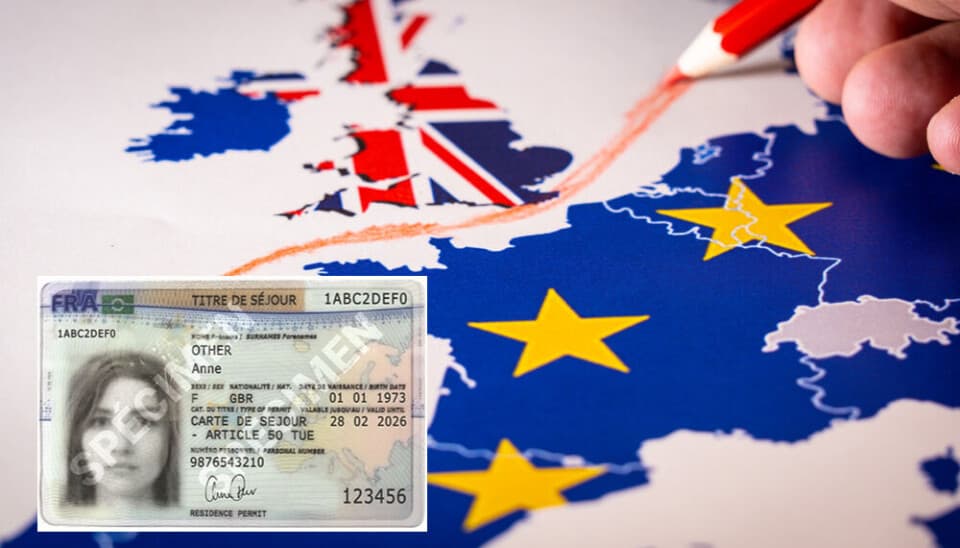
Working Holiday Visa France - Eligibility, Benefits & How to Apply
Complete guide to the France Working Holiday Visa (VVT) in 2026: eligibility rules for 16 partner countries, age limits (18-35), financial requirements, health insurance, and step-by-step application process for young travelers.

International Mobility Expert
The Working Holiday Visa France (also known as the visa Vacances-Travail France) is a youth exchange program that allows young adults to live in France for up to one year, combining travel with the ability to work locally.
This special visa is based on bilateral agreements between France and several partner countries. Only citizens from these eligible countries can apply for the program. The visa is available to people aged 18–30 (and up to 35 for certain nationalities). To participate, applicants must meet specific eligibility requirements, such as age, nationality, and other conditions.
Additionally, specific conditions (such as quotas, age limits, or document requirements) may vary depending on the bilateral agreement between France and each partner country. In this article, you'll learn everything you need to know about eligibility, benefits, requirements, and the step-by-step process to get a working holiday visa France, updated for 2026.
What Is the France Working Holiday (Vacances-Travail) Visa?
The visa Vacances-Travail France (VVT), also called the Working Holiday Visa (WHV), is a temporary long-stay visa granted to young international travelers who want to experience France in depth.
This visa is issued as a long-stay visa equivalent to a residence permit (VLS-TS in most cases), valid for up to 12 months, meaning you can enter and leave France freely during the visa's validity period. It also allows short stays within the Schengen Area (up to 90 days in any 180-day period), in accordance with Schengen rules.
The working holiday visa France allows young adults to live in France for up to one year, providing the opportunity to live and work in a foreign country.
This French working holiday program is built on reciprocity: only citizens of countries that have signed an agreement with France can apply, and in return, young French citizens can access similar working holiday programs in those partner countries. The goal is to support cultural exchange and independence for young travelers.
A major advantage is that no separate work permit is required to work in France under this visa - unlike many standard work visas. No prior work authorization is required, as the right to work is directly attached to the visa.
In short, the working holiday visa France offers unique flexibility: it lets you combine long-term travel with diverse work experiences, without the usual heavy administrative burden. It's an ideal opportunity to improve your French, discover French culture from the inside, and gain valuable international experience.
Need help with your French visa application?
Our team of experts assists you with all procedures to obtain your French visa, regardless of type.
More than 400 visas successfully obtained
Participating Countries & Bilateral Quotas
The France working holiday visa program is open to young people from multiple partner countries. As of 2026, 16 countries and territories have signed a Vacances-Travail agreement with France:
If you're a citizen of one of these eligible countries, you may be eligible for a visa Vacances-Travail France (and French citizens can usually apply for a WHV in your country as well).
Each bilateral agreement generally sets an annual quota of visas available per nationality - except for Australia and New Zealand, where the program is typically unlimited.
- Canada: ~7,000 per year
- South Korea: ~2,000 per year
- Japan: ~1,800 per year
- Argentina: ~1,500 per year
- Hong Kong: ~750 per year
- Brazil & Taiwan: ~500 per year
- Chile & Colombia: ~400 per year
- Mexico, Peru, Ecuador, Uruguay: ~300-500 per year
Quotas vary significantly depending on the country and are subject to change each year. For accurate figures, applicants should always refer to official consular sources. Colombian nationals residing abroad may have specific application procedures or requirements, so it is important to check with the French consulate in your country of residence.
Quotas can change depending on bilateral negotiations, so it's strongly recommended to verify the updated quota each year with the French embassy or consulate in your country. In high-demand countries (like Canada), the larger quota often means eligible applicants can usually get a spot, while smaller quotas may require applying early.
Program Benefits for Participants
Beyond the ability to live in France for up to a year without complex formalities, the work and travel France program offers several major benefits:
Immersive cultural experience
Living and working alongside French locals helps you immerse yourself in the language and culture far more deeply than a short tourist trip.
International work experience
Short-term jobs or internships in France boost your CV, build new skills, and strengthen your French. Having a job offer in advance can help demonstrate your intent to work.
Travel flexibility
With multiple entry and the ability to travel within the Schengen Area (up to 90 days), you can explore Europe during your year in France.
No extra work authorization
French employers can generally hire WHV holders without extra administrative work—because the visa allows employment.
By working in France (seasonal work, hospitality, tourism, restaurants, retail, etc.), you can support yourself and extend your adventures without draining your savings.
Core Requirements
To obtain the WHV France, you must meet the eligibility rules set by the bilateral agreement between France and your country of citizenship. To be eligible, you must meet the following criteria: while details vary slightly, the main requirements are broadly similar.
Age Limits (18-30 / 35 Depending on Country)
Age is a key factor: you must usually be 18 to 30 years old inclusive at the time you submit your application. That means you must not be 31 or older on the day you apply.
It's important to understand that this visa is generally issued only once per person, per country. If you already had a WHV for France, you cannot apply again for France. Likewise, French citizens cannot get the same WHV twice in the same partner country.
Proof of Savings + Return Ticket
To ensure you can support yourself at the start of your stay, you must show a minimum amount of savings. The required amount varies slightly by country but is often around €2,500 (or the equivalent in local currency).
- Japan: ~€3,100
- Australia: ~5,000 AUD (~€3,000)
- South Korea: ~€2,500
- Canada: ~2,500 CAD (~€1,700)
In practice, you'll usually provide proof of funds such as recent bank statements or a bank letter showing you hold at least the required amount. Some consulates may accept a credit card with a sufficient limit or a letter of financial support from parents, but requirements vary, so always check your consulate's checklist.
You must also either:
- Provide a return ticket (round-trip flight), or
- Prove you have additional funds to buy a return ticket later.
Many applicants choose a flexible round-trip ticket or an open ticket to meet the rule while staying flexible on their return date.
Long Stay Visa Requirements
The Working Holiday Visa is a specific type of long-stay visa, generally issued as a VLS-TS (visa long séjour valant titre de séjour), which serves as both a visa and a residence permit for the duration of the stay.
This visa is essential for anyone participating in the working holiday visa program, as well as for other extended stays. The VLS-T is typically valid for up to one year and is generally non-renewable, except in special cases such as for Canadian citizens who benefit from a specific bilateral agreement with France.
To qualify for a long stay visa, you must meet several important requirements. First, you'll need a valid passport with at least two blank pages, ensuring there's space for your visa and any necessary stamps.
You must also demonstrate sufficient financial resources to support yourself during your entire stay in France - this is usually proven with recent bank statements or a bank letter. Additionally, you are required to have health insurance covering the entire duration of your stay, which must include medical care, hospitalization, and repatriation.
Other key documents include proof of accommodation in France (such as a rental agreement or a letter from a host), and a return ticket or evidence of funds to purchase one. It's crucial to meet the eligibility criteria for the specific type of long stay visa you're applying for.
Other Key Requirements and Documents
In addition to age and finances, here are other common requirements for the visa Vacances-Travail France:
- Nationality and passport: You must be a citizen of an eligible country and hold a valid passport. Your passport should typically be valid for at least 6 months after your planned end date.
- Multiple nationalities: If you hold multiple nationalities, you must apply using the nationality covered by a WHV agreement with France.
- Police clearance: Some agreements require a clean criminal record check and/or a medical certificate confirming you don't have certain contagious diseases.
- Motivation letter: Many embassies require a letter explaining why you want to do a French working holiday, what you plan to experience, and how you intend to organize your stay.
- Health insurance: This is mandatory. You must buy private travel insurance covering your entire stay in France, including medical costs, hospitalization, and repatriation.
- No dependents: The program is designed for individuals without dependents. You cannot bring dependent children under this visa.
- Legal standing: You must not present a risk to public order. That generally means no serious criminal convictions or major immigration issues.
Step-by-Step Application Process
Getting a working holiday visa France involves a multi-step process usually handled by the French consulate (or an authorized visa application center) in your country of residence.
This is a French national long-stay visa that allows residence in France and short travel within the Schengen Area, but it is not equivalent to a short-stay Schengen visa. Most WHV holders do not need to apply for a separate residency permit upon arrival in France.
1) Gather Documents + Biometrics at the Consulate
Research and plan ahead
Start by reviewing the official guidance provided by the French authorities. You can apply up to 3 months before your planned departure. It's recommended to apply 4–6 weeks in advance.
Complete the application form
Submit a long-stay visa application on France-Visas and select the purpose as 'Vacances-Travail' (Working Holiday). Print the confirmation summary.
Prepare your full document file
Gather passport, photos, motivation letter, CV, proof of funds, insurance certificate, and proof of return ticket. Organize them in the order requested.
Book your appointment and submit in person
Attend your appointment at the consulate or visa center (VFS/TLS). Staff will collect your biometrics (fingerprints + photo) and you'll pay the visa fee (~€99).
Wait for processing
Processing can take from a few days to several weeks. On average, expect 2–3 weeks. You can often track your application online.
Collect your passport and check the visa
Once approved, retrieve your passport. Check that the visa type mentions 'Vacances-Travail' and that the dates match your expected validity.
2) OFII Registration After Arrival
One of the biggest advantages of the visa Vacances-Travail France is administrative simplicity. Depending on how the visa is issued (VLS-TS), WHV holders may be required to validate their visa online within 3 months of arrival via the official French administration portal.
The WHV itself serves as your right to stay for its full duration, so there is usually no OFII appointment and no medical visit required for this visa category.
That said, you should still respect entry requirements at the border. In rare cases, border agents may ask to see supporting documents (insurance proof, funds, return ticket), so keep them accessible in your carry-on.
Need help with your French setup?
Our team helps you navigate the French administration and find the best accommodation for your working holiday.
Need help with your administrative procedures in France?
Our experts accompany you in all your visa, residence permit and installation procedures in France.
Working Rules & Restrictions in France
The French working holiday visa lets you work freely in France as long as you respect French labor laws and the validity period of your visa.
Types of Jobs and Sectors
You can work in almost any sector: seasonal jobs in tourism or agriculture, hospitality and restaurants, retail jobs, paid internships (where allowed).
Maximum Months per Employer
In some countries, WHV rules include a strict 6-month maximum per employer. In France, no general legal limit is formally imposed across all agreements, but bilateral conditions may apply depending on nationality.
Working Hours
Unlike international students in France (who have annual hour limits), WHV holders usually have no official annual work-hour quota. You can work full-time if you wish.
Study and Courses
The WHV is not a student visa, but you can usually take short courses (French classes, workshops). However, you typically cannot enroll in a full university degree program under a WHV.
Health Coverage and Insurance
WHV holders are not automatically covered by the French public healthcare system upon arrival and must rely on private insurance. If you work, your employer contributes and you may have some workplace protections (like work accident coverage).
Housing and Everyday Setup
The WHV doesn't grant housing benefits, but it doesn't restrict your ability to rent. With your passport and visa, you can often:
- Open a French bank account
- Get a local mobile plan
- Obtain a temporary social security number (if declared by an employer)
Managing Taxes and Finances
Arranging your finances is a key step for young professionals and young adults planning to stay in France.
Setting Up Finances in France
One of the first things you'll want to do after arrival is open a bank account. Most banks will ask for a valid passport, proof of address, and your visa.
Managing Taxes
The French administration requires all residents to declare any income earned in France and pay taxes accordingly. If you undertake paid employment, your employer will usually handle tax withholdings (prélèvement à la source).
For more information, read our guide on how to open a bank account in France.
Extending or Switching Status after WHV
The visa Vacances-Travail France is not renewable beyond one year. When the 12 months end, you are expected to leave France.
In principle, changing status within France is limited and often requires returning to the home country. You typically cannot convert a WHV directly into a student visa or standard work visa without leaving.
Apply for a New Visa from Abroad
If you find a long-term job or get accepted into a degree program, you can begin preparing a new visa application (employee, student, etc.) from your home country.
Canadian Youth Mobility Exception
Canada is a special case. A Canadian who completes a WHV France may be able to apply for another category (e.g. Young Professionals) afterward, allowing a combined stay of up to 24 months.
Do Another WHV in Another Country
After your work and travel France year, you may choose to continue traveling by applying for a working holiday visa in another partner country.
Conclusion - Enjoy a Year in France!
The Working Holiday Visa France is a gateway to a year of adventure and personal growth. Every year, thousands of young people come to explore France—from Paris to the French Riviera, from Bordeaux vineyards to Alpine peaks.
In 2026, France continues to welcome young travelers with open arms. Prepare your file carefully, follow the steps, and dive into French life. Hiliv is here to support you every step of the way, making your transition to France as seamless as possible.
Need help with your French visa application?
Our team of experts assists you with all procedures to obtain your French visa, regardless of type.
More than 400 visas successfully obtained
Working Holiday Visa France FAQ
Can I renew my Working Holiday Visa for a second year?
No, the WHV France is strictly non-renewable beyond 12 months. The only exception is for Canadian citizens who can participate in other categories of the Youth Mobility agreement (up to 24 months total).
Do I need to speak French to apply?
No, there is no language requirement for the visa itself. However, speaking basic French will significantly help you find a job and integrate into daily life.
Can I travel to other countries with this visa?
Yes! Your French WHV allows you to travel within the Schengen Area for up to 90 days in any 180-day period. It is a multiple-entry visa.
Is there a deadline to apply?
Applications are open year-round, but quotas for certain countries (like Canada or Argentina) can fill up. It's best to apply at least 2 months before your planned departure.
Can I bring my partner or children?
No, the WHV is an individual visa. Dependents (children or spouses) cannot be included. Your partner must apply for their own visa if eligible.
Do I need a job offer before applying?
No, a job offer is not required. The purpose of the visa is to allow you to look for work once you arrive in France.