France Visa Health Insurance: Schengen €30,000 Rules, Long-Stay Cover & CPAM Enrollment
Complete guide to health insurance for a France visa: €30,000 Schengen travel medical cover, long-stay student, work, Talent Passport and visitor requirements, accepted certificates and policy formats, how to buy before your appointment, CPAM / Assurance Maladie after arrival, and FAQs.

International Mobility Expert
Health Insurance France Visa: What coverage do you need?
Applying for a French visa means proving you won't become a burden on France's healthcare system. One key requirement is proof of adequate health insurance for the duration of your stay. Whether you're an international student, a foreign worker, or a long-term visitor, you must show that you have medical coverage meeting French standards. In this guide, we explain why health insurance is mandatory, the minimum coverage amounts by visa type, what kinds of insurance policies are accepted, how to purchase compliant insurance before your visa appointment, and how to transition to French social security (CPAM) once in France. We'll also tackle frequently asked questions about travel vs. full medical insurance, multi-trip plans, and coverage for family members. By the end, you'll know what coverage you need for a successful French visa application and how to stay covered throughout your stay.
If you are also preparing your dossier, our checklist of essential documents for a France visa pairs well with this article. For the big picture on categories, see French visa types.
Need help with your visa file or CPAM registration? Hiliv supports international students, workers, and families moving to France with step-by-step guidance, document checks, and referrals to compliant insurance options so you can submit a complete dossier with confidence. Explore Hiliv's France relocation services to see how we can help beyond this guide.
Need help with your administrative procedures in France?
Our experts accompany you in all your visa, residence permit and installation procedures in France.
Why French authorities demand proof of health insurance
French authorities require visa applicants to have health insurance so newcomers can pay for medical care and won't overload the public health system. France has a generous healthcare system, and public hospitals provide advanced care as part of the national infrastructure, especially in urban centers. However, as a visa holder you are not immediately eligible for it. By showing proof of health insurance, you demonstrate that if you fall ill or have an accident in France, your insurance will cover the costs (from doctor visits to hospital bills and emergency services) instead of the French state. Visa applicants must demonstrate sufficient healthcare cover for their stay so that medical and hospital expenses (including emergency repatriation) are met. This requirement is rooted in law: foreigners must have an insurance policy that covers medical and hospital expenses (including emergency repatriation) for the entire stay. In practical terms, this protects both you and France: you gain peace of mind in a country where even routine healthcare has costs, and the French government is assured it won't have to pay those bills. Ultimately, adequate health insurance is mandatory for visa approval because it prevents unpaid medical expenses and helps ensure every visa holder can access care without public assistance.
Visa applicants must demonstrate they have sufficient healthcare cover for their stay so that necessary medical and hospital expenses (including emergency repatriation) are met. Official requirements and checklists evolve; always cross-check your situation on France-Visas and your consulate's page before you apply. For Schengen short-stay medical coverage rules at EU level, see the Visa Code and Commission implementing guidelines.
Minimum coverage amounts by visa type
For short-stay Schengen visas (up to 90 days), applicants must present travel medical insurance covering at least €30,000 in medical expenses, including emergency hospitalization and repatriation, as set out in EU Schengen rules (EUR-Lex / Commission implementing decisions on visa code).
For long-stay visas (more than 90 days), French authorities require proof of health insurance covering medical and hospital expenses and repatriation for the duration of the stay. Unlike Schengen visas, no fixed minimum amount is always published for every long-stay category, but the insurance must provide comprehensive protection appropriate to your stay.
Expectations can vary by visa category and profile. Below we summarize requirements for main long-stay categories (student, work/talent, visitor). For the most current rules, use official government and consular sources.
Student visa (VLS-TS étudiant)
If you're coming to France on a long-stay student visa (visa de long séjour valant titre de séjour, étudiant), you must show proof of health insurance covering your stay. International students applying for a long-stay student visa must demonstrate health coverage during their stay. In practice, many consulates request proof of private health insurance for the initial period in France until you register with French public health insurance (Assurance Maladie). Checklists often list "proof of medical insurance with minimum €30,000 coverage valid in France." A travel health insurance policy for the first part of your stay can fulfill this requirement. For a deeper dive, see our French student visa requirements guide and French student visa application overview.
However, because France requires foreign students to join the national system:
- Students under 28 years old: After arriving in France and enrolling at your university, you are required to register for French Student Social Security (Assurance Maladie), which covers a large share of medical expenses. Registration is free and compulsory via the dedicated student portal (for example etudiant-etranger.ameli.fr) once you have your visa and school enrollment. Since you will gain access to French social security, some consulates only require proof of insurance for the interim period (for example a 90-day travel policy until state healthcare starts). In practice, most students must still present insurance on arrival, usually for at least the first 3 to 6 months of their stay or for one academic year, depending on consular instructions. It is safest to obtain a one-year plan if your visa is a one-year VLS-TS, even if you plan to switch to the French system, to avoid any gap in coverage.
- Students 28 years or older: You may not be eligible for the student section of French social security. French authorities will expect you to maintain private health insurance for your entire stay or until you qualify for public coverage through another route. When applying for the visa, show a private policy covering all medical risks for the full duration of your studies. The minimum €30,000 coverage still applies on paper, but in reality you should have a comprehensive plan because you will not immediately benefit from student health coverage in France.
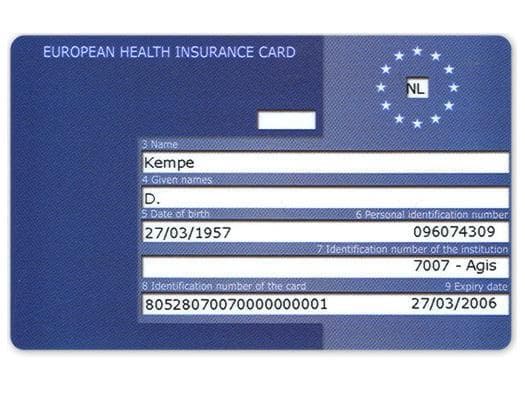
- EU/EEA/Swiss students: Students from EU, EEA, or Swiss countries do not require a visa. They can use a valid European Health Insurance Card (EHIC) issued by their home country to access necessary healthcare during their stay in France.
Bottom line for student visas: plan on securing at least a travel health insurance policy meeting the €30,000 coverage minimum before your visa appointment. Many students buy a one-year international student insurance or travel insurance policy that meets French requirements, then transition to French social security (CPAM) after arriving. Failing to provide proof of insurance can result in visa denial, so treat it as a crucial document alongside your university acceptance letter and proof of funds.
Work & Talent visas
For work-related visas (standard work visa or Talent Passport for professionals, researchers, entrepreneurs, etc.), insurance is essential but works differently once you integrate into the workforce.
If you will be employed by a French company from the start of your stay, you will generally be enrolled in the French public health insurance system through your employment. Employees in France are typically eligible via their job; however, administrative registration and issuance of a social security number may take several weeks, which is why temporary private coverage is often recommended after arrival. Your employer registers you with social security, and this grants you coverage (you receive a social security number and later a Carte Vitale). French consulates do not always require separate private insurance for a work visa if you can show you will be covered by the French system (for example a copy of your French work contract or an employer attestation). That said, interim private insurance is highly recommended and sometimes requested from the moment you land until work-sponsored coverage is fully in place. Delays of weeks or months before you receive all French insurance documents are common; a short-term private plan protects you in the meantime. For work visa routes, see how to obtain a French work visa and Talent Passport France.
For Talent Passport and self-sponsored categories:
- If you are not immediately employed by a French company (for instance you come to start a business or work as a freelancer under a Talent visa), you will not have an employer to register you in the health system on day one. Therefore you must obtain private health insurance covering your stay and present proof when applying. The policy should cover medical expenses, hospitalization, and emergency repatriation for the duration of the stay. While French regulations do not always specify one fixed minimum for every long-stay category, many plans used for visa applications provide coverage of €30,000 or more. It should be valid for at least your first year in France or until you can join the public system. Talent Passport applicants are often asked to show a one-year comprehensive policy. Basic short-term travel insurance may be considered insufficient if it only covers emergency care. Many applicants choose international health insurance designed for long-term stays.
- If you move with family members (spouse and children) under your work or talent visa, each dependent should also have health coverage. Often your French employer's plan or the public system will cover family once you are enrolled (spouses and children can be added as ayants droit). At visa application stage, provide proof for each family member: a family private policy or individual policies, with coverage dates aligned to the visa duration.
In summary, for work visas, prepare to show proof of health insurance even if you anticipate joining French Social Security quickly. A safe approach is to purchase a compliant travel or expat policy covering at least the first 3 months of your stay (or longer, up to a year, if required), meeting the €30,000 minimum and other criteria. That demonstrates you are covered from day one. Once you work in France, you transition to the national system; private insurance acts as a bridge. Do not assume a work contract alone is enough: check consulate lists. Many French consulates explicitly list proof of health insurance for work visa applications, as for students and visitors.
Visitor visa (private policy for entire stay)
If you apply for a long-stay visitor visa (visa de long séjour « visiteur »), the health insurance requirement is the strictest of all. Unlike students or workers, visitor visa holders will not be immediately working or studying in France, so you will not have automatic access to the French health insurance system. Therefore French authorities absolutely require that you carry private health insurance to cover your entire stay in France as a visitor.
For a visitor visa, your insurance certificate should clearly show:
- Coverage for the full duration of your visa (typically one year). The policy should start from your arrival date in France and last until your planned departure or visa expiration date.
- Comprehensive medical coverage including hospitalization and emergency repatriation for the full duration of the stay. While no official minimum amount is defined for all long-stay visas in every document, many policies used for visa applications provide coverage of €30,000 or more.
- Ideally, no major exclusions that would raise concerns (for instance if the policy explicitly excludes certain necessary treatments, the consulate might question adequacy).
- The insurer's details and confirmation that the policy is valid in France (and preferably the wider Schengen area, since visitor visas allow travel).
French consulates make this requirement very clear: failing to show suitable private health insurance will result in visitor visa refusal. Since visitor visa holders will not be employed in France, applicants must provide proof of private health insurance when applying. After establishing stable residence in France for several months, they may be eligible to apply for coverage under the French public system (PUMa), depending on their situation. Even after arrival, keep your private insurance active until you potentially enroll in the French system later (visitor visa holders can in some cases apply for French public health coverage after 3+ months residence, but it is not automatic). For official information on rights in France, see Service-Public.fr. For visitor routes specifically, our long-stay visitor visa France guide details insurance alongside funds and accommodation.
Retirees from the UK (or countries with similar arrangements): if you are a British citizen receiving a state pension and moving to France on a visitor visa, you might be eligible to use an S1 form instead of private insurance. An S1 is a certificate of entitlement to healthcare issued for pensioners moving abroad. French visa guidelines may accept a valid S1 as proof of health coverage for retiree visa applicants in relevant cases. If the S1 is not ready by the time of your visa, you would typically need private insurance and can adjust once your S1 is active. See NHS guidance on healthcare when moving abroad. For non-UK retirees or anyone not eligible for an S1, a private policy remains mandatory.
Bottom line for visitor visas: you must invest in a solid private health insurance plan and have the certificate for your visa application. Choose a plan you can rely on for at least a year in France, because you will depend on it for healthcare needs until you join the French system if you choose to and qualify. Expat or long-term traveler plans are appropriate: the policy should state coverage in France (or worldwide including France), meet the €30,000 minimum where relevant, and cover the full length of stay. A visitor visa application without solid health insurance proof is very likely to be rejected.
Need help with your French visa application?
Our team of experts assists you with all procedures to obtain your French visa, regardless of type.
More than 400 visas successfully obtained
Acceptable insurance providers & policy formats
Not all policies satisfy consular review. Officers check that documents meet requirements. Choose an acceptable provider and present coverage in the proper format.
Providers: France does not maintain one official worldwide list of "approved" insurers for every country. The general rule is that your company should be reputable and authorized to operate in France or at least in your home country. Purchase from a well-established provider (or broker) recognized internationally. Many applicants choose insurers that offer travel medical insurance for Schengen visas or international health insurance for expats. Examples of global insurers in this space include Allianz, AXA, Cigna, APRIL International, and SwissCare, among others. You do not necessarily have to buy from a French company: foreign insurers are acceptable if they can pay claims in France. Consulates often check that the insurer has a presence or partner in Europe, or that the policy clearly covers care obtained in France. Avoid tiny or obscure insurers that may not pass scrutiny. If your consulate publishes examples, use them as guidance.
Policy type: For long stays, the consulate wants to see a comprehensive health insurance policy intended for residents, not only basic travel insurance for tourists. In practice, many travel insurance plans still meet formal visa requirements (€30,000 and repatriation), but consulates are increasingly strict and may question a short-term travel policy if you are coming to live in France for a year. The safest approach is an international private medical insurance policy that explicitly covers long-term residence. Some insurers issue special "visa letters" or certificates stating suitability for French long-stay visa purposes. If you already have ongoing cover (for example an international policy from your employer), obtain a letter confirming it meets French requirements.
Format of proof: submit a formal certificate or attestation. A payment receipt or generic brochure is not enough. The document should be official (letterhead or branded PDF) and include:
- Full name matching your passport.
- Insurer name and contact details.
- Policy number.
- Coverage dates from entry through at least visa validity (or renewable annual cover clearly stated).
- Coverage amount (at least €30,000 where required, or "unlimited" on comprehensive plans).
- Scope: medical treatment, hospitalization, emergencies, repatriation. Wording such as "meets Schengen requirements" helps for travel products.
- No inappropriate territorial exclusions for France (worldwide or Schengen/France explicitly covered).
- Language: English or French for the consulate; translate or request an English certificate if needed.
Many insurers can provide an insurance certificate immediately upon purchase, which helps when visa timelines are tight. In rare cases there may be a short delay, so confirm with your provider if you need the document urgently.
When preparing your documents, ensure the certificate is printed clearly and signed or stamped if required. Some insurers provide digitally signed letters, which is usually acceptable. Bring a hard copy to your appointment even if you uploaded documents online. The name on the policy must match your passport exactly (including middle names where relevant).
Acceptable formats include a one-page certificate, a policy card with a detailed letter, or a policy schedule with a cover letter. Do not submit only an insurance card or a generic brochure: the consulate needs a readable document it can file, confirming required health insurance. If you already have a fixed address in France, listing it on the certificate can underline that the cover is for your stay in France rather than a short tourist trip (optional if you do not yet have an address).
In short, choose a trusted insurance provider and obtain a proper certificate of coverage. If anything is missing or unclear, ask the insurer to correct it before your appointment. Fixing issues in advance is far easier than arguing at the counter. A well-formatted certificate from a reputable provider supports a smooth decision.
How to buy compliant insurance before your visa appointment
Purchasing the right health insurance for your French visa might feel daunting, but it can be straightforward if you approach it step by step. Here is how to secure a compliant insurance policy before your visa interview.
- Determine the coverage period and requirements: First, verify how long your insurance needs to last and what it must cover. Generally, for a long-stay visa (VLS-TS), you need coverage for 12 months (or the entire planned stay if shorter). For a temporary stay (VLS-T) of 4–6 months, coverage for that duration is needed. For short Schengen visas (up to 90 days), coverage for the trip is required. The policy must include at least €30,000 in medical coverage, including repatriation where Schengen rules apply. Knowing these parameters helps you filter suitable plans.
- Research insurance providers and plans: Look for insurers that offer plans geared toward travelers or expats in France. If you are a student, some organizations provide student travel insurance packages for study abroad. If you move for work or as a retiree, consider international health insurers that cover long-term stays. Search for terms like "France visa health insurance" and check embassy recommendations. Focus on providers known for Schengen visa insurance or expat coverage. Ensure any plan explicitly mentions coverage in France (and the Schengen Area if applicable) and meets visa requirements.
- Compare policy features: Not all policies are equal, even if they meet minimum requirements. Compare shortlisted plans for coverage, price, and convenience:
- Does the plan cover all essential medical care or only emergencies?
- What is the coverage limit (some basic plans cover €30,000 exactly, others offer €100,000 or unlimited)?
- Is there a deductible or co-pay? (Lower or zero deductible is preferable for visa purposes.)
- Are pre-existing conditions excluded? (Visa officers may check exclusion clauses.)
- Does it include emergency repatriation and medical evacuation?
- Can you get the certificate in English or French immediately?
- Can the policy be canceled with a refund if your visa is refused? (Some insurers refund the premium minus a fee if you show proof of refusal.)
- Purchase the policy: Once you have chosen a plan, buy it online (often by card). Enter personal details exactly as in your passport. Be accurate with the dates: the start date should be on or before your intended arrival in France, and the end date should be at least the last day you plan to stay (for long stays, often one year from arrival). Padding a few days at the start and end can help if travel dates shift.
- Obtain the insurance certificate: After payment, download or receive the official certificate of insurance and policy wording if separate. Verify all required fields. If anything is missing, request a customized visa letter; many insurers are used to consulate requirements.
- Prepare copies for your application: Print the certificate. Keep at least two copies (one for the file, one spare). Ensure the document is in English or French; attach a certified translation if needed.
- During the visa appointment: Be prepared to answer briefly about your insurance if asked. Officers typically check that coverage is valid for the entire stay or that you will maintain it until you enter the French system, especially for long-stay visas.
- After obtaining the visa: Keep policy details when you travel. Carry the certificate in hand luggage. Border control may occasionally ask for proof of health insurance (uncommon for long-stay visa holders, but possible).
By following these steps, you can secure the necessary medical insurance for your France visa without unnecessary stress. If you find the process overwhelming, note that some agencies and brokers (and services like Hiliv) can assist in recommending plans that meet French visa criteria. The key takeaway is: do not leave the insurance purchase until the last minute. Give yourself time to compare and obtain the certificate so you are not scrambling before your appointment.
Switching to French Social Security after arrival (CPAM enrolment)
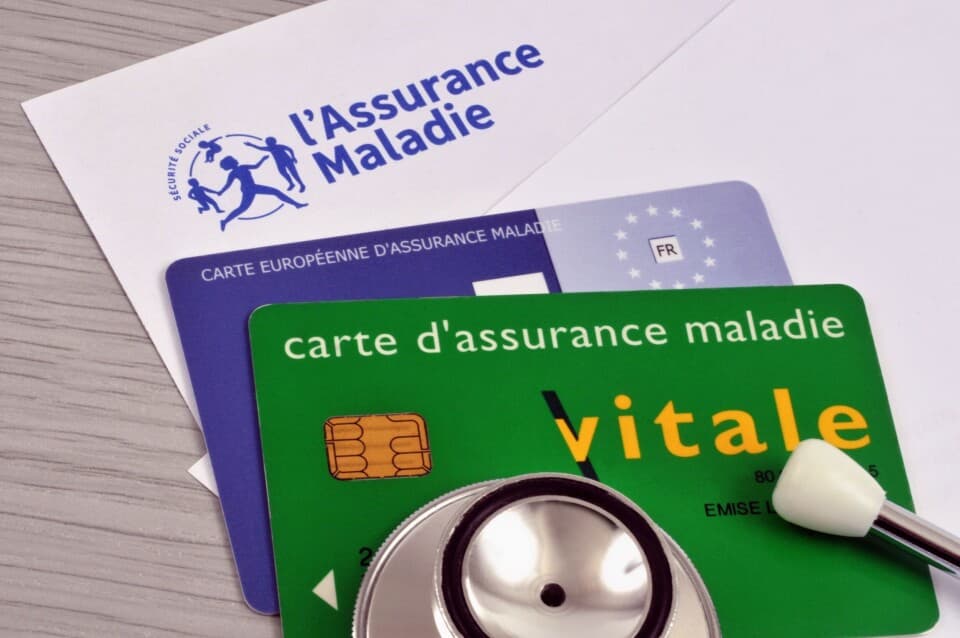
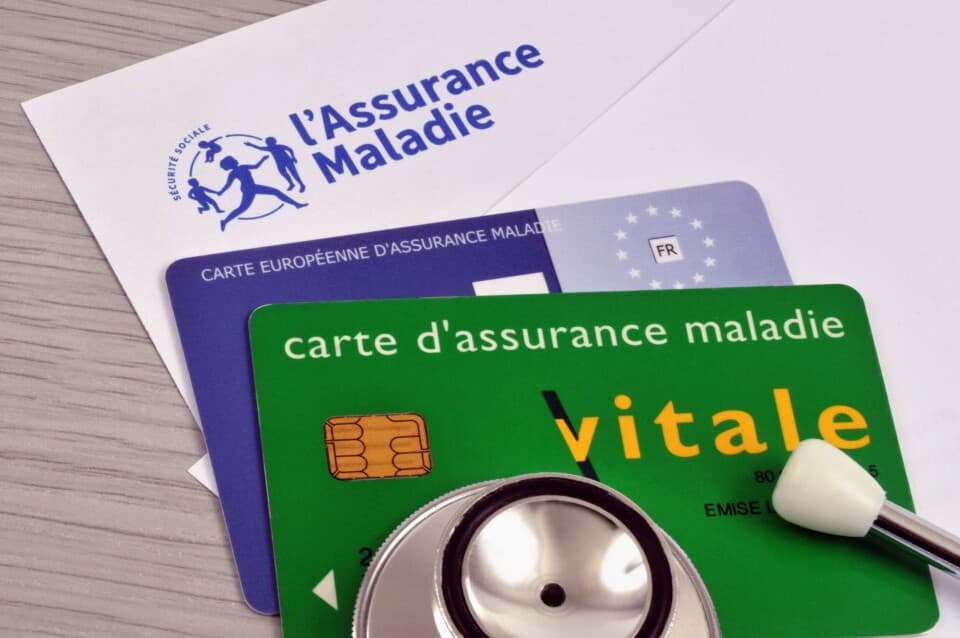
After arrival, most long-term residents aim to join the public healthcare system (Assurance Maladie / Sécurité sociale), administered locally by CPAM branches. Enrollment unlocks reimbursements similar to other residents. The process takes time and paperwork. Overview (Ameli, Cleiss for international social security information):
Eligibility and waiting period: Generally, foreigners living in France become eligible for public health insurance after establishing 3 months of residency in France when they are not immediately covered through work or studies. That means if you move on a visitor visa, you may need at least three continuous months of residence before applying to PUMa (Protection Universelle Maladie). During those initial months, private insurance is your primary coverage. Exceptions include: salaried workers (you do not have to wait: employment makes you eligible; HR registers you with social security, though you still complete forms); students (non-EU students on a long-stay visa must register for student health insurance when enrolled, without the same 3-month wait; enrollment is online and free via the foreign-student platform); family members of insured persons (you may be added as a dependent ayant droit without waiting 3 months in some cases, for example spouse of a French national once residence conditions are met).
Enrollment process: You typically submit an application to your local CPAM. Documents often include: proof of identity (passport); your visa and proof of legal residency (OFII validation, titre de séjour, or VLS-TS validation confirmation after arrival); proof of address in France; a birth certificate with certified French translation if not in French (needed for a social security number); marriage or family records for dependents; bank details (RIB) for reimbursements. Students enroll through the dedicated website; others may send a demande d'ouverture des droits to CPAM or use online services when available. You can find your CPAM on Ameli or by visiting an office.
Processing time: Enrollment is not instantaneous. You may first receive a temporary social security number or attestation; the permanent number and physical Carte Vitale can take months. The whole process often spans roughly 2–6 months before you are fully set up. During this period, keep your private insurance active. Do not cancel private cover as soon as you hit three months or immediately after mailing a CPAM dossier: wait until you have confirmation of rights. Many new residents assume they are covered once paperwork is sent, but until you have at least a temporary attestation from CPAM, you may have no guaranteed public coverage. Even after receiving a number, some services may not work fully until the process completes. Overlap private insurance with public enrollment to avoid gaps.
Using French healthcare: Once you have a social security number, you can use the public system: standard tariffs apply, and you are entitled to reimbursement of part of costs (often around 70% for a GP visit, higher shares for hospital care in many cases, unless you have full coverage for chronic conditions). You may pay upfront and be reimbursed later. The Carte Vitale, once issued, streamlines claims at the point of care. If you see a doctor before receiving the card, you can still claim via CPAM forms.
In France, public insurance usually reimburses part of expenses rather than 100% of everything. Many residents buy complementary insurance (mutuelle) to cover the remainder. Expats often add a mutuelle after joining CPAM; employers frequently provide one for employees.
Visitors and non-employed: After 3 months, you may apply to PUMa as a resident without employment, subject to assessment. If you live in France without working and have significant income or assets, you might be liable for a yearly health contribution (Cotisation médicale, sometimes called PUMa-related contribution) calculated by URSSAF for higher incomes. Average retirees or moderate incomes are often little affected; the important point is to understand your pathway into the system.
In summary, switching to French social security takes patience and paperwork, but the system is strong. Until you are enrolled and holding a Carte Vitale, your private health insurance remains your safety net. After full transition, you may drop duplicate international cover to avoid paying twice, but only when timing is safe. A good practice is to overlap private and public coverage briefly for extra security.
If you need help enrolling, university help desks support students; organizations such as Cleiss document cross-border social security rules, and Hiliv can guide you through CPAM registration steps as part of relocation support.
Need help with your French social security registration?
Our team of experts assists you with all procedures for your French social security affiliation.
More than 800 successful affiliations
Visa duration and insurance: matching your policy to your stay
Align your insurance with the exact duration and type of visa. Authorities expect continuous, comprehensive cover for the whole time you will be in France and, for Schengen trips, the wider area as required.
For Schengen short stays, stays are generally limited to 90 days in any 180-day period. Your certificate should cover emergency medical costs, repatriation, and necessary care for the whole trip, valid across Schengen states you will visit, from entry to exit. Reputable insurers email certificates immediately after purchase so you can upload them to your France-Visas file.
For long stays (work, study, family projects), the consulate expects comprehensive insurance for the entire planned stay, including hospitalization and ongoing treatment where relevant. If you have pre-existing conditions, ensure the policy does not exclude required treatment. Expiry before visa end is a common pitfall: match or exceed visa validity on paper.
Keep your dossier complete: passport, photos, insurance certificate, and any extra items the embassy lists. If officers need clarification, a provider experienced in France visa insurance can speed up responses.
Optional add-ons (cancellation, luggage) do not replace medical compliance but can help with travel risk. Wherever you go, keep the certificate with you and know how to contact your insurer's assistance line.
Conclusion: staying covered
The right health insurance is not a box-ticking exercise: it protects you from high costs and supports a smooth move. French rules exist so visitors and new residents can access care without shifting bills to the state.
From arrival until you leave or fully transition to public healthcare, avoid gaps. After you join Social Security, you may still want a mutuelle or travel cover for trips outside France. The first priority remains meeting visa conditions and the first months on the ground.
How Hiliv helps: Navigating options is easier with expert support. Hiliv specializes in helping international students, professionals, and families relocate to France with peace of mind. We partner with reputable insurance providers who know French visa requirements and can issue visa-compliant certificates. That helps you find competitively priced policies that still offer solid coverage beyond minimums. Our team can guide you in selecting a plan and ensuring your visa file includes the right documentation.
Support does not stop at the visa stamp. After arrival, questions often include how to enroll in CPAM, when to cancel private insurance, and whether you need a mutuelle. Hiliv can advise on those steps as part of relocation assistance. The goal is that you stay fully covered at every stage, from application to Carte Vitale and beyond, so health paperwork does not overshadow your move.
Key takeaways: always maintain proper health insurance when moving to France on a visa; skipping or under-buying can jeopardize a visa or leave you exposed in an emergency. With clear information (and expert help when needed), securing cover is manageable. Once insurance is in place, you can focus on your new life in France. Explore Hiliv's services if you want end-to-end support. Stay safe, stay covered, and welcome to France.
Frequently asked questions: France visa health insurance
Is a regular travel insurance policy enough for a French long-stay visa, or do I need full medical insurance?
For short visits (under 90 days or a non-renewable 6-month stay), a standard travel medical insurance policy is usually sufficient as long as it meets the €30,000 coverage rule and includes emergency hospital and repatriation. For tourist Schengen visas and temporary visas, consulates expect a travel insurance certificate. For long-stay visas (VLS-TS) that let you live in France for a year or more, travel insurance alone is often not enough: authorities want comprehensive health insurance as a resident, not only a basic vacation policy. Full international health insurance (expat insurance) typically covers routine care, prescriptions, and ongoing treatment, not just emergencies. Travel insurance may exclude follow-up visits, chronic conditions, or care beyond a time limit, and may impose age caps or pre-existing exclusions. Consulates have become stricter and may refuse a visa if proof is only a short-term travel policy. For a one-year visa (student, work, visitor, etc.), prefer a long-term private health plan. Some products marketed as one-year Schengen insurance can work if they meet all criteria; read exclusions carefully.
I have annual multi-trip travel insurance that covers each trip abroad up to 30 days. Can I use that for my French long-stay visa?
Usually no. Multi-trip policies limit each trip (30, 60, or 90 days). They suit people who return home between trips. If you relocate to France continuously, your stay is one long period that can exceed the per-trip limit, so coverage may lapse even if the plan is annual. Consulates expect insurance valid for every day of your stay in France without interruption. Your certificate must align with planned entry and exit or visa validity. Prefer a single-trip or continuous expat policy for a long single stay. If multi-trip is your only option, you would need insurer documentation stating full-duration coverage in France with no inappropriate per-trip cap; that is uncommon.
Do family members need separate health insurance for their visas?
Yes. Each applicant must show proof of health insurance. You can use one family plan if every person is listed as insured with correct dates. For children, ensure dependent coverage is explicit. If the main applicant has employer international cover that extends to dependents, obtain a letter stating dependents are covered in France; if that is slow, a short-term policy for dependents may be simpler for the visa file. Spouses of French or EU citizens sometimes access rights differently; still carry travel insurance for the initial period when in doubt.
What if I already have international health insurance from my employer or home country?
You may not need a new policy if your existing plan covers you in France and you can obtain a certificate in English or French stating: your name (and dependents), France/Schengen in the coverage area, period matching the visa, at least €30,000 medical expenses and repatriation, and equivalence to comprehensive cover. Some regional or US plans only cover emergencies abroad with low limits or reimbursement models consulates dislike; those may not suffice. When in doubt, add a compliant travel policy for the application while relying on your main plan after arrival.
Will my French health insurance (CPAM) cover me immediately when I arrive?
Not immediately in most cases. Workers are eligible from a labor-law perspective but still complete registration. Students enroll at the start of school. Others may face a waiting period (e.g. around three months for some residence situations). The consulate therefore requires private insurance up front. Rely on private cover during initial weeks or months until CPAM confirms your rights, then transition to using your social security number or Carte Vitale.
What is the €30,000 Schengen travel insurance rule?
For short-stay Schengen visas, travel medical insurance must cover at least €30,000 for medical expenses, emergency hospitalization, and repatriation. Always verify current France-Visas wording and your consulate checklist.
Can visitor visa holders apply for French public coverage (PUMa)?
After stable residence and subject to conditions, some people can apply to PUMa; it is not automatic for everyone. Keep private insurance until any public enrollment is finalized.