How to Bring Your Pet to France: Requirements and Tips for Moving
Planning to move to France with your pet? Discover the essential requirements for microchipping, rabies vaccinations, and documentation for dogs, cats, and ferrets.

International Mobility Expert

Moving to France with your beloved pet can be an exciting adventure, but it also requires careful planning to meet all import regulations. Importing pets into France involves following specific legal and veterinary procedures to ensure compliance with EU and French laws. France allows pet animals such as dogs, cats, and ferrets to enter, but under strict rules designed to prevent the spread of diseases (especially rabies) and ensure animal welfare.
This guide will explain French pet import rules, vaccination and documentation requirements, and travel tips so you can bring your pet to France smoothly and safely. Short-nosed dogs, curious kittens, or any four-legged family members – with the right preparation, they can all enjoy la vie française with you!
France is a pet-friendly country, but there are important pets in France rules you must follow. In non-commercial movement (also known as non-commercial travel, when pets accompany their owners and are not for sale or transfer), you can bring up to five pets with you. All pets must be properly identified and vaccinated before entry. Failing to meet the requirements could result in your pet being turned away at the border or quarantined, and any costs incurred for quarantine, return transport, or other penalties will be at the owner's expense, so it's crucial to get everything in order well before your moving date. Below, we break down the key steps and tips to bring your pet to France successfully.
French Pet Import Regulations (Non-Commercial Travel)
When moving to France with pets, most people fall under non-commercial pet travel rules. Non-commercial means you (the owner) are traveling within 5 days of before or after pet and not selling or transferring ownership. If the owner cannot travel, an authorized person may accompany the pet instead, provided all official procedures and documentation are followed. It also limits the number of pets to 5 per person. Under these regulations, French authorities (customs and border veterinarians) will check your pet's identity and health documents upon arrival. Here are the fundamental France pet import rules to be aware of:
- Allowed Pets: Dogs, cats, and ferrets are the primary pets covered by the standard import rules. Other pets (like rabbits, rodents, reptiles, or birds) have their own special requirements, which you should check separately.
- Age Restriction: Puppies and kittens under 15 weeks old (under about 3.5 months) generally cannot be brought to France. This is because they are too young to complete the rabies vaccination process (which can only be done at 12 weeks old plus a 21-day waiting period). So, plan to only move with pets that are at least 15 weeks old and have had their shots.
- Arrival Checks: Upon entering France (or the EU), you must declare your pet at Customs. A customs officer may verify the microchip by scanning it and will review your pet's documents (vaccination record, health certificate or passport). Make sure to have these papers handy in your carry-on luggage. Importing a pet without declaring it can lead to fines or your pet being held, so never skip this step at the airport or border crossing.
- Five-Pet Limit: If you have more than five pets, special rules apply. The maximum can exceed five if the animals are more than six months old and you provide written proof of their registration to compete or participate in exhibitions, competitions, or sporting events. For most people, though, the five-pet limit is sufficient.
- Banned Dog Breeds: France prohibits the import of certain dog breeds classified as "Category 1" dangerous dogs. These include dogs resembling pit bulls (American Staffordshire Terrier without pedigree), Mastiff-type dogs, and Tosa (without pedigree). If you have a dog that might fall under these categories, check French regulations carefully – you may not be allowed to bring it at all. Category 2 breeds (like Rottweilers or pedigreed Staffordshire Terriers and Tosas) are allowed entry with restrictions. You'll need to show pedigree papers to prove the breed, and once in France, you'll have to follow strict rules (such as leash and muzzle in public, and obtaining a special permit for ownership).
In short, French pet import regulations require that your pet is old enough, properly documented, and one of the allowed species/breeds for entry. Next, we'll delve into the two most critical health requirements: microchips and rabies vaccinations.
Besoin d'aide pour vos démarches administratives en France ?
Nos experts vous accompagnent dans toutes vos démarches de visa, titres de séjour et installation en France.
Microchipping and Identification (ISO Standards)
Microchipping your pet is an essential first step before moving to France. A microchip provides a permanent ID for your dog, cat, or ferret and is required by European law for pet travel. Here's what you need to know about microchips:
- ISO-Compliant Microchip: The microchip must meet ISO standard 11784/11785, which means it is a 15-digit, non-encrypted microchip operating at 134.2 kHz frequency. Most modern pet microchips are of this type. France also currently accepts AVID-9 and AVID-10 microchips. If your pet already has a microchip, double-check that it's ISO-compliant. Microchip IDs that are 15 digits long are usually compliant. The pet's microchip is essential for identification and must be properly registered with the relevant database to comply with import requirements.
- Non-ISO Chips: If your pet has a different kind of chip (for example, some older or US chips that have 9 or 10 digits), you have two options. The simpler option is often to get a second microchip implanted that does meet ISO standards. Your veterinarian can implant a new chip; just make sure both chip numbers get recorded on the health documents. The other option is to carry your own microchip scanner that can read your pet's chip when you travel, but this can be inconvenient and is not guaranteed to be accepted by all officials.
- Timing of Microchipping: It's vital that the microchip be implanted before or at the same time as the rabies vaccination. Why? Because the rabies shot's validity for travel is tied to a verified ID. If your pet was vaccinated for rabies but not yet microchipped at that time, the vaccination won't count for EU travel purposes. So if you're starting from scratch, microchip first, then vaccinate. If your pet already had a rabies vaccine but no chip, you will need to chip them and then revaccinate for rabies to meet the requirement.
- Legible Tattoos: One exception – if you have an older pet with a clearly legible tattoo identifying it, and that tattoo was applied before July 3, 2011, it can be accepted in lieu of a microchip. However, in practice most people will need the microchip. A tattoo after that date or an illegible one won't be accepted.
Microchipping is not just a bureaucratic hurdle; it's also a good idea for your pet's safety. It greatly increases the chance of reuniting if your pet gets lost during travel or after you settle in France. Just remember to update your contact information in the microchip registry when you have a new address in France!
Vaccination Requirements (Rabies Shot and Waiting Period)
The rabies vaccination is the cornerstone of pet import requirements. France, like all EU countries, is rabies-free and intends to stay that way, so they mandate strict rabies vaccination rules for incoming pets. Here's what to do:
- Valid Anti Rabies Vaccination: Your dog, cat, or ferret must have a valid anti rabies vaccination administered by a licensed veterinarian for entry into France, and the vaccine must be valid at the time of entry. This means the shot was given according to the manufacturer's guidelines and is not expired. Many rabies vaccines are good for 3 years, but if it's the pet's first-ever rabies vaccination or the first after an old vaccine expired, it is considered a "primary rabies vaccination" which is only valid for one year in the EU. So even if you got a 3-year vaccine, treat it as a 1-year vaccine if it's the first in your pet's record. Keep the vaccine certificate safe – it will be needed for travel documents.
- Timing – 21-Day Waiting Period: Plan ahead, because after the rabies shot is administered, you must wait at least 21 days before your pet can enter France. Day 0 is the date of vaccination, so travel is possible on day 21 or later. For example, if your pet got the rabies vaccine on January 1st, the soonest you could arrive in France would be January 22nd. This waiting period only applies to the first rabies vaccination (or a late booster given after a lapse). For subsequent on-time boosters, as long as each booster is given before the previous one expires, no new 21-day wait is needed for travel – your pet is continuously considered immunized.
- Unlisted Country – Blood Titer Test: If you are coming from a country with a high risk of rabies (countries that the EU does not consider rabies-controlled), additional steps are required. In those cases, your pet needs a rabies antibody titer test. This blood test must be done at least 30 days after the rabies vaccination and then the sample is sent to an EU-approved lab. The result must show sufficient antibodies (≥0.5 IU/ml). After the blood is drawn, you then have to wait 3 months before entering the EU. This is a long lead time, so if there's any chance your country is not on the EU's list of low-risk countries, start this process many months in advance. The good news: the USA, Canada, UK, Australia, New Zealand, and many others are on the approved list, so pets from those places do not need the titer test – just the microchip and rabies vaccine will suffice. If unsure, check the EU or French agriculture ministry website to confirm your country's status.
- Other Vaccines and Treatments: Aside from rabies, France doesn't require other specific vaccines for import. However, it's wise to have your pet up-to-date on core vaccines (like distemper, parvo for dogs, feline viral diseases for cats) for their own health. If you are traveling onward to places like the UK or Ireland from France, you must have your dog treated against the tapeworm Echinococcus multilocularis by an EU veterinarian between 1 and 5 days (24-120 hours) before entering those countries. All details of the treatment must be entered in your pet's passport or health certificate. The anti-Echinococcus treatment is not required for dogs travelling directly between these countries. But again, France itself doesn't impose it on entry.
In summary, vaccination requirements for France pet import boil down to having a current anti rabies vaccination done after microchipping, and observing the necessary wait time. Always travel with the original rabies vaccination certificate or record, as this information will be recorded on your pet's passport or health certificate.
Required Documentation (EU Pet Passport vs. Third-Country Health Certificate)
Documentation is where a lot of pet owners get tripped up, but it's actually straightforward if you know which paper you need. The documents serve to prove the above requirements (microchip and vaccines) are met, and to declare your pet's health status.
If you are coming from within the EU (or returning to France after a stay abroad), your pet should travel with an EU Pet Passport. This is a small blue booklet (with the EU flag logo) issued by licensed veterinarians in EU countries. It contains your pet's identification details and records of its microchip number, rabies vaccination, and other vaccinations or treatments. If your pet already has an EU passport from another country (for example, you lived in Germany and your dog has a German-issued EU pet passport), that passport is valid for entry into France. Just make sure the rabies vaccination in it is up to date. An EU pet passport is the gold standard document because it's recognized across Europe for travel. Even if you are starting in France, once you settle, you can get a French pet passport issued by a local vet, which will make any future trips (even back home or around Europe) much easier. These rules apply to any EU member or EU member states, so always check the specific requirements for the country you are traveling from or to within the EU.

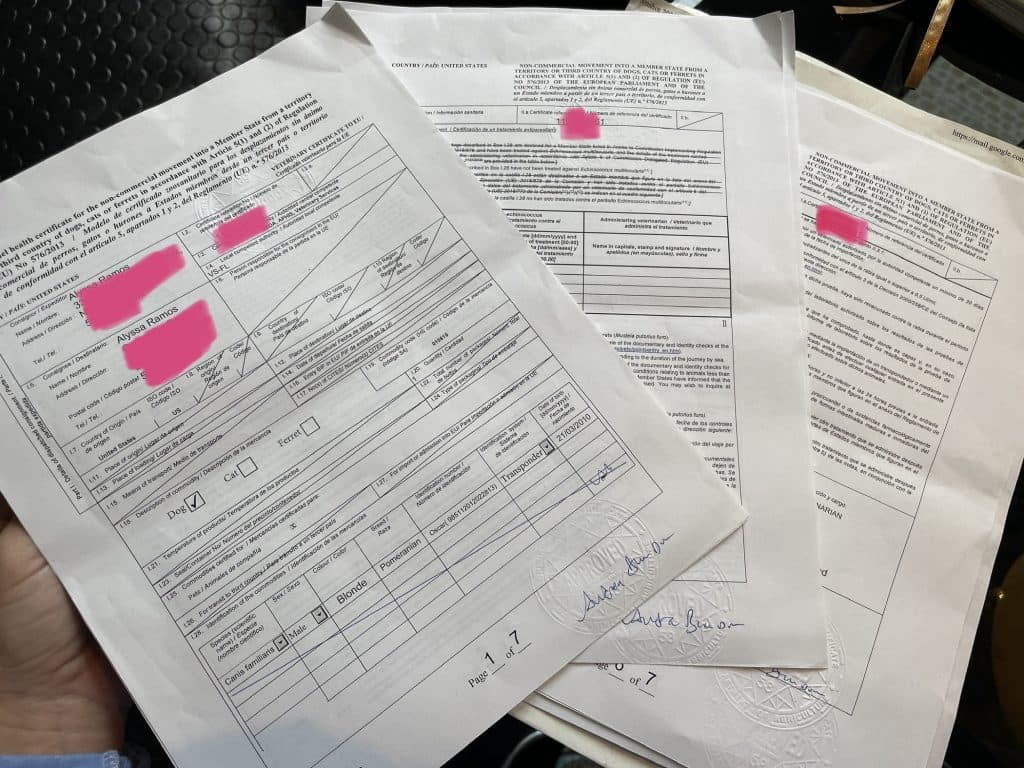
If you are coming from a non-EU country (which includes the UK now, as well as the USA, Canada, etc.), you will need an EU health certificate for entry. This is an official document required by EU regulations, sometimes informally called a "third-country health certificate." Key points about this document:
- It is an official form that must be filled out by an accredited veterinarian in the country of departure, then endorsed by the official government authority (for example, the USDA if coming from the United States, or DEFRA if coming from the UK). Essentially, a government vet or agency stamps/signs it after your local vet completes it. Note: For non-commercial certificates from the US, the pets must arrive in the EU within 10 days from the date the USDA endorses the certificate. For commercial certificates, the pets must leave the US within 48 hours from the date the Accredited Veterinarian issues the certificate.
- The health certificate form is standardized for the EU. It will have sections to record your pet's microchip number and date, rabies vaccination date, vaccine manufacturer, batch number, expiration, and (if applicable) the rabies titer test details. It also includes a declaration that you are moving the pet for non-commercial, personal reasons.
- The timing depends on certificate type: for non-commercial certificates, pets must arrive in the EU within 10 days from USDA endorsement. For commercial certificates, pets must leave the US within 48 hours from when the Accredited Veterinarian issues it. After entry, it remains valid for travel within the EU for up to 4 months (or until the rabies vaccine expires, whichever comes first). So if you land in France and then plan to drive to another EU country a month later, the same certificate would cover that travel too.
- The certificate will be in the language of the entry country (France) and English. Usually, it's a multi-page form. Be sure all information is 100% correct – even a small typo in the microchip number could cause problems at customs. Double-check everything with your vet.
- You must also attach or carry with you the supporting documents: the rabies vaccination certificate, and if required, the rabies titer lab report, as well as your written declaration of non-commercial transport (this is typically a one-page statement you sign, often provided with the certificate form). Your vet or the endorsing authority will usually give you all needed papers.
- In some cases, an import permit may be required, especially for certain animals, unaccompanied pets, or specific breeds. Always check if your pet require an import permit before travel.
When you schedule your vet appointment for the health certificate, a clinical examination by a licensed veterinarian is required as part of the process to confirm your pet's health status and compliance with travel regulations.
Upon arrival, the French customs officer will review the health certificate (or pet passport) and may keep a copy. If everything is in order, your pet will be allowed in with no quarantine. France does not impose quarantine on pets that meet all the import requirements – one of the big reliefs for pet owners moving internationally!
Tip
To bring pet to France, your pet require proper documentation and health checks to ensure smooth entry and compliance with French and EU regulations.
Traveling with Your Pet (Airline Rules, Pet Carriers, and Comfort Tips)
Travel day is often the most stressful part – for both pet and owner. Being prepared will make the journey smoother. Here are some crucial considerations when traveling with your pet to France:
- Airline Pet Policies: Every airline has its own pet policy, so start by checking directly with your chosen carrier about their rules for pet travel. Most major airlines allow small cats and dogs in the cabin if the pet in its carrier is under a certain weight (commonly around 8 kg or ~17 lbs). Larger pets have to fly in the cargo hold as checked baggage or air cargo. There are usually limits on the number of pets per flight, so book your pet's spot early. When you reserve your own ticket, call the airline to add your pet and get confirmation. There will be a pet travel fee and specific instructions to follow. Note that pet's transport is classified as either non-commercial or commercial, and each type has different requirements for documentation and conditions, so check which applies to your situation. Important: Not all airlines accept pets - for example, Ryanair and EasyJet do not carry animals at all, and some airlines like British Airways only accept service dogs in cabin, requiring pets to be transported separately through partners like PetAir UK.
- Approved Pet Carrier: Invest in a sturdy, airline-approved pet carrier or kennel. For in-cabin travel, a soft-sided carrier that fits under the seat is usually required – the pet must be able to stand up and turn around in it. For cargo, an IATA-compliant hard kennel is needed. It should be well-ventilated and large enough for the animal to move comfortably. Most airlines have detailed size requirements for kennels; you can often find these on their website. Label the carrier with your contact information, destination, and "Live Animal" stickers. Inside the crate, include absorbent bedding and maybe a pee pad in case of accidents, plus a no-spill water bowl.
- During the Flight: If your pet is in cabin with you, they must remain in their carrier under the seat for the duration of the flight. You can usually reach in to calm them, but they can't roam around. Try to get a direct flight to France if possible to reduce travel time and stress. If your pet is flying in cargo, choose flights with minimal layovers and avoid extreme temperatures (morning or evening flights in summer, midday flights in winter). Many airlines will not accept pets in cargo if it's too hot or cold at any point in the route. Note: Snub-nosed (brachycephalic) breeds such as Pugs, Bulldogs, Boxers, Pekingese, Shih Tzus, Persian and Burmese cats are not permitted to travel in the holds of airplanes for health and safety reasons.
- Pet Comfort and Health: In the days leading up to travel, help your pet get used to the carrier by letting them spend time in it at home with treats and toys – so it feels like a safe space. On the day of travel, exercise your pet before leaving for the airport to tire them out a bit. Feed them a small meal no less than a few hours before the flight, so they aren't too full (to avoid nausea or potty incidents). Do offer water to keep them hydrated, and you can freeze a small dish of water that will melt slowly during the flight for them to drink (this is a handy trick for water bowls in the crate). Do not sedate your pet without veterinary guidance – most vets and airlines advise against tranquilizers because they can affect the pet's breathing at high altitude. Instead, consider natural calming aids if your vet approves, like a pheromone spray in the carrier or a mild calming treat.
- Documents for Travel: Carry copies of your pet's documents with you in your carry-on. Some countries (and airlines) require seeing the health certificate and vaccination proof before boarding. It's also smart to have a pet ID tag on your animal's collar with your phone number (and maybe a temporary tag with your travel info). In case of an unexpected layover or inspection, having everything on hand avoids panic.
- Plan for Arrival: Check the arrival airport's procedure for pets. Major airports in France (Paris Charles de Gaulle, Orly, Nice, etc.) have customs checkpoints where you present your pet and paperwork. Important: Not all border control posts (BCP) are authorized to control pets. You must, before boarding, find out about the competence of the BCP at your point of entry. Approved international airports in France include Paris CDG, Paris Orly, Nice, Lyon, Marseille, Reunion, and Toulouse. Follow the signs or ask staff where to go for pet clearance. Typically, if you're coming from a non-EU country, you'll clear your pet at the first EU airport you land in. So if you have a connecting flight in Europe before reaching France, you might go through the pet check there. Keep that in mind when booking connections – ensure you have enough layover time (at least 2-3 hours) to go through the process without stress. If you are traveling with more than five pets, be aware that exceptions to the five-pet limit may apply for animals traveling for exhibitions, competitions, or sporting events, provided you have proof of registration or participation in such events.
Traveling with a pet may seem daunting, but thousands of pets fly every year and do just fine. By complying with airline rules and prioritizing your pet's comfort and safety, you greatly increase the chances of a smooth trip. It can be helpful to talk to your vet about any concerns; some pets might benefit from anxiety treatments or motion sickness medication, but always get professional advice for those.
Lastly, consider how you will transport your pet from the airport to your new home in France – have a plan for a pet-friendly taxi or rental car. After a long flight, you both will be eager to get home and relax.
Endangered Species and Pet Travel
Traveling to France with pets that are considered endangered species—such as certain birds, reptiles, amphibians, or specific dog breeds—requires extra planning and strict adherence to international and European Union regulations. The EU, in line with the Convention on International Trade in Endangered Species of Wild Fauna and Flora (CITES), has implemented robust measures to protect endangered species and regulate their movement across borders.
CITES Permits and Export Health Certificates: If your pet is an endangered species, you must obtain a CITES permit before travel. This permit is issued by the relevant authorities in your country of export and is essential for legal international trade and movement of these animals. Alongside the CITES permit, you'll need an export health certificate issued by a USDA accredited veterinarian (for US residents) or an authorized veterinarian in the EU. This health certificate must confirm your pet's identity, health status, and compliance with all destination country requirements.
EU Health Requirements for Endangered Species: For dogs, cats, and ferrets, the European Union requires a valid EU pet passport or an official health certificate. Your pet must be microchipped, and the rabies vaccination must be up-to-date and recorded in the health certificate. In some cases, a rabies antibody titration test may be required, especially if your pet is coming from a country outside the EU or a country not listed as rabies-controlled. The rabies vaccination must be administered by a licensed veterinarian, and all details—including vaccine manufacturer and batch number—should be accurately recorded.
Pet Birds and Avian Influenza Regulations: If you are moving to France with pet birds, additional rules apply. The EU has strict regulations to prevent the spread of avian influenza (bird flu). You must obtain a health certificate issued by an official veterinarian, and provide a declaration that your bird is not intended for commercial purposes. Pet birds must have an identification number such as a clip, leg band, microchip, or tag. If identification is not possible, a description of the birds is sufficient if they will be moved to an approved quarantine establishment. It's also crucial to ensure your pet bird is not listed as an endangered species under CITES. Always check the latest official health information related to avian influenza and other diseases before travel.
Special Dog Breeds and Endangered Species Permits: Certain dog breeds, such as the American Staffordshire Terrier, Staffordshire Terrier, and Tosa, are subject to special regulations in France and the EU. If your dog is one of these breeds, you must provide a registered pedigree to prove its lineage and comply with all EU rules on the movement of endangered species. Without proper documentation, these breeds may be refused entry or require additional permits. Always consult with your veterinarian and the relevant authorities well in advance to ensure you have all necessary paperwork.
Transporting Endangered Species: When transporting live animals, including endangered species, you must follow International Air Transport Association (IATA) standards for pet carriers and travel. The pet's transport must be approved by the destination country, and you should always check with your airline and the French authorities for the latest requirements. Each pet must have its own valid EU pet passport or health certificate issued by a licensed veterinarian, and all documentation should be kept with you during travel.
Besoin d'aide pour vos démarches administratives en France ?
Nos experts vous accompagnent dans toutes vos démarches de visa, titres de séjour et installation en France.
After Arrival (Veterinarian Visit and Local Registration)
Bienvenue en France! Now that you and your pet have arrived, there are a few important steps to take to ensure your pet's continued health and legal compliance in your new country.
1. Schedule a Post-Arrival Vet Visit
Within the first week or two after you settle in, find a local veterinarian and take your pet for a check-up. This visit serves multiple purposes:
- You can verify that your pet is healthy after the journey and get advice on any health concerns specific to France (for example, certain parasites or vaccinations common in the region). France has ticks and leishmaniasis in some areas, so your vet might recommend preventative treatments.
- Take this opportunity to discuss getting an EU Pet Passport (if you moved from outside the EU). Show the vet your pet's health certificate and vaccination records. Most French vets can issue an EU pet passport on the spot or within a short time, transferring the details from your documents. The passport will make any future travel or even routine checks easier, as it consolidates all info.
- If your pet's rabies vaccine will expire soon or did expire during travel, the vet can administer a booster. Always keep the rabies up to date annually or triennially as required – it's not only important for travel but also if you want to take your dog to certain public places or kennels in France.
- If you have other animals, such as ornamental aquatic animals or ornamental fish, consult your veterinarian about any additional local requirements or registration procedures that may apply to these pets.
2. Microchip Registration in France: I-CAD
France maintains a national pet identification database called I-CAD for all dogs, cats, and ferrets. When you move to France, you should register your pet's microchip with I-CAD so that your French address and contact information are linked to that microchip number. If your pet was imported with a foreign microchip, it's still readable by French vets and shelters, but if it's not in the French database, there could be delays in reaching you if your pet gets lost. During your vet visit, ask the vet about registering the microchip. Often, the vet can help you submit the paperwork to I-CAD. You may need to provide proof of ownership and your new address. This registration is important because in France, by law, dogs and cats should be identified and the owners' info kept updated. Also, if you ever sell or transfer the pet in France, that must be recorded in the database. For now, as a new arrival, just make sure you are listed as the owner at your French address. The registration is called I-CAD registration and is required for any pets residing in France for more than three months.
3. Local Rules and Lifestyle Adjustments
After arriving, it's also a good idea to familiarize yourself with local pet regulations and norms. France is generally very welcoming to pets – you'll find dogs allowed in many parks and even some restaurants. But there are rules to follow:
- Dog Licensing/Permits: France doesn't have a universal dog licensing system like some countries. The microchip registration largely serves as identification. However, if you have a dog of a restricted breed (Category 2), you are required to obtain a permit from the local town hall (mairie). This involves a behavioral evaluation of the dog by a vet and sometimes attending training courses. If this applies to you, get started on it soon after arrival.
- Leash and Muzzle Laws: Keep in mind that in public spaces, dogs are usually required to be on a leash. Certain dogs (again, typically the Category 2 breeds) must wear muzzles in public by law. Even if your pup is the friendliest on the block, abide by these rules to avoid fines and conflicts.
- Pet Etiquette: The "petiquette" in France includes cleaning up after your dog (many cities have strict fines for not picking up waste – carry those little bags!), and keeping noise to a reasonable level if you live in an apartment. Neighbors in France can be particular, so a constantly barking dog could become an issue – something to be mindful of as your pet adjusts to the new environment.
4. Settling Your Pet In
Just like you, your pet might experience a bit of culture shock or jet lag. Give them time to adjust. Provide a quiet space at home with their familiar bed and toys. Re-establish routine as soon as possible – feeding times, walks, playtime – to give them a sense of normalcy. Exploring your new neighborhood together can be fun and will help your pet become comfortable with the sights, sounds, and smells of France. You might notice different pet food brands; if your pet's diet changes, transition gradually to avoid stomach upset. Also, consider connecting with local pet owners or joining social media groups – it's a great way to get tips about pet-friendly spots and perhaps make new friends for both you and your furry companion.
By following these steps after arrival, you'll ensure your pet stays healthy, legal, and happy in their new French home. France truly loves its animals – veterinary care is high-quality, and you'll soon see pets accompanying their owners in cafes, on trains, and more. With the paperwork and initial tasks out of the way, you can fully enjoy the experience of living in France with your pet by your side.
Hiliv Can Help
Bon voyage et bonne installation – we wish you and your pet a smooth move and a wonderful new life in France!
Frequently Asked Questions
Can I bring my puppy or kitten to France?
Generally, no, if they are under 15 weeks old. Pets must be at least 12 weeks old to receive their rabies vaccine, and you must wait 21 days after the shot before they can enter France.
Is there a quarantine for pets entering France?
No, France does not impose a quarantine on pets as long as they meet all the health and documentation requirements (microchip, rabies vaccine, health certificate).
What are Category 1 and Category 2 dogs?
Category 1 dogs are considered dangerous and are prohibited from being imported into France (e.g., Pitbull-types without pedigree). Category 2 dogs (e.g., Rottweilers, pedigreed Staffies) are allowed but require a special permit, insurance, and must be leashed and muzzled in public.
How do I register my pet in the French I-CAD database?
You must visit a French veterinarian. They will verify the microchip and submit the registration paperwork to the I-CAD database with your new French contact details.
Do I need a rabies titer test if coming from the USA or UK?
No, the USA, UK, Canada, and Australia are considered rabies-controlled countries. You only need a microchip and a valid rabies vaccination (plus the health certificate).
What is the non-commercial movement rule?
It means the pet is traveling with its owner (or within 5 days) and is not intended for sale or transfer of ownership. You can bring up to 5 pets under this rule.
Moving with a pet is a journey of its own. By following these regulations and preparing well in advance, you ensure that your furry friend arrives safely and ready to enjoy their new life in France. Bon voyage et bonne installation!