Long-Stay Visitor Visa France (VLS-TS Visiteur): Complete Application Guide 2026
Step-by-step guide to the French long-stay visitor visa (VLS-TS): eligibility, proof of funds, health insurance, accommodation, France-Visas application, ANEF validation, renewal, and pitfalls.

International Mobility Expert
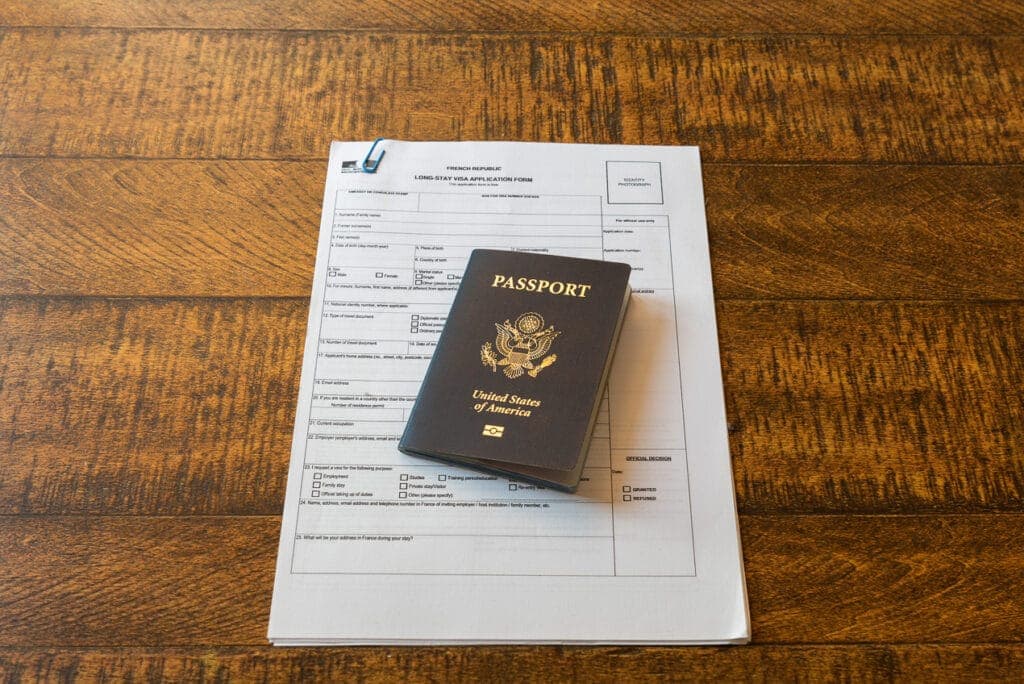
The long-stay "Visiteur" visa is a specific visa category that lets non-EU nationals (like Americans) live in France for up to 12 months without employment.
Citizens of the European Union, EEA, and Switzerland do not require this visa to visit France or reside for extended periods. Travelers from many countries can visit France for short stays without a visa, but a long-stay visitor visa is required for longer stays.
This visa is a type D visa (VLS-TS) valid between 4 and 12 months. When the intended stay exceeds 12 months, a standard 3-month long-stay visa (VLS, not VLS-TS) is issued instead, which requires the holder to apply for a residence permit at the prefecture within 2 months of arrival - this is a distinct document type.
The applicant can travel freely in the Schengen area (up to 90 days per 180 days) under the Schengen rules. Ideal uses include spending a year in France for retirement, long-term travel, language immersion, or accompanying a partner.
This guide covers who can apply as an applicant, all requirements, step-by-step application tips, renewal or conversion options, and common pitfalls to avoid. Eligibility depends on the applicant's personal circumstances, such as retirement, family ties, or personal projects.
Besoin d'aide pour votre visa visiteur pour la France ?
Notre équipe d'experts vous accompagne pour obtenir votre visa visiteur français en toute sérénité.
Plus de 150 visas visiteur obtenus
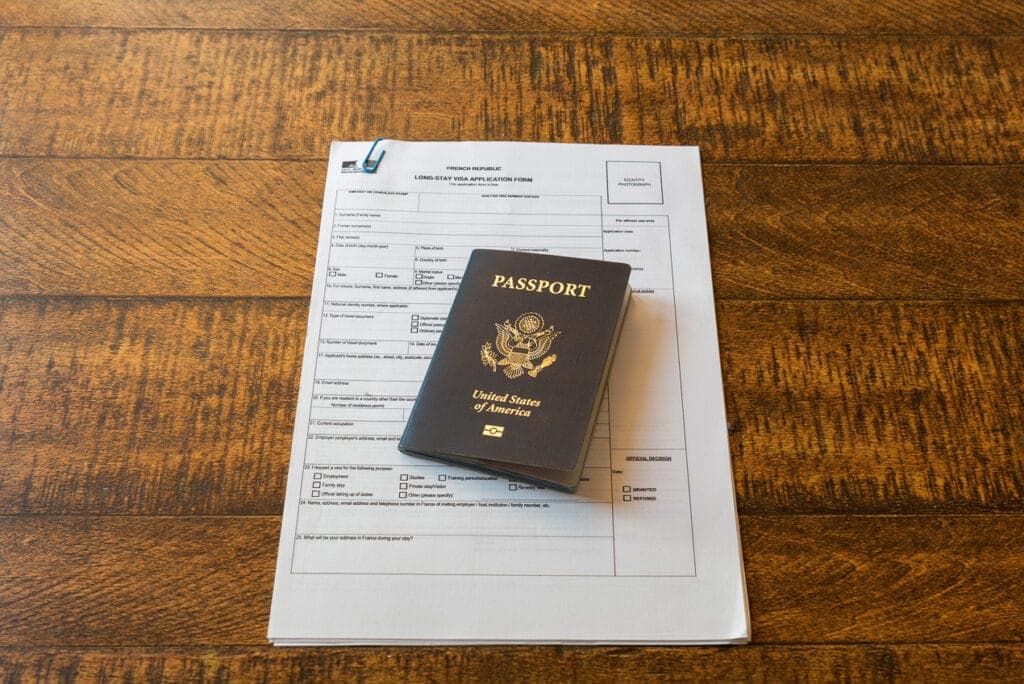
Who Needs the Long-Stay "Visiteur" Visa?
The "Visiteur" visa is for people who want to stay in France for personal reasons without working. Eligibility for the long-stay visitor visa depends on the applicant's personal circumstances, such as retirement, family connections, or personal projects. Typical eligible applicants include:
- Retirees or pensioners: Foreigners living off a pension, savings, or investment income who wish to retire or spend a sabbatical year in France. (Our guide fits keywords like "retire in France visa".)
- Remote workers (digital nomads): Those employed by a company abroad or freelancing for foreign clients. You must not be employed by a French company and should pay taxes abroad. Your main income source must come from outside France, but you can work remotely from France. Note: the visitor visa formally prohibits any professional activity on French territory. The legality of remote work for a foreign employer from France on a visitor visa sits in a legal grey area and is not explicitly authorized. Applicants must sign a sworn statement that they will not engage in any professional activity in France.
- Family of French residents: Non-EU spouses or partners of French (or EU) citizens or legal residents, including PACS partners or concubines. These applicants already have personal ties in France but need the visitor visa if they won't work. Note: spouses of French citizens are generally eligible for a dedicated "private and family life" VLS-TS, which is often more appropriate than the visitor visa.
- Parents of children in France: Foreign parents (not covered by other family visas) of a minor studying in France, or foreigners coming to stay with family members who will support them.
- Others on a personal project: People taking a career break, sabbatical, or simply immersing in French life for a year.
All applicants must formally promise not to work in France. This sworn statement is a required document in the application file (see document requirements below). If you later find a job or want to study, you must convert your visa status (see "Renewing or Converting" below).
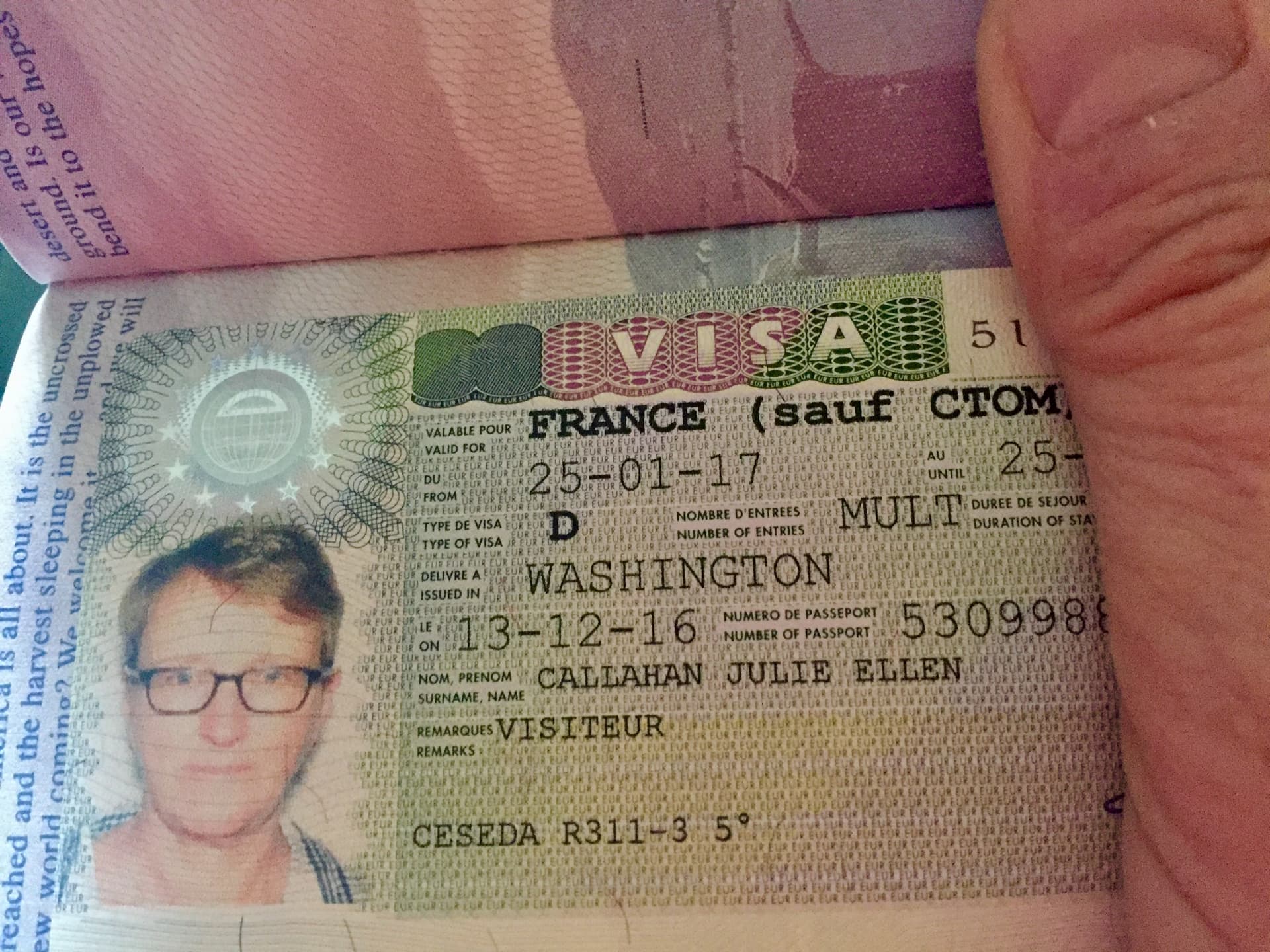
Eligibility & Key Requirements
Applicants must meet all of the following requirements to be considered for a French long-stay visitor visa. French authorities require solid proof of self-sufficiency. Key requirements include the following:
- Proof of sufficient financial means to support yourself during your stay.
- Valid health insurance covering your entire stay in France.
- A passport with sufficient validity, at least 3 months beyond the expiry date of the visa requested (not your departure date), and at least 2 blank pages. The passport must also have been issued within the last 10 years.
- Payment of all required fees for the visa application process; these fees are generally non-refundable, even if the application is unsuccessful.
- A sworn statement that you will not engage in any professional activity in France, accompanied by a letter explaining your project and purpose of stay.
- A detailed travel itinerary.
- A criminal record (police clearance certificate) of less than 3 months, from your current and previous places of residence. This is a required document per the official French consulate checklist that the article currently omits entirely.
The long-stay visitor visa does not grant work authorization in France. Applicants wishing to work must apply for a specific employment or self-employment visa.
Proof of funds (no fixed official threshold - approximately the SMIC as a benchmark)
You must demonstrate you have enough money to live in France without working. There is no single legally fixed income threshold for the visitor visa; requirements are assessed on a case-by-case basis by each consulate. As a common benchmark, consulates often refer to the net SMIC (approximately €1,426/month in 2026), but this figure is not codified in law for this visa category. Each consulate may apply a different standard.
Consulates typically ask for bank statements, pension slips, rental income records, or other proofs to show your funds. Acceptable sources include pension/retirement income, rent or dividends from abroad, foreign annuities, or substantial savings. If your regular income is below the SMIC threshold, you can offset it with bank savings or assets that can easily be liquidated.
The goal is to show that you could live on about €1 400/month (or the equivalent yearly amount) for the duration.
You may also include a letter from a French sponsor (family member) if someone in France will guarantee your finances. Documents should be clearly organized, translated if not in French, and highlight the relevant amounts.
This sentence is misleading and not sourced from official guidance. Payment methods vary by consulate and service provider - always check directly with your consulate or VFS/TLS provider for accepted payment methods.
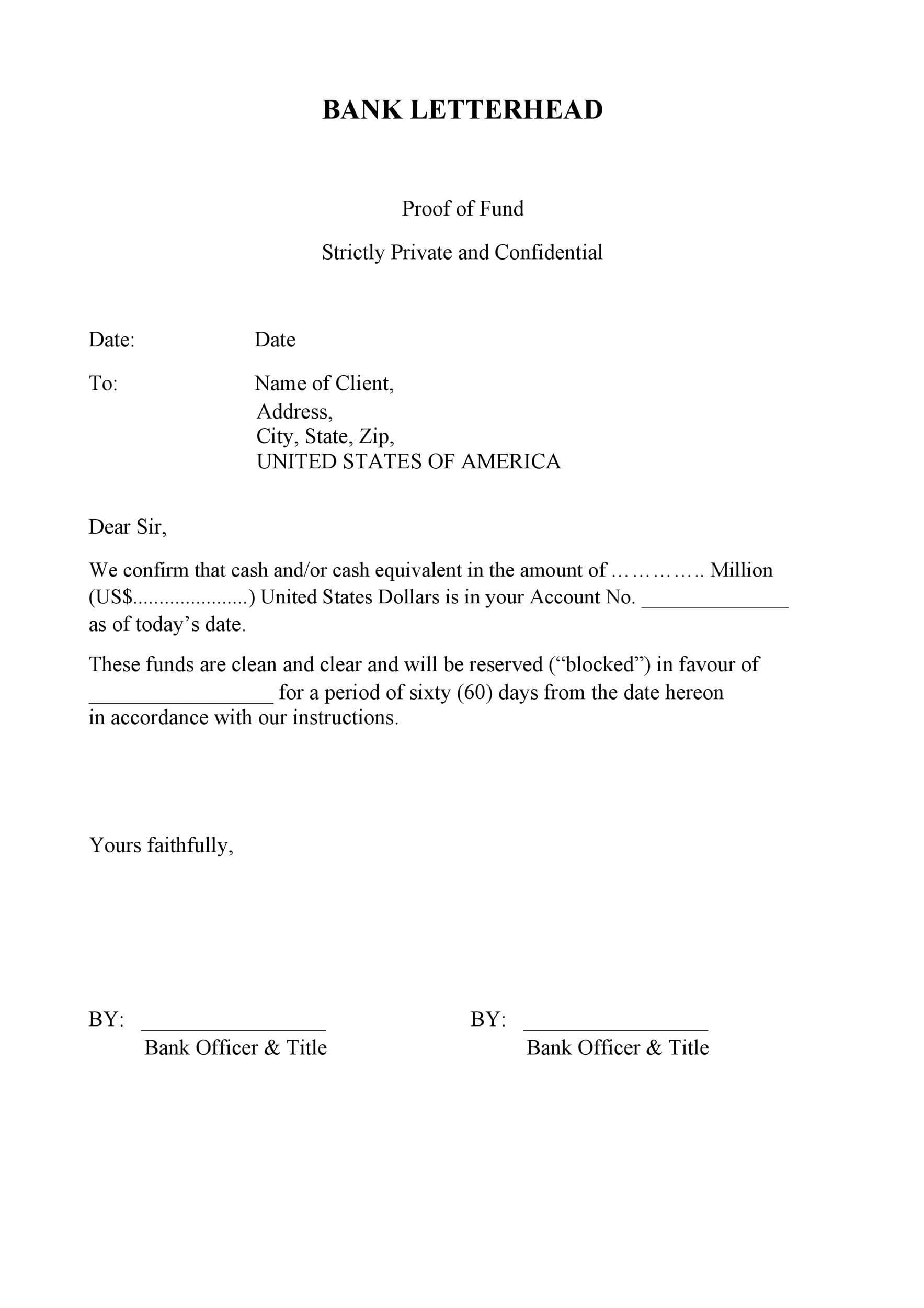
French medical-insurance proof
A visa-compliant health insurance policy is required for your entire stay. The policy must cover the full validity period of the visa (up to 1 year maximum). Official consulate guidance does not specify a minimum coverage amount of €30,000 or €100,000 in the context of the visitor visa (that threshold is specific to the Schengen short-stay visa). For the long-stay visitor visa, the requirement is simply comprehensive health insurance covering the full duration of the stay, including both in-patient and out-patient care and repatriation for both in-patient and out-patient care, plus repatriation, for the full visa period.
Standard travel or Schengen insurance is often not enough. Many applications are rejected due to insufficient insurance.
Common pitfalls to avoid: do not submit a policy with a deductible, limited coverage, or only emergency/repatriation benefits.
The S1 form is specifically for EU/EEA citizens entitled to state healthcare coverage from their home country. It is not relevant for the majority of non-EU applicants.
U.S. applicants should ensure any private plan clearly covers France. Access to PUMa is not automatic after 3 months for visitor visa holders. PUMa is designed for people working or residing stably in France; a visitor visa holder who does not work in France may not automatically qualify and should not rely on PUMa as a substitute for private insurance during the visa period.
The visa application requires proof of insurance up front. Always attach your insurance certificate (in French or with a clear translation) showing start/end dates and coverage details to the embassy file.

Proof of accommodation for at least 3 months
You need to show lodging arrangements for your stay. Typically this means proving you have secured housing or reservations for at least the first 3 months. For example:
- A copy of a rental lease or long-term hotel/apartment booking covering the initial stay.
- If staying with someone in France, a lodging document provided by the host is required. The "attestation d'hébergement" validated at the mairie (as described) applies specifically to short-stay Schengen visa requirements, not to long-stay visa applications. For a long-stay visitor visa, a simple letter from your host along with proof of their own accommodation (lease or title deed) is the standard requirement. The €32.50/day figure is a short-stay Schengen border entry requirement and should not be presented as a long-stay visa condition.
- If living in a furnished rental or Airbnb, provide the booking confirmation covering 3+ months.
Official consulate guidance (French Embassy document checklist) confirms that proof of accommodation must cover the full duration of stay. In practice, consulates often accept a 3–6 month booking and evidence you intend to extend (e.g. signed rental agreement or renewed reservation later). The key is to demonstrate you won't be homeless. Include all address details and proof of payments or deposits if available.
Step-by-Step Application Process
Follow these steps to apply for the VLS-TS "Visiteur" visa:
- Start online at France-Visas. Create an account on the official France-Visas portal and complete the long-stay visa application form. Select the "Visiteur" category (private stay, no work). The site's visa assistant will list required documents based on your nationality. Upload or prepare photocopies of everything: passport, photos, proof of funds, travel insurance, accommodation documents, sworn statement of non-activity, criminal record and a letter explaining your visit (motivation letter). Important: provide both originals and photocopies of all documents. Consulates cannot make copies on-site, and original documents submitted without photocopies will not be returned once a decision is made. Print out the completed application summary and appointment voucher when prompted.
- Book the consulate appointment. The France-Visas site will direct you to an external service provider (such as VFSGlobal or TLScontact) or the French consulate itself to schedule an in-person appointment. Applications cannot be submitted more than 3 months before your planned arrival date in France. On the day, submit your printed file, original passport, and pay the visa fee (€99 for this long-stay visa). Provide biometric data (fingerprints and a photo). Be sure to bring all requested documents in order; visa officers will not process an incomplete file. You can track the progress of your visa application online via the official France-Visas website.
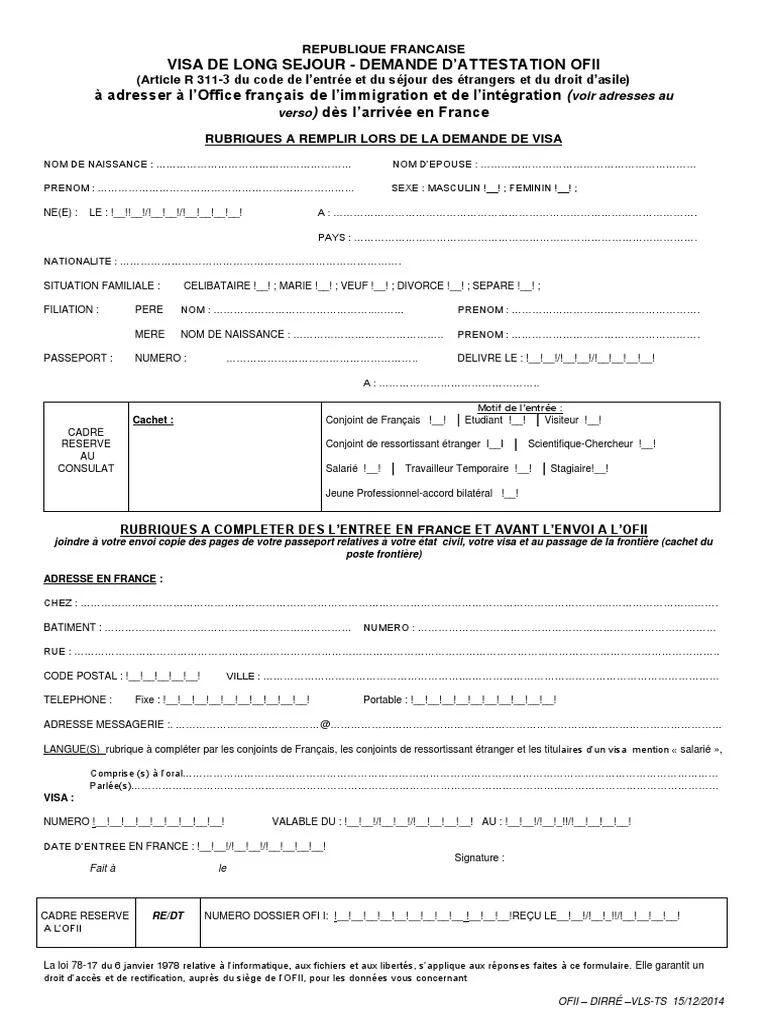
- Complete OFII validation after arrival. Once your visa is stamped in your passport and you arrive in France, you must validate it within 3 months. Go to the official (administration-etrangers-en-france.interieur.gouv.fr this is the ANEF portal managed by the Ministry of the Interior, not the OFII website).
Enter your visa information, date of entry, and French address. You will pay the required validation tax fee online The amount of the validation tax varies depending on visa type and personal situation. The article's figure of €250 is not confirmed by current official sources for the visitor visa specifically; you should verify the applicable amount on the ANEF portal at the time of your application. Certain categories may be exempt — check with your consulate or the ANEF portal. You will then receive a visa validation certificate (or sticker) that makes your visa equivalent to a residence permit. The prefecture or ANEF platform may later ask you to get a medical exam or sign an integration contract. If you do not register your VLS-TS on time, you lose legal status in France.
- After validation, keep the certificate with your passport. If you plan to stay longer, note that you must apply for a fresh residence permit at the prefecture at least 2 months before your visa expires. This step finalizes your ability to live beyond the visa period.
Besoin d'aide pour votre visa visiteur pour la France ?
Notre équipe d'experts vous accompagne pour obtenir votre visa visiteur français en toute sérénité.
Plus de 150 visas visiteur obtenus
Scheduling a Visa Appointment
Scheduling your visa appointment is a vital part of the long stay visa application process for France. Once you have completed your online application and gathered all required documents, you'll need to book an appointment to submit your file in person. Visa applicants can schedule their appointment through the official France-Visas website, which will direct you to the appropriate French consulate, embassy, or external service provider (such as VFS Global or TLScontact) in your home country.
It's important to book your visa appointment well in advance, as waiting times can vary depending on your country and the time of year. Applications must be submitted no more than 3 months before your planned departure date. During your appointment, a consular officer will review your application, check your required documents, and collect your biometric data (fingerprints and a photo). You may also be asked questions about your planned stay in France, including your intended duration, accommodation, and financial arrangements.
Be sure to attend your appointment in person and bring all necessary documents, including your valid passport, proof of financial means, health insurance, sworn statement of non-professional activity, criminal record, and any supporting paperwork. Missing or incomplete documents can delay the visa process or result in a refusal. The visa appointment is your opportunity to demonstrate your preparedness and commitment to following French regulations for a long stay. By preparing thoroughly and arriving on time, you'll help ensure your application progresses smoothly and avoid unnecessary waiting or complications.
Visa Long Séjour Validation – What to Do After Arrival
After you arrive in France with your long stay visa valid as a residence permit (VLS-TS), it's essential to validate your visa within three months of your arrival. This step is mandatory for all long stay visa holders and confirms your legal residence in France, allowing you to access essential services and benefits.
The validation process is completed online through the following website: https://administration-etrangers-en-france.interieur.gouv.fr. To get started, create a personal account and follow the instructions to enter your visa details, date of arrival, and French address. You'll also pay the required validation tax fee online as part of the process. In most cases, the validation is straightforward and you'll receive a confirmation certificate, which you should keep with your passport as proof of your valid residence permit.
Completing this process on time is crucial - if you fail to validate your VLS-TS within three months, your stay in France will no longer be legal, and you may face difficulties with future residence permits or travel. Depending on the mention on your VLS-TS, you may also be invited to undergo a medical examination and/or sign a Republican Integration Contract (CIR) - both of which are coordinated by OFII after validation. If you encounter any issues or need additional information, you can contact French authorities or seek help from an external service provider like VFS Global. Prioritizing this step ensures you maintain your legal status and can fully enjoy your stay in France as a long stay visa holder.
Renewing or Converting the Visa (visitor → work, student, spouse)
A long-stay Visiteur visa is initially valid up to 12 months. To remain in France afterward, you have options:
- Renew your Visiteur permit: If you still meet the conditions (sufficient funds, etc.), you can apply at your local prefecture for a renewal of the visitor carte de séjour for another year. You must apply at least 2 months before your visa expires. You'll need updated documents proving continued financial means and accommodation.
- Switch to a work visa: If you find a job with a French employer, you can change status. Submit a change-of-status request to the prefecture for a work permit (such as "Salarié" or "Talent Passport"). This requires a valid work contract and meeting salary/industry criteria. You cannot work without officially converting – doing so risks visa cancellation.
- Switch to a student visa: If admitted to a French university or program, apply to change to a "student" residence permit. You must show university enrollment and pay the student visa fee.
- Change to a family visa: If you marry or form a civil partnership (PACS) with a French citizen or EU resident, or otherwise qualify for a family-based permit, you can apply for a "vie privée et familiale" carte de séjour. Similarly, if your dependent parent or child is French/EU, other family permits may apply.
- Long-term stay extension: After five years on any legal status, you can apply for a 10-year "résident" card, and later French citizenship. This process is a pathway to long term residency in France, allowing you to stay for an extended period and eventually become eligible for citizenship. The visitor route can be the first step toward these if you stay continuously.
The French Embassy's official document checklist for the visitor visa states explicitly that the visa is neither extendable nor renewable at the consulate level. Extension of stay beyond the visa period must go through the prefecture as a change of status or residence permit application - it is not a simple visa renewal.
In each case, consult the prefecture's website for specific documents. The main point is timing: do not let your VLS-TS lapse without action. Apply for whatever permit suits your new status at least a couple of months before expiration to maintain uninterrupted residency.
Common Pitfalls & How to Avoid Them
Even a well-deserved visa can be denied over avoidable mistakes. Key pitfalls include:
- Insufficient or unclear financial proof: Showing bank accounts below the SMIC threshold is a top reason for refusal. To avoid this, present multiple proof sources (pension letters, investment statements, rented property income) and highlight totals. If relying on savings, clearly annotate balances and note they are liquid. Always provide a currency conversion if your documents aren't in euros. Aim to make it obvious you meet or exceed ~€1,400 per month. Incomplete or disorganized bank statements are risky; consider including a cover sheet summarizing your financial summary.
- Inadequate health insurance: Another very common trap is submitting an unacceptable insurance plan. Double-check your policy certificate covers "soins hospitaliers et ambulatoires" with no excess. Include proof of repatriation coverage. Attach a copy of the paid invoice or a stamped payment receipt to prove the policy is active. Do not rely on short-term Schengen-only plans or emergency-only coverage – consulates require comprehensive plans for a 1-year stay. If in doubt, use specialized visa insurance providers who guarantee compliance.
- Missing the criminal record document: Many applicants are unaware that a police clearance certificate (criminal record) of less than 3 months is required for the visitor visa, covering both current and previous places of residence. Failing to include this document will result in an incomplete file.
- Mistakes in documentation: Pay attention to every list item. Obtain certified translations for any document not in French (birth certificates, marriage licenses, etc.). Use the exact photo specifications (recent, neutral background). Fill out forms neatly. A missing page or form is a common rejection cause. Also write a motivation letter explaining why you want to stay long-term (e.g. retirement goals, family reasons, cultural interest). French authorities often expect a personal statement for visitor visas.
- Not validating the visa on arrival: Remember the 3-month rule. Failure to register your visa online (OFII) within 3 months makes your stay illegal. Set a calendar reminder as soon as you arrive.
- Working or misrepresenting status: Do not begin any work in France on a visitor visa. The long-stay visitor visa does not provide work authorization; you must obtain a separate work visa to legally work in France. If you inadvertently do so, or if a consulate suspects you plan to work, your visa can be canceled. At application, explicitly sign that you will not engage in any professional activity. If you do want to work later, be prepared to change to the correct visa type first.
- Late or last-minute timing: Applying too close to your trip can backfire. It's best to apply at least 2-3 months ahead. This gives time to gather extra documents if requested. Conversely, don't rush to buy non-refundable tickets or cancel prior commitments until your visa is approved. Note: applications submitted more than 3 months before your planned entry will not be accepted.
- Underestimating cultural/administrative differences: For example, the threshold of €1,380/month might surprise Americans - be ready to explain it as equivalent to, say, selling property or planned savings. And remember: even if you have cheap living arrangements, visa officials focus on your declared means.
By carefully preparing and double-checking each requirement, you can avoid these pitfalls. If needed, use the official checklist on France-Visas and seek advice early.
Conclusion – Enjoying an Extended Stay in France with Hiliv's Help
A year in France is a rewarding adventure - from charming Parisian streets to sunlit Provencal villages. Although obtaining the Visa de long séjour « visiteur » involves paperwork, the payoff is living in France at your own pace. Keep in mind the core rules: stay financially independent, insured, and agree not to work. Follow each step methodically: apply online, attend your consulate appointment with all documents, then validate your visa on arrival.
To make the process as smooth as possible, remember that professional guidance is available. The team at Hiliv specializes in French visas and can review your application for completeness, answer your questions about forms, and advise on any tricky points. With their support, you'll minimize stress and focus on preparing for your life in France. Once your visa is approved and validated, all that's left is to immerse yourself in French culture, language, and cuisine. Bon séjour en France!
Frequently asked questions: long-stay visitor visa for France
What is the difference between VLS-TS and VLS for a visitor?
The VLS-TS (visa long séjour valant titre de séjour) is a long-stay visa that acts as a residence permit for up to one year and must be validated online after arrival. If your planned stay exceeds 12 months, you may receive a standard 3-month long-stay visa (VLS, not VLS-TS) and must apply for a residence permit at the prefecture within two months of arrival.
Can I work remotely on a French visitor visa?
The visitor visa requires a sworn statement that you will not engage in any professional activity in France. Remote work for a foreign employer is a grey area; you must not work for a French employer. Always follow the latest consular guidance and your signed undertakings.
How much money do I need to show for a visitor visa?
There is no single legal minimum published for all cases. Consulates assess means on a case-by-case basis; a common reference is around the monthly net SMIC (roughly €1,426 in 2026). You can combine income, savings, and sponsorship letters.
Is Schengen travel insurance (€30,000) enough for a long-stay visitor visa?
Short-stay Schengen rules (including the €30,000 medical coverage figure) are not the same as long-stay requirements. For a VLS-TS visitor, you need comprehensive health insurance covering the full visa period, including inpatient and outpatient care and repatriation, as specified by the consulate.
Do I need a criminal record certificate?
Yes. French consulate checklists typically require a police clearance / criminal record certificate less than three months old from your current and, where relevant, previous places of residence.
How long do I have to validate my VLS-TS after entering France?
You must validate your visa online within three months of arrival on the official ANEF portal (administration-etrangers-en-france.interieur.gouv.fr). Late validation can mean your stay is no longer regular.
Can I renew a visitor visa at the consulate?
The embassy checklist usually states the visa is not extendable at consulate level. To stay longer, you apply at the prefecture for a renewal or change of status (visitor titre de séjour, work, study, family) before expiry.
When can I submit my visa application?
You generally cannot submit more than three months before your planned arrival in France. Book early because appointment slots fill up, especially in peak seasons.