Settling in Salamanca: Complete Guide to Expatriation in the Golden City of Castile
Everything you need to know to settle in Salamanca: administrative procedures (NIE, empadronamiento), housing, cost of living, and tips for a successful expatriation.
International Mobility Expert
Settling in Salamanca means choosing to live in one of Spain's most emblematic and historic cities. Nicknamed the "golden city" due to the golden hue of its Villamayor stone buildings, this city in Castile and León offers a unique blend of centuries-old academic tradition, UNESCO World Heritage architectural heritage, and modern, affordable quality of life. Whether you're a student, young professional, or retiree, this comprehensive guide will accompany you through all the steps of your expatriation to Salamanca.
Salamanca's Advantages
Practical and tourist information about Salamanca is easily accessible to help plan a stay or relocation.
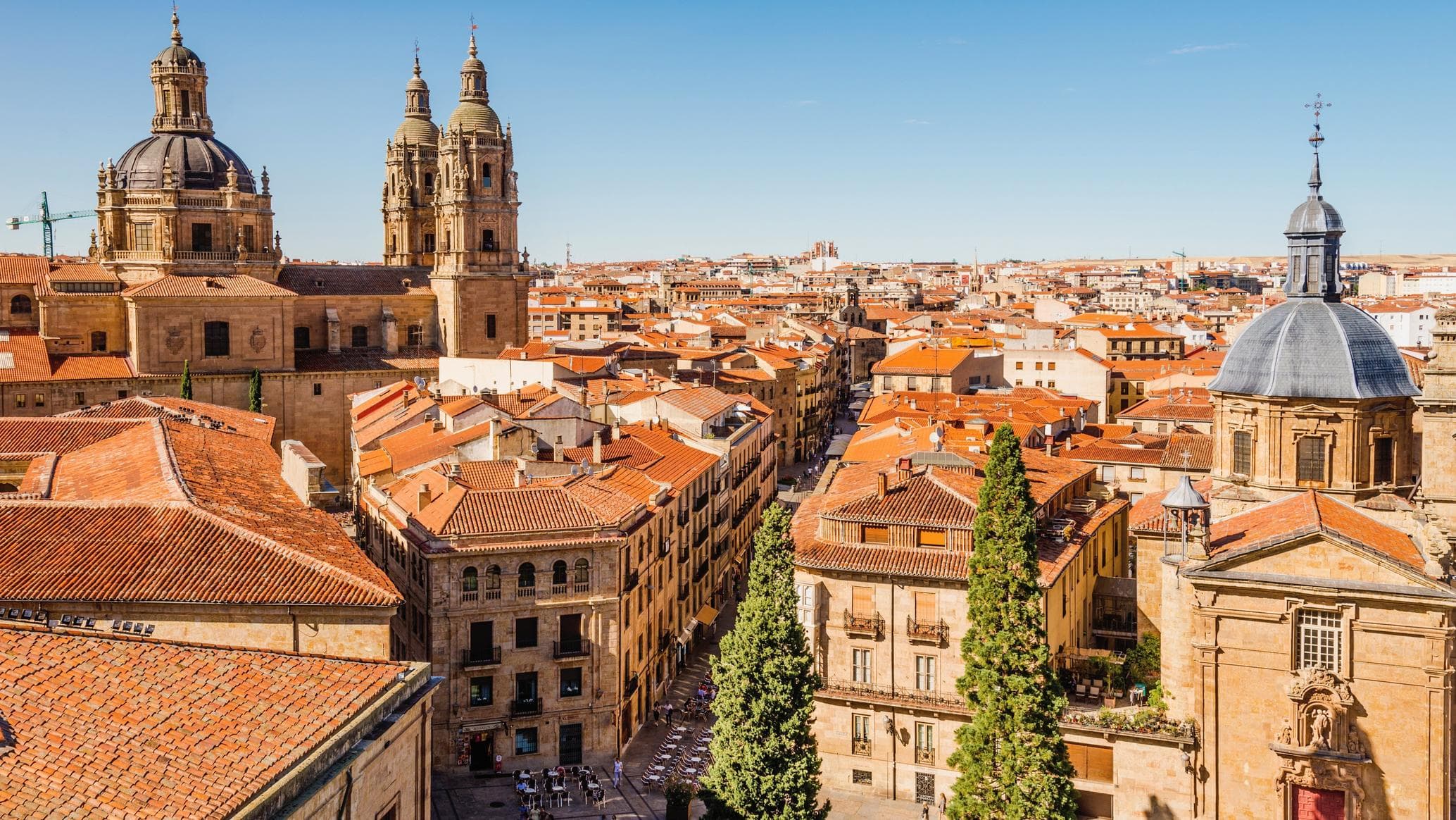
Salamanca is a human-sized city (approximately 150,000 inhabitants) located in Castile and León, in western Spain. Nicknamed the "golden city" due to the golden hue of its Villamayor stone buildings, it boasts remarkable architectural heritage. Its historic center, a UNESCO World Heritage site, makes Salamanca an internationally recognized site for its exceptional heritage, containing treasures such as its majestic Gothic cathedral and the famous Plaza Mayor with its impressive arcades. A city steeped in history, Salamanca has managed to preserve its old-world charm while remaining vibrant and dynamic.
Salamanca Spain also attracts expatriates and tourists alike thanks to its unique atmosphere, prestigious university, and affordable cost of living. Salamanca is primarily known as a university city. Its university, founded in 1218, is one of the oldest in Europe and has been radiating for eight centuries. This academic tradition translates into a lively student atmosphere throughout the year. Each fall, thousands of Spanish and international students flock here, infusing the city with youthful and cosmopolitan energy.
Concerts, cultural festivals, and student events punctuate local life, while countless tapas bars and cafés around the Plaza Mayor create a very convivial social scene. Despite this effervescence, Salamanca remains peaceful and safe, making it a pleasant place to live for both students and retirees seeking tranquility.
Another significant advantage: the cost of living is moderate. Living in Salamanca costs significantly less than in major Spanish cities like Madrid or Barcelona, particularly for housing. To organize a trip to Salamanca, you should budget around €60 to €80 per night in a 3-star hotel, allowing for a reasonable accommodation budget. For example, you can easily enjoy a daily menu in a local restaurant for around €10, or treat yourself to a beer for just €1.50 in a student bar. Generally speaking, everyday expenses (groceries, outings, transport) are below the national average. This financial accessibility helps attract not only international students but also foreign retirees with more limited budgets. It's therefore easy to come discover the city on a first exploratory trip. Finally, although far from the hustle and bustle of Madrid, the capital remains accessible in about 2h30 by train – practical for a weekend or to stay connected with a major metropolis. In short, Salamanca offers a lifestyle rich in culture and gentleness for those who appreciate history, student atmosphere, and tranquility.
Need help obtaining your green NIE in Spain?
Our team of experts helps you obtain your green NIE (resident) quickly and efficiently.
More than 800 green NIEs obtained
Administrative Procedures Upon Arrival
When expatriating to Spain, even in a medium-sized city like Salamanca, certain administrative formalities are unavoidable. The good news is that procedures here tend to be simpler than in Madrid or Barcelona, thanks to lower footfall. Here are the main steps to anticipate upon your arrival:
NIE in Salamanca
The NIE (Número de Identidad de Extranjero) is the identification number for foreigners in Spain. It's an essential key for many procedures (opening a bank account, signing an employment contract, buying a SIM card, etc.). In Salamanca, obtaining the NIE is done at the National Police station (Foreigners Office – Oficina de Extranjería). You generally need to make an appointment beforehand (cita previa) via the official Spanish portal. Fortunately, the city's smaller size means it's often easier and faster to get an appointment than in Barcelona or Madrid where available slots go quickly. On the day, you'll need to present the official form (EX-15), your passport, and proof of the reason for the request (for example, a university admission letter or rental contract), as well as proof of payment of a small administrative fee.
Empadronamiento
The empadronamiento corresponds to registration in the municipal register of residents. This formality is carried out at Salamanca's town hall (Ayuntamiento) or in the municipal offices provided for this purpose. Registering means simply declaring yourself as a resident of the municipality. In practice, you'll need to fill out a form and present proof of address (rental contract, electricity bill, or accommodation certificate) as well as an ID document. In return, you'll receive a certificate of empadronamiento, which proves your residence in Salamanca.
Why is this important? On one hand, the empadronamiento is required to access certain local public services. For example, neighborhood health centers will ask for this certificate to assign you a primary care doctor in the public system. Similarly, to enroll children in school or to register a car in Spain, municipal registration is often required. On the other hand, being empadronado allows the city to count its inhabitants and obtain funding accordingly – so it's an appreciated civic step. The procedure is free and immediate: you generally leave with your certificate on the same day as the request. In Salamanca, procedures are all the simpler as the city is less populated: there's little waiting and municipal staff are used to guiding newcomers.
Social Security and Health Coverage
If you plan to work or do an internship in Salamanca, you'll need to obtain a Spanish social security number (called NUSS – Número de Usuario de la Seguridad Social). This unique number identifies you in the Spanish health and social protection system. It's essential to be officially hired by a Spanish employer, as it allows you to be affiliated and contribute (unemployment rights, retirement, etc.). To obtain it, simply present yourself with your passport and NIE at the local office of the Tesorería General de la Seguridad Social (TGSS). Again, in a city like Salamanca, formalities are generally quick and you can leave with your affiliation number the same day. Once you have your NUSS, you can register at the public health center in your neighborhood to receive a Spanish health card (Tarjeta Sanitaria). This will give you access to healthcare (general practitioner consultations, specialists, hospitals) like any insured person in the country.
For international students on university exchange (Erasmus or others) who don't work locally, the situation is a bit different. As citizens of the European Union, they generally benefit from the European Health Insurance Card (EHIC) issued by their country of origin. This card allows them to obtain medically necessary care in Spain without having to affiliate locally. Thus, a French student in Salamanca can use their EHIC to consult a doctor for free or get reimbursed for medications according to local rules. However, if you plan to stay for more than a few months or do small jobs, it may be wise to also request a Spanish social security number to be fully covered.
Finally, for retirees settling in Salamanca, there's a specific arrangement: the S1 form. This document, to be requested before departure from your health insurance fund in France, allows you to transfer your health rights to your destination country. In other words, by submitting the S1 form to Spanish authorities (to Spanish Social Security), you can be affiliated with the Spanish public health system while remaining financially covered by France for your medical expenses. This is a crucial point to settle for expatriate retirees to continue benefiting from health coverage without interruption. Once the S1 is validated and your social security number obtained, you'll just need to choose a local health center to finalize your registration and receive your Spanish health card.
Finding Housing in Salamanca
Good news for future expatriates: finding housing in Salamanca is much more affordable than in most major Spanish cities. Using a local real estate agency can greatly facilitate the search and support during property purchase, ensuring a secure and simplified process. The city, due to its medium size and less competitive real estate market, offers moderate rents. Local professionals provide personalized support to guide newcomers at every step of their real estate project, from search to signing.
Salamanca also stands out as an attractive city for real estate investment, particularly thanks to strong student rental demand which guarantees good profitability potential. It's quite possible to find a two-room apartment (T2 type) for around €500 per month, or less depending on location and condition. Studios and shared rooms, popular with students, are even more economical (often between €200 and €300 per person). In terms of average prices, the square meter in Salamanca is around €1,800 to €2,000, while the regional average in Castile and León is slightly lower. Comparatively, these rates are unbeatable compared to cities like Madrid, Barcelona, or Valencia where rents can be two to three times higher.
Obviously, the housing budget will depend on the neighborhood you choose. Salamanca has various sectors with varied atmospheres, suited to different resident profiles. Here's an overview of the best neighborhoods to settle in, depending on your desires and lifestyle:
Historic Center
The Centro Histórico of Salamanca is the city's heritage heart. This is where most emblematic monuments are concentrated: cathedrals, old university, Casa de las Conchas, Plaza Mayor, etc. Living in the historic center means immersing yourself daily in a unique atmosphere, surrounded by Renaissance and Baroque buildings that glow golden in the evening. Housing here is often located in old character buildings, restored for modern comfort. This neighborhood is very popular with history and culture lovers, as well as some foreign retirees who want to do everything on foot and enjoy the surrounding beauty. You'll find charming apartments with balconies overlooking squares or cobbled streets. However, be aware that living in the center also means being around tourists, especially in summer, and may involve some noise during student parties or local celebrations. Nevertheless, the general atmosphere remains rather calm in the evening outside bar areas. In terms of budget, the center is logically a bit more expensive than the outskirts, but it remains reasonable: count around €500-600 for a well-located T2.
Student Areas Around Campus
As Salamanca is primarily a university city, several neighborhoods near the faculties live to the rhythm of students. The Campus Unamuno sector (main campus) and the surroundings of the old university form a first student area. For example, we can mention the neighborhood around the Faculty of Letters (historic building of the University) and Campo de San Francisco park. In these streets, many buildings house student shared accommodations. The atmosphere is lively and young: you'll find a concentration of cheap bars, cafés, bookstores, and print shops – in short, the entire ecosystem for student life. Rents are modest – sharing a large apartment with several people often allows paying less than €250 per person.
Another sector popular with students is the San Bernardo neighborhood and the Barrio del Oeste, located west of the center. These areas, a bit outlying but still within walking distance of the faculties, are known for their bohemian and artistic atmosphere (Barrio del Oeste is renowned for its street art murals). Life here is like in a village, with small squares where young people gather in the evening. Apartments are spacious and very affordable: a four-room apartment for a complete shared accommodation can be rented for around €800 (so €200 each for four). By choosing a student neighborhood, you benefit from an active nightlife, proximity to campuses, and a myriad of social activities. It's ideal if you're coming to study in Salamanca or if you're a young professional who likes to go out. Just keep in mind that these areas can be a bit noisy at night on weekends (student singing, late comings and goings).
Quiet Residential Neighborhoods
Outside the center and around the university, Salamanca has several peaceful residential neighborhoods that perfectly suit families, professionals seeking tranquility, or retirees wanting calm. Among these, the Garrido neighborhood (north of the city) is often mentioned. It's a zone mainly inhabited by locals, with wide avenues, parks, supermarkets, and all amenities. Garrido is appreciated for its authentic neighborhood atmosphere, far from tourism, and its very reasonable rents. You'll find modern apartments in recent buildings, ideal for families.
The Prosperidad and Salesas neighborhoods, east and west of the historic center respectively, offer a similar profile. These are calm and safe sectors, with small local shops, covered markets, as well as health centers and schools. Many buildings date from the 70s-80s, with good-sized apartments often featuring balconies. Foreign retirees appreciate the comfort and proximity of everything (buses, doctors, public parks) without the inconveniences of the city center.
Finally, the San José neighborhood, in the southeast, deserves mention. It's a slightly outlying area, green and airy, where sports facilities are notably located. San José is renowned for its tranquil living environment and its rents even lower than average – perfect for those with a car or who don't mind walking a bit to reach the city center.
Need help with your Empadronamiento in Spain?
Our team assists you with your municipal registration (Padrón) and facilitates all your procedures in Spain.
More than 600 registrations completed
Cost of Living and Budget
Living in Salamanca is very affordable, making it one of the great advantages of this destination compared to other Spanish cities. To give you a concrete idea, here are some price benchmarks and monthly budget:
- 1Food and outings: A complete meal (menu del día) in a local restaurant costs on average €10 to €12. Eating out remains economical. A pincho de tortilla or a tapa in a neighborhood bar costs €1-2, and a local draft beer around €1.50 to €2. Having a coffee on a terrace will cost you around €1.20.
- 2Housing: Rent for a modest apartment hovers around €400-500 monthly. In shared accommodation, a student can even reduce their share of rent to €200-300. Utilities (electricity, gas, water) are not excessive either, often around €100 per month for a T3.
- 3Transport: Salamanca is a city where you can easily do everything on foot. There's a good urban bus network, with a ticket around just €1.40 (and monthly passes at reduced rates for students or seniors). If you own a car, parking is much cheaper than elsewhere.
In terms of overall monthly budget, a student in Salamanca can get by with approximately €700 to €800 all included (housing, groceries, transport, leisure). This is well below the budget of a student in Paris or even Madrid. A retired couple with approximately €1,500 per month can live comfortably in Salamanca, regularly enjoying restaurants, cultural outings, and even treating themselves to a few trips around the country. With such an amount, you can easily cover reasonable rent, food, current bills, and even save a bit.
This moderation in the cost of living largely contributes to Salamanca's charm. The city allows for a pleasant lifestyle without breaking the bank. You can, for example, taste local specialties (Guijuelo Iberian ham, Castilian cheese, etc.), go out several times a week, or take additional Spanish classes. This is an aspect to seriously consider if you're hesitating between several destinations in Spain: Salamanca undoubtedly offers one of the best quality-price ratios in the country for an expatriate.
Studying or Working in Salamanca
Salamanca has been for centuries a hub of knowledge and education. If you're coming with the aim of studying or working here, here's what you need to know about opportunities and local particularities.
Studying in Salamanca
Salamanca's academic reputation is well-established. Its university, the oldest in Spain, has trained generations of students since the Middle Ages and still attracts students from around the world today. Each year, more than 25,000 international students choose Salamanca to learn Spanish or follow a university program at one of its renowned faculties. The city proudly bears the title of "City of Spanish".
If you're an Erasmus student or enrolled in an exchange program, your first steps will consist of finalizing your administrative registration at the university. USAL has an international relations office accustomed to welcoming French speakers. Also think about formalities: for a stay of more than 3 months, obtaining the NIE and registering as a resident are strongly recommended. The university generally organizes welcome sessions each fall where you'll be guided on these administrative matters.
Day to day, studying in Salamanca means enjoying an ideal setting for student life. Campuses and libraries are located in the city center or nearby, allowing you to stroll between classes in historic gardens or have a coffee on the Plaza Mayor. With such a large student community, many extracurricular activities are offered: language tandems, organized excursions, participation in famous university fiestas or clubs (theater, sports, etc.).
Working in Salamanca
On the professional side, it's important to keep in mind that Salamanca's economy is that of a medium-sized city oriented toward services and education. The main local employers are the university itself, educational institutions, the tourist sector (hotels, restaurants, guides), as well as public services and shops. There's no major industry or multinational headquarters in Salamanca.
Opportunities for an expatriate are often in specific niches: for example, French speakers can find positions as French teachers, translators, or in tutoring. Digital and remote work are also options to consider. The unemployment rate in the Castile and León region has historically been slightly higher than the Spanish national average. This means that as a foreigner, it may be necessary to be flexible and entrepreneurial. The town hall also seeks to encourage entrepreneurship to energize the local fabric.
If you arrive with a job already found in Salamanca, you'll undoubtedly appreciate the gentler pace of life the city offers. Work schedules in Spain can include a long lunch break (sometimes 2pm-4pm) and shops often close around 8pm. Commutes are short and pleasant, often on foot. And above all, you'll benefit from an enviable work-life balance.
Integrating into the Local Community
Successful expatriation isn't just about sorting out administrative papers and finding housing: it's also about integrating into your new living environment. In Salamanca, you'll discover a welcoming local population, proud of their city, with a reputation for being welcoming to foreigners. Here are some tips:
- 1Participate in cultural and festive events: Don't miss Semana Santa, university festivals, and other open-air concerts. Student integration week or neighborhood fiestas are opportunities to share convivial moments.
- 2Frequent tapas bars and cafés: Socialization happens a lot through gastronomy. Sit at the counter to enjoy a caña (draft beer) or a glass of regional wine, accompanied by some tapas, and strike up a conversation with your bar neighbors.
- 3Join groups and communities: Search social networks for groups like Expats in Salamanca or French in Salamanca. The Erasmus community is also very active and often open to all ages for language meetups.
- 4Adopt the local rhythm and show your interest: Live on Salamanca time! Adapt to Spanish schedules by shifting your meals a bit and enjoy the siesta. Learn a few local expressions and show interest in the city's football team.
By following these tips and staying open to encounters, you'll see that Salamanca will welcome you with open arms. Integration is a process that takes time, certainly, but this city with a warm soul offers fertile ground for feeling at home fairly quickly.
Conclusion – A Peaceful and Enriching Life
Settling in Salamanca means choosing a peaceful life in the heart of a grandiose historic setting. Whether you're drawn by the intellectual effervescence of its university, the gentleness of its social climate, or the prospect of living in a city with rich heritage without sacrificing your budget, the golden city of Castile has what it takes to meet your expectations. Here, every walk takes you through centuries of history, every square offers a convivial atmosphere, and daily life flows at a more human pace than elsewhere.
Of course, successful expatriation requires preparation: don't neglect administrative procedures on the pretext that life is simpler than in Madrid. Obtaining your papers (NIE, social security, etc.), finding suitable housing, and understanding local functioning are mandatory steps. Once these formalities are completed, you'll be able to fully enjoy everything Salamanca has to offer.
In case of doubt or difficulty, don't forget that resources exist to support you. Hiliv and its experts, for example, are here to advise you on your installation project, even remotely, and can mobilize a local trusted network to help you in more modest-sized cities like Salamanca. With a little help and lots of enthusiasm, your expatriation will go smoothly.
In the end, Salamanca offers a rare balance between history, quality of life, and authenticity. By settling here, you'll discover the pleasure of living within a proud and open community. Whether you come to study, work, or spend a tranquil retirement, you'll quickly understand why so many who have walked its golden cobblestones have fallen in love with it. Bienvenidos a Salamanca, your new life awaits you here!
Activities and Leisure in Salamanca
Salamanca, a true gem of Castile and León, captivates with the richness of its activities and leisure. A UNESCO World Heritage site, the city offers a unique living environment where history meets modernity, and where every street corner invites discovery.
At the heart of the historic center, the Plaza Mayor stands as the ideal starting point to explore Salamanca's cultural life. A true open-air living room, it hosts concerts, markets, and events throughout the year, in a warm, typically Spanish atmosphere. History enthusiasts will be delighted by visits to emblematic monuments like the majestic University of Salamanca, the Casa de las Conchas, or art and archaeology museums.
Life in Salamanca is punctuated by student effervescence, driven by the presence of several renowned universities. Erasmus and international students enjoy a cosmopolitan atmosphere, where cultural exchanges are facilitated by numerous events, workshops, and themed evenings. Public transport, efficient and inexpensive, allows easy movement between different neighborhoods, campuses, and green spaces.
In terms of leisure, the city center is full of tapas bars, traditional restaurants, and lively cafés, where you can savor local specialties at very affordable prices. The cost of living in Salamanca allows you to fully enjoy Spanish gastronomy without breaking the bank. Evenings come alive around squares and streets, offering a convivial and safe nightlife.
For those seeking relaxation or contact with nature, Salamanca offers many green spaces and parks, perfect for a walk, picnic, or outdoor sports session. These places provide a peaceful setting to recharge, while remaining close to the center and its amenities.
Investment opportunities are also not lacking in Salamanca. Thanks to attractive real estate prices, the city attracts more and more investors looking for quality property, whether an apartment in the city center or a family home in a residential neighborhood. Local agencies support newcomers in their search.
Finally, the Spanish language holds a central place in daily life. Many courses and workshops are offered to learn or perfect your Spanish, thus fostering integration and discovery of local culture. Language exchanges and encounters with Spaniards allow you to fully immerse yourself in the city's atmosphere and build lasting bonds.
In short, Salamanca offers a range of activities and leisure that will appeal to heritage enthusiasts, students seeking adventure, families, or investors. Between its vibrant historic center, prestigious universities, advantageous cost of living, and pleasant living environment, the golden city of Castile is a destination to discover and adopt for a successful expatriation.
Need help obtaining your green NIE in Spain?
Our team of experts helps you obtain your green NIE (resident) quickly and efficiently.
More than 800 green NIEs obtained
Frequently Asked Questions About Salamanca
Is it easy to find housing in Salamanca?
Yes, compared to Madrid or Barcelona, the real estate market is much less competitive. Prices are affordable and there's a varied offer ranging from student shared accommodations to family apartments in quiet residential neighborhoods.
What monthly budget should a student plan for?
A budget of €700 to €800 per month is generally sufficient to cover rent, groceries, transport, and leisure, thanks to the city's moderate cost of living.
Can you live in Salamanca without speaking Spanish?
In the university environment, English is understood, but for daily life and administrative procedures, a basic level of Spanish is strongly recommended. It's also the ideal place to learn it!
How to get around the city?
Salamanca is a human-sized city where almost everything can be done on foot. It also has an excellent and very economical urban bus network.
What are the priority formalities upon arrival?
The three priorities are: obtain your NIE, register at the municipal register (empadronamiento), and obtain your social security number if you plan to work.
What is the climate like in Salamanca?
The climate is continental Mediterranean. Winters can be cool but sunny, and summers are hot and dry. It's a typical climate of inland Spain.