France Visa Types: Short-Stay, Long-Stay, and Visa Guide Explained
A comprehensive guide to French visa categories: short-stay Schengen visas, long-stay VLS-TS, student, work, talent passport, and visitor visas.

International Mobility Expert
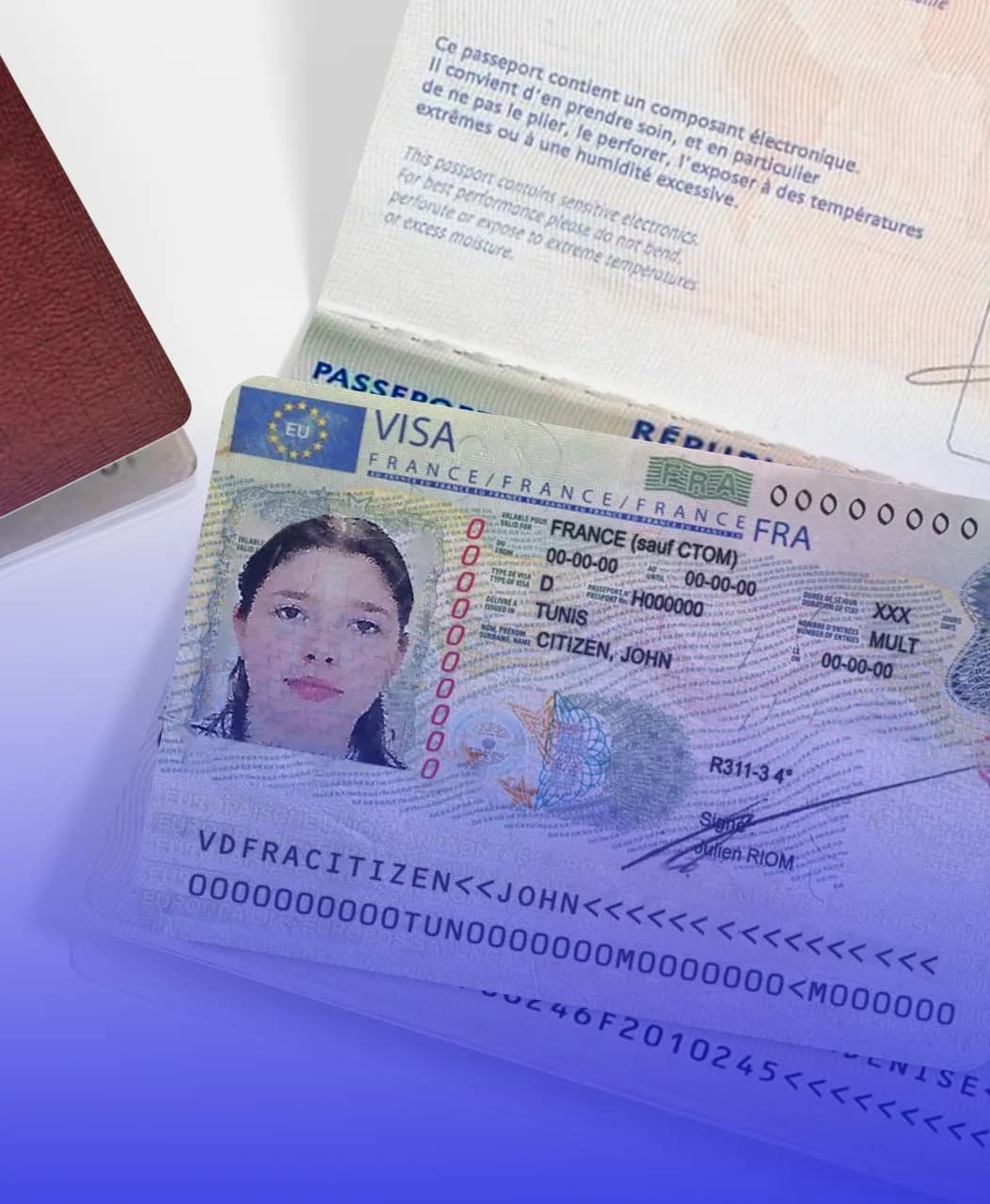
France welcomes millions of visitors and new residents each year, but securing the right visa is your first step. The main France visa categories are divided into short-stay (Schengen) visas and long-stay visas. A short-stay visa covers trips of 90 days or less (within any 180-day period) for tourism, business or family visits. For stays longer than 90 days — whether for work, study, family reunification, or other reasons — you will need a long-stay visa (either a long-stay visa equivalent to a residence permit (VLS-TS) or, in some cases, a long-stay visa requiring a residence permit application after arrival). Choosing the correct visa depends on the purpose and duration of your stay. This guide explains the different visa types and helps you determine which one fits your plans in France.
The subject of this guide is to help you understand the different France visa types and their specific requirements.
Introduction to France Visas
France, as a prominent member state of the Schengen area, offers a range of visas to foreign nationals who wish to enter and stay in French territory. The type of French visa you need depends on the purpose and duration of your stay — whether you're planning a short stay for tourism or business, or a long stay for work, study, or family reasons.
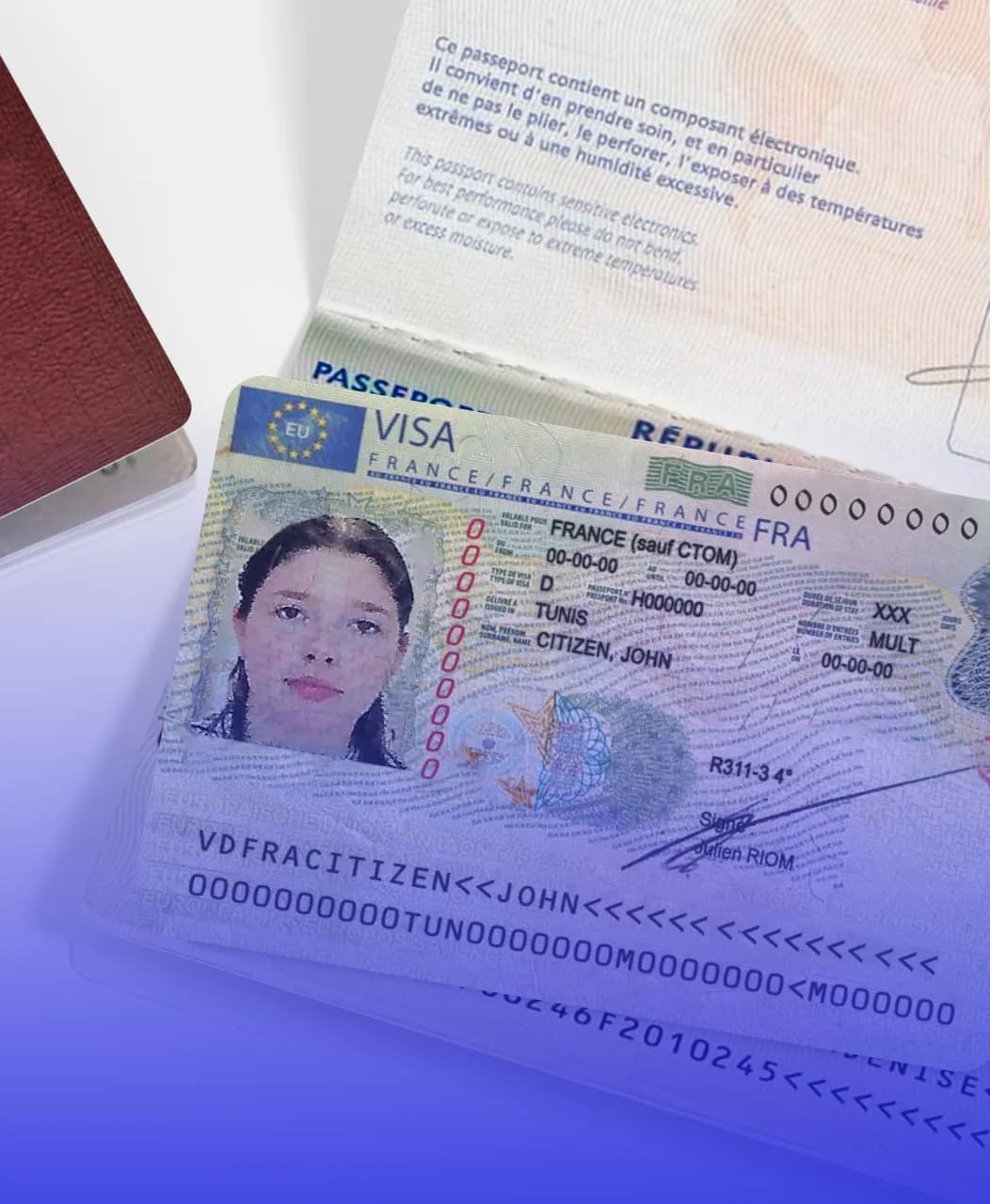
For example, US citizens and many other nationals can enter France without a visa for short stays of up to 90 days within any 180-day period for tourism, business meetings, or family visits, but not for paid employment. However, if you intend to stay longer than 90 days, you must obtain the appropriate long stay visa before entering France. Navigating the visa application process can be complex, so it's essential to understand the different categories — such as short stay visas, long stay visas, and student visas — to ensure you meet all requirements and enjoy a smooth entry into France.
Besoin d'aide pour votre demande de visa pour la France ?
Notre équipe d'experts vous accompagne dans toutes les démarches pour obtenir votre visa français, quel que soit le type.
Plus de 400 visas obtenus avec succès
Short-Stay (Schengen) Visas (≤90 days for tourism/business)
A short-stay visa (often a Schengen visa) allows travel in France and the Schengen Area for up to 90 days in any 180-day period. These visas are issued for tourism, business trips, corporate meetings, family visits, short training courses, conferences or internships not exceeding 3 months provided the activity is unpaid or expressly authorized under Schengen rules. If your nationality does not enjoy visa-free entry, you must apply at a French consulate before your trip.
The application typically requires proof of travel plans, accommodation, sufficient funds, travel medical insurance and return plans, and it is important to provide accurate details when submitting your application. Short-stay visas can be single- or multiple-entry; multiple entries are possible for travelers who need to enter and exit France several times within the visa's validity period. Frequent travelers may even apply for a multi-year "circulation visa," which lets you enter France repeatedly over several years (still observing the 90-day limit in any 180-day window).
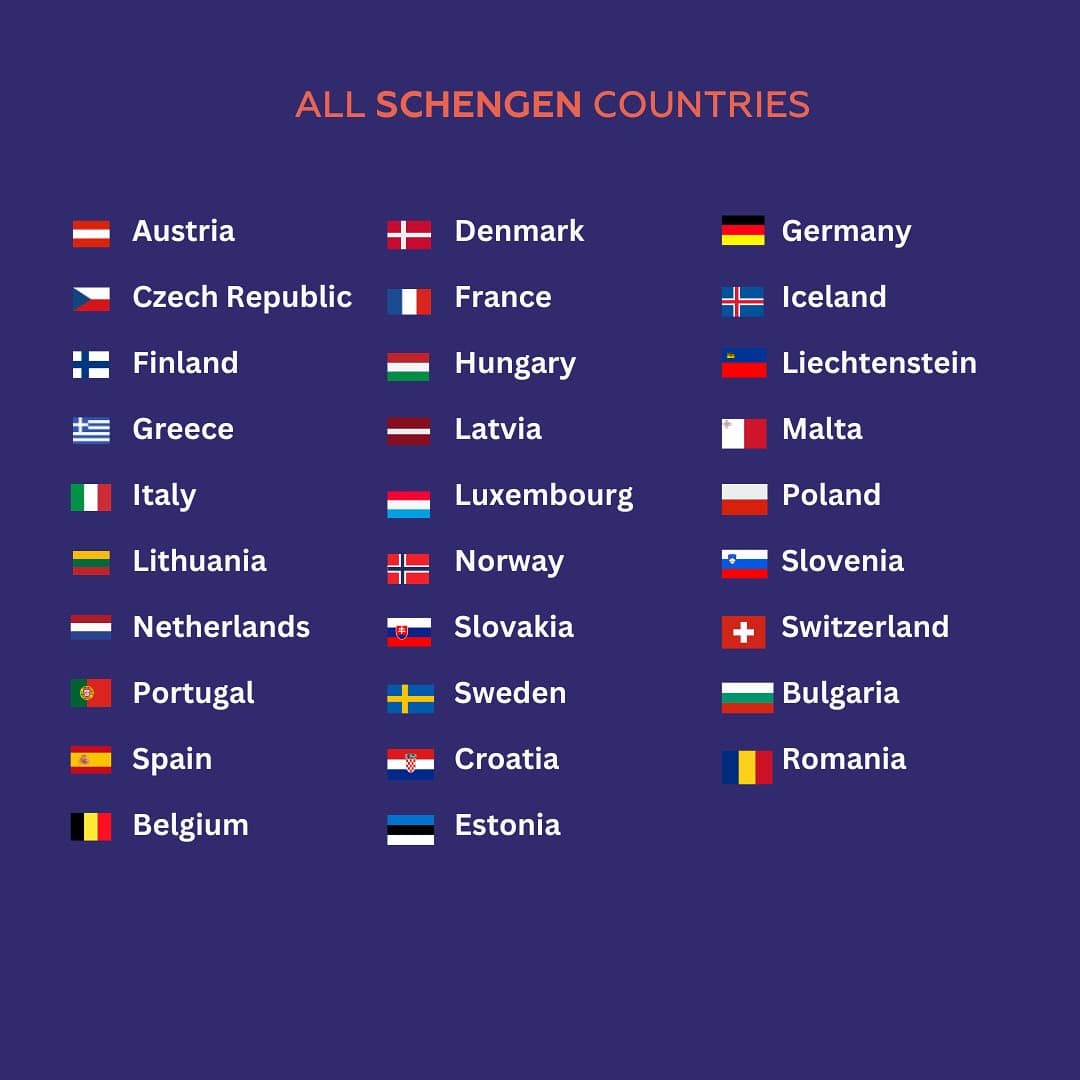
Travelers transiting through a French airport may need a visa depending on nationality and whether they leave the international transit area (airport transit visa - ATV), so it is important to check the specific requirements for airport transit.
Note that short-stay visas cannot be used for settling or working permanently in France — once your 90 days are up, you must depart France or apply for a long-stay visa from outside France.
Long-Stay Visas (VLS-TS) – When You Need ≥90 Days
For any stay exceeding 90 days, France requires a long-stay visa. There are two main categories of long-stay visas:
- VLS-TS (Visa de Long Séjour valant Titre de Séjour): This long-stay visa also acts as a temporary residence permit and grants residency rights. Upon arrival in France, holders must validate their visa online with OFII within three months. A validated VLS-TS allows you to live in France and access public services such as healthcare (Assurance Maladie/PUMA).
- VLS-T (Visa de Long Séjour Temporaire): A temporary long-stay visa, issued for a fixed period between six months and one year, but does not confer residency rights. Holders of a VLS-T cannot apply for a Carte de Séjour (residence permit) and cannot access the French social security system. This visa is designed for stays that are limited and non-renewable, such as sabbaticals or temporary assignments. At the end of the visa period, you must leave France and cannot convert it to a resident status without applying for a new visa from abroad.
You must apply for this visa in advance at a French consulate. Long-stay visas are typically valid from 3 months up to 1 year (this is the validity period of the visa) within three months of arrival. Some long-stay visas are issued without residence permit equivalence (VLS non-TS); in such cases, the holder must apply for a residence permit at the prefecture within two months of arrival.
If you plan to stay beyond the visa's expiration (for example, if your study or work extends past one year), you can apply for renewal or a multi-year residence permit before the visa expires.
The long-stay visa also allows limited travel: within its validity you can visit other Schengen countries for up to 90 days in a 180-day period (just like a short-stay visa). In practice, all non-EU/EEA nationals need a long-stay visa to reside in France more than 3 months; even those who don't normally need a short-stay Schengen visa must get a long-stay visa if they won't return home. Long-stay visas are tailored to your purpose of stay, and you must submit documents related to your situation (e.g. admission letter for students, employment contract for workers, proof of family tie for spouses, etc.) with your application.
Common Long-Stay Categories: Student, Work, Talent, Family, Visitor, etc.
Long-stay visas come in several categories depending on your reason for moving to France. The most common categories include:
- Student visas (VLS-TS "Étudiant"): For foreign nationals pursuing higher education in France (enrollment in a university or approved program).
- Work/Talent visas: For people coming with a French job offer or contract. This includes standard work visas subject to prior work authorization and special categories for highly skilled workers (see below).
- Talent Passport visas: A distinct legal regime for high-level professionals (e.g. researchers, executives, artists, investors). Talent Passport visas can last up to 4 years and allow family members to accompany and work.
- EU Blue Card: A Europe-wide work permit for very high-skilled workers with a qualifying employment contract. In France the salary must exceed about €54,000/year (set by decree). It grants long-term residency and EU mobility.
- Family/Private life visas: For spouses, partners or children of French citizens (or legal residents) who want to join family in France. Also includes visas for non-working residents (see "visitor" below).
- Long-stay "Visitor" visa (VLS-TS Visiteur): For individuals staying in France for personal or retirement reasons without working. This is now the appropriate pathway for retirees, as the former "Retirement Visa" category no longer exists as a standalone option. Applicants must show adequate income (generally around €1,430 net per month, equivalent to the French minimum wage as of 2026), housing and health coverage.
- Vacances travail (Working Holiday visa): Allows young people from certain countries to travel and work in France for up to one year under reciprocal agreements subject to age limits, nationality, and bilateral quotas, providing an opportunity to experience French culture while earning money.
- Profession Libérale visa: For freelancers, consultants, and self-employed professionals who plan to work independently without being employed by a French company. Applicants must present a viable business plan and prove sufficient financial resources (around €1,430 net per month as of 2026).
Each category has its own requirements and benefits. Below we highlight some key long-stay visa types:
Besoin d'aide pour votre visa visiteur pour la France ?
Notre équipe d'experts vous accompagne pour obtenir votre visa visiteur français en toute sérénité.
Plus de 150 visas visiteur obtenus
Student Visa (VLS-TS Étudiant) – requirements and benefits
The long-stay student visa (VLS-TS Étudiant) is for anyone enrolled full-time in a French educational institution for more than 90 days. To qualify you need an unconditional acceptance letter from a French school or university, proof of sufficient financial resources (generally around €615 per month, minimum amount set by regulation and subject to change), and health insurance. Applicants often apply through the "Études en France" online procedure via Campus France if they live in participating countries.
Once in France, you must validate this visa with OFII (French immigration service) within three months. The validated student visa lets you stay and study for up to one year (it can be extended or converted into a multi-year residence permit if you continue studying). One of the main benefits is work rights: student visa holders are allowed to work part-time – up to 964 hours per year (about 20 hours a week) – without needing a separate work permit. This helps students supplement their income. Eligibility for housing assistance or VISALE is not automatic and depends on individual conditions. After completing a year, many students can renew their stay each year by converting their visa into a carte de séjour pluriannuelle, allowing several years of study in France.
Work/Talent Visas – Employer-sponsored, Talent Passport, EU Blue Card
If you have secured employment in France, you will need a work-related long-stay visa. In general, your French employer must sponsor your visa and obtain prior authorization from the labor administration. The typical process is that the employer applies to the French labour ministry for authorization to hire a foreign worker; once approved, you apply for a salarié (salaried employee) visa. With this VLS-TS salarié visa, you may enter and work in France for the duration of your contract (usually up to one year, renewable). Family members (spouse/children) can join under family reunification rules.
France also offers special "Talent Passport" visas to attract skilled workers and investors. For example, if you have a high-level job offer (such as an innovative company or research institution) and meet salary or qualifications thresholds, you can apply under a Talent Passport category (e.g. "Passeport Talent – Salarié qualifié" or "Recherche/PhD"). Talent Passports may be issued for up to four years and grant facilitated renewal; spouses and children get a passeport talent-famille visa and are allowed to work. Each talent sub-category has specific requirements (like proof of advanced degree, contract length, or investment).
Highly qualified workers may alternatively apply for the EU Blue Card in France. This requires a binding job offer of at least one year and a salary meeting the statutory threshold defined annually (around €50,000+). The Blue Card is issued as a long-stay visa (passeport talent – "Carte Bleue"). It offers easier access to permanent residency and the right to move to another EU country after 18 months.
In all cases, applicants need to prove their qualifications, job contract, and the employer's credentials when applying. Successful work or talent visa applicants can arrive in France on a long-stay visa and must later request a multi-year residence permit from the local prefecture (or through OFII) based on their visa category.
Family/Private Life Visa – joining family in France
France issues long-stay family visas (often called "vie privée et familiale" visas) for people joining relatives already in France. The most common case is a spouse or partner of a French citizen (or holder of certain residence permits). To apply, you must provide proof of marriage or civil union and the French nationality or status of your sponsor. A VLS-TS family visa is granted for up to one year (renewable), and leads to a carte de séjour vie privée et familiale residence permit. The spouse visa holder is entitled to work in France without a separate permit.
Children (usually under 18) of French citizens can also get long-stay visas to join their parents. In more complex cases, dependent parents or relatives may be eligible if the French family member can prove sufficient support and accommodation. For EU/EEA family members (e.g. spouse of an EU national living in France), visa rules are more flexible – often no visa is needed for entry and the person can apply for a French residence card after arrival. However, when in doubt, use the official visa assistant.
French law also provides for family reunification of refugees and protected persons, allowing spouses/children to apply for visas to join their refugee family in France under special conditions.

Finally, if you plan to live in France as a long-term visitor (for example as a retiree or someone supporting a relative), you would apply for a long-stay visitor visa. This VLS-TS "visiteur" requires proof of steady personal income (pension or savings), private health insurance, and a pledge not to work in France. It allows residency up to one year and must be validated similarly.
Visa Application Process
The French visa application process involves several key steps to ensure your entry into France is as seamless as possible. To begin, visa applicants must complete the official visa application form, which is available online through the France-visas portal. This user-friendly platform guides you through each stage of the application, from selecting the correct visa type to uploading your supporting documents.
It's important to gather all required documents in advance, such as a valid passport (issued less than 10 years ago, with at least two blank pages, valid for at least 3 months after your planned departure from the Schengen Area or after the visa expiration date for long-stay visas), proof of accommodation, an employment contract if applicable, and any other supporting documents relevant to your stay.
Applications should be submitted no earlier than 6 months and generally no later than 15 days before departure, but applying earlier is recommended to allow for processing time. Visa applications are generally processed within 15 days, but this period can be extended up to 45 days in particular cases. Depending on your location, you may need to attend an appointment at the consulate or with an external service provider to submit your documents and biometric data. If you have submitted biometric data (fingerprints) for a Schengen visa within the past 59 months, you do not need to provide them again.
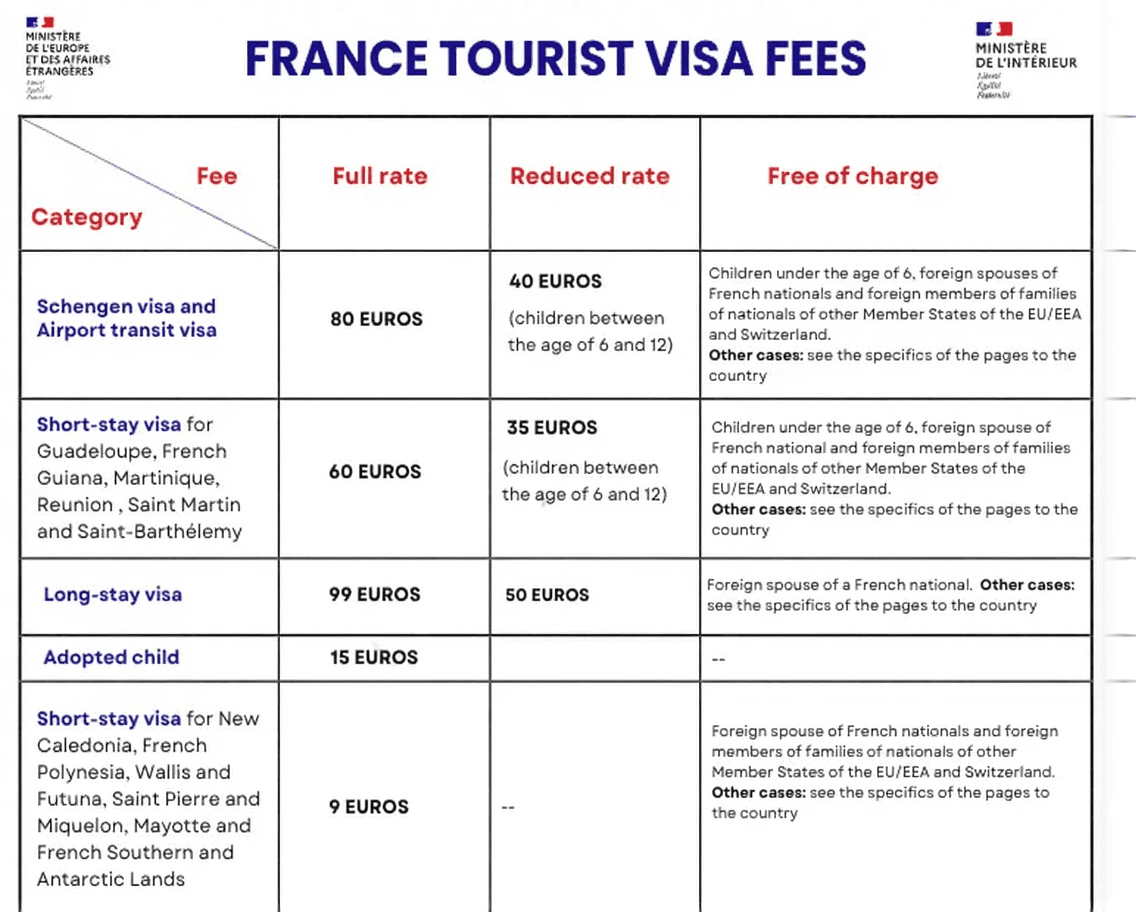
Don't forget to pay the visa application fee as part of the process (short-stay visas: up to €90; fees vary by visa type and are not refunded if the application is unsuccessful). Once submitted, you can track your application status online and will be notified when a decision has been made. Careful preparation and attention to detail will help ensure your visa application is processed smoothly and efficiently.
How to Determine Your Visa (referral to France-Visas wizard)
With many visa categories to consider, using France's official visa portal can simplify the process. The France-Visas website offers an interactive Visa Wizard that asks simple questions about your citizenship, travel purpose (tourism, study, work, etc.), and planned stay length. The France-Visas portal allows you to complete your application online and guides you through each step.
Based on your answers, it recommends the appropriate visa type (short-stay or which long-stay category) and provides a personalized list of required documents and fees. This ensures you apply for the correct visa at the outset. For broader support with your move, you may also want to discover expatriation services for France that provide personalized help for every step of relocalization.
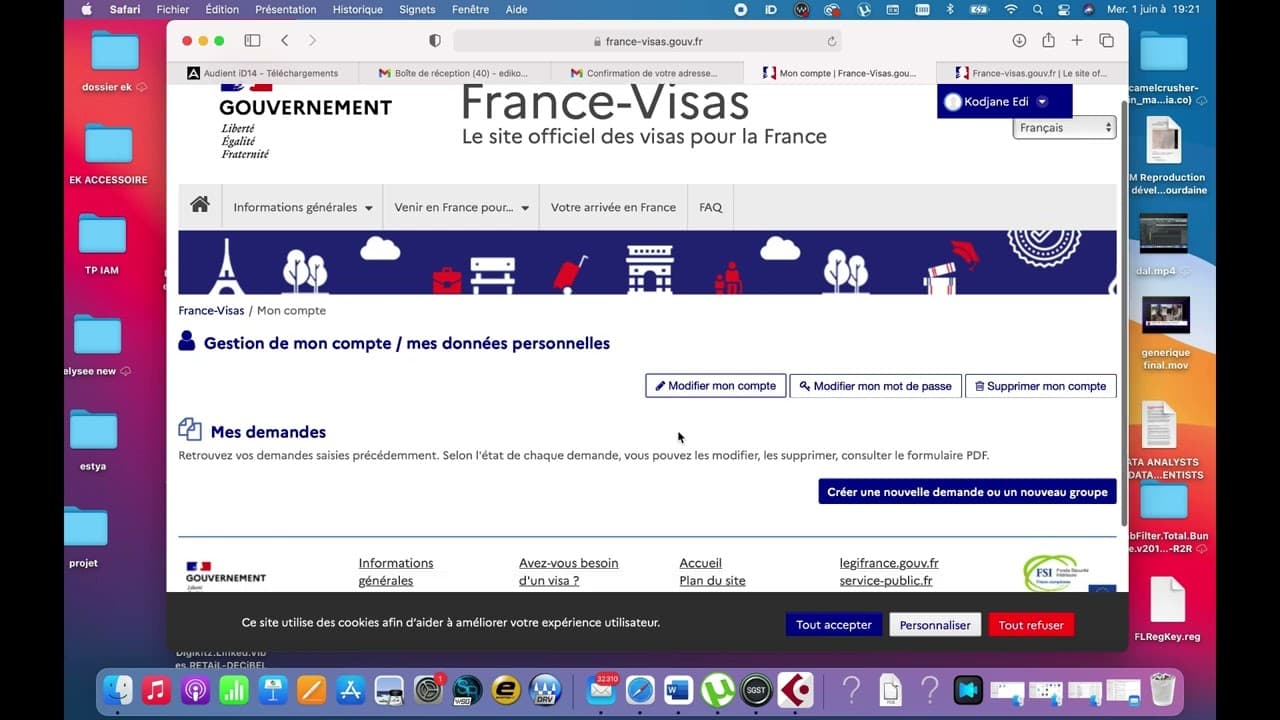
For example, if you indicate you will study for more than 3 months, the wizard will guide you toward the long-stay student visa and show you how to complete the Études en France procedure. Applicants must create a France-Visas account to submit their application and book appointments. The online application system offers convenience for uploading documents and tracking your progress. If you plan a short holiday within 90 days, it will tell you if you even need a visa (many nationalities are visa-exempt under Schengen rules).
Always double-check visa requirements on the France-Visas official portal or with the nearest French consulate. The portal distinguishes between European and non-European nationals, clarifying that non-European nationals may have different requirements for entering French territory. The portal also clarifies entry requirements for those wishing to enter French territory, including insurance and financial support requirements. The portal also links to relevant government sites (like Campus France for students or business immigration offices) and explains residence permit procedures after arrival. By consulting these official resources and using the visa wizard, you can confidently choose the right visa for your move or visit to France.
Visa Renewal and Extension
Renewing or extending your France visa depends on the type of visa you hold and your individual circumstances. For short stay visas, renewal is not possible; you must leave the Schengen area and wait 180 days from your first date of entry before submitting a new visa application.
Long stay visas, however, can often be renewed or extended if you continue to meet the necessary requirements and if you hold a VLS-TS (not a VLS-T, which cannot be renewed from within France). It's crucial to apply for renewal or extension before your current visa expires to avoid complications with the French authorities.
Applications for renewal or extension can typically be submitted online or at your local prefecture, and you'll need to provide relevant documents such as proof of continued employment, study, or family ties. You must apply within two months of the expiration date of your residence permit. Processing times may vary, so it's wise to consult the France-visas website or contact the prefecture for specific instructions and timelines. Staying proactive and organized will help ensure your continued legal stay in France.
Common Mistakes and Tips
Many visa applicants encounter setbacks due to avoidable mistakes, such as submitting incomplete or inaccurate application forms, failing to provide all required supporting documents, or not meeting eligibility criteria. To maximize your chances of a successful visa application, carefully review the requirements for your specific visa type and double-check that all documents are complete and up to date.
Start your application well in advance of your intended departure date to allow ample time for processing and to address any issues that may arise. Make use of the France-visas website, which offers step-by-step guidance and checklists tailored to your situation. If you have questions or need assistance, don't hesitate to consult the consulate or an external service provider for additional support. By following these tips and staying organized throughout the process, you can avoid common pitfalls and ensure a smoother visa application experience.
Frequently Asked Questions about France Visas
Do US citizens need a visa for France?
For stays under 90 days (tourism/business), no. For stays over 90 days, yes, a long-stay visa is mandatory.
What is the 90/180 day rule?
It means you can stay in the Schengen area for a maximum of 90 days within any rolling 180-day period.
Can I work on a visitor visa?
No, the VLS-TS "Visiteur" strictly prohibits any professional activity in France.
How long does it take to get a French visa?
Processing usually takes 15 days, but can extend to 45 days during peak seasons or for complex cases.
What is the difference between VLS-TS and VLS-T?
A VLS-TS is a resident visa that can be renewed in France. A VLS-T is a temporary visa (6-12 months) that cannot be renewed or converted into a residence permit.
Can I travel to other countries with a French long-stay visa?
Yes, a French long-stay visa allows you to travel within the Schengen area for up to 90 days in any 180-day period.
Conclusion
In summary, obtaining a French visa requires careful planning, attention to detail, and a thorough understanding of the different visa types and application procedures. By meeting all eligibility requirements, providing complete supporting documents, and submitting your application correctly, you can greatly increase your chances of a successful outcome.
The France-visas website is an invaluable resource for navigating the visa application process, offering official guidance and up-to-date information. Whether you are a US citizen or another foreign national, it is essential to comply with French visa regulations and the instructions of the French authorities to avoid any complications. With the right preparation and by following the steps outlined in this guide, you can look forward to a smooth and successful entry into France.