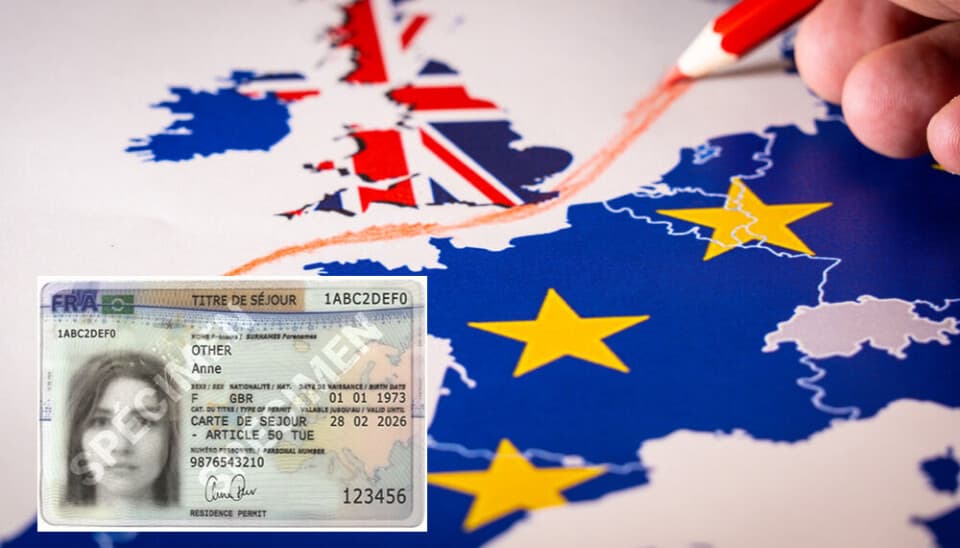
Starting a Business in France: Guide to the Entrepreneur Visa (Talent Passport – Business Creator)
Complete 2026 guide to the France entrepreneur visa (Talent – Porteur de projet): €30,000 investment, viability attestation, application steps, SMIC resources (€22,404), residence card fees (€350), family reunion, and post-arrival obligations.

International Mobility Expert
Starting or taking over a business in France as a non-EU national is possible through the France entrepreneur visa, part of the Passeport Talent scheme. This updated 2026 guide covers the renamed "Talent – Porteur de projet" (Business Creator) category: eligibility, application steps, post-arrival obligations, family reunion, and practical tips for launching your startup in France.
Overview: France Entrepreneur Visa (Talent Passport – Business Creator)
The French entrepreneur visa is part of the Passeport Talent scheme, specifically the "Talent – Porteur de projet" (Business Creator) category. The scheme was renamed and its rules updated by the immigration law of 26 January 2024 and a decree of 13 June 2026, though it is still widely known by its former name, "Passeport Talent – Création d'entreprise." It is designed for founders and startup creators from outside the EU, that is, nationals of countries outside the European Union and the European Economic Area (EEA), who want to create or take over a business in France.
This long-stay visa allows you to live in France while launching your company. Successful applicants receive a multi-year residence permit (up to 4 years, renewable), with the actual duration depending on the nature and timeline of your project, which grants the right to work on your project in France. Your spouse and minor children can accompany you under the "Talent – Family" status, allowing them to live (and work) in France.
In short, the entrepreneur visa simplifies immigration for founders and reflects France's support for international talent.
- ✓Visa renewable over several years (up to 4 years per issuance)
- ✓Family reunification under Talent – Family status
- ✓Access to the French startup ecosystem (French Tech, incubators, etc.)
- ✓Ability to set up or invest in a French company
Need help with your administrative procedures in France?
Our experts accompany you in all your visa, residence permit and installation procedures in France.
Eligibility Criteria
To be eligible for the Talent – Porteur de projet (Business Creator) card, several conditions must be met:
Minimum Investment
You must make a direct economic investment of at least €30,000 in own or borrowed funds into the business project. This capital must be invested directly in the company's activity (for example, as share capital, reinvested profits, or loans between affiliated companies) and demonstrates your commitment to the business. Purely financial investments are not eligible.
Business Plan: A "Real and Serious" Project
Your business plan must describe a real, economically viable project. It should be solid, well-documented, and show genuine market prospects. A key requirement is obtaining an official viability attestation (an opinion on whether the project is "real and serious"), issued following an application via the government's Démarches Simplifiées platform. This opinion is formally issued on behalf of the Ministry of the Economy and is processed nationwide by the DRIEETS Île-de-France, regardless of where your business will actually be based.
Recognition by an approved incubator or regional public body applies to the separate "innovative economic project" (French Tech Visa) track, not to the standard Business Creator track described here. You must provide evidence supporting the viability of your business plan, which may include a supporting letter attesting to its soundness and feasibility. This attestation demonstrates to the authorities that your project is credible.
Expert Tip
Degree or Experience
You must hold a degree at Master's level or equivalent, or have at least 5 years of professional experience at a comparable level. This requirement ensures the entrepreneur has the skills needed to manage and grow the project (the degree or experience should relate to your sector, or demonstrate equivalent managerial capability).
Financial Resources
You must have sufficient personal resources to support yourself (and your family) while the business gets off the ground. In practice, this means having income or savings at least equal to the full-time gross annual minimum wage (SMIC), approximately €22,404 per year as of June 2026. This reference figure is revised periodically and should be checked against the current rate at the time of application on service-public.fr. This requirement ensures you can cover your living costs before the business starts generating revenue.
Meeting all these criteria is essential. If your project involves a regulated activity (healthcare, finance, etc.), you will also need to obtain the required professional license or certification.
Application Steps
Obtaining the entrepreneur visa involves several key stages:

1. Prepare the business plan and obtain the viability attestation
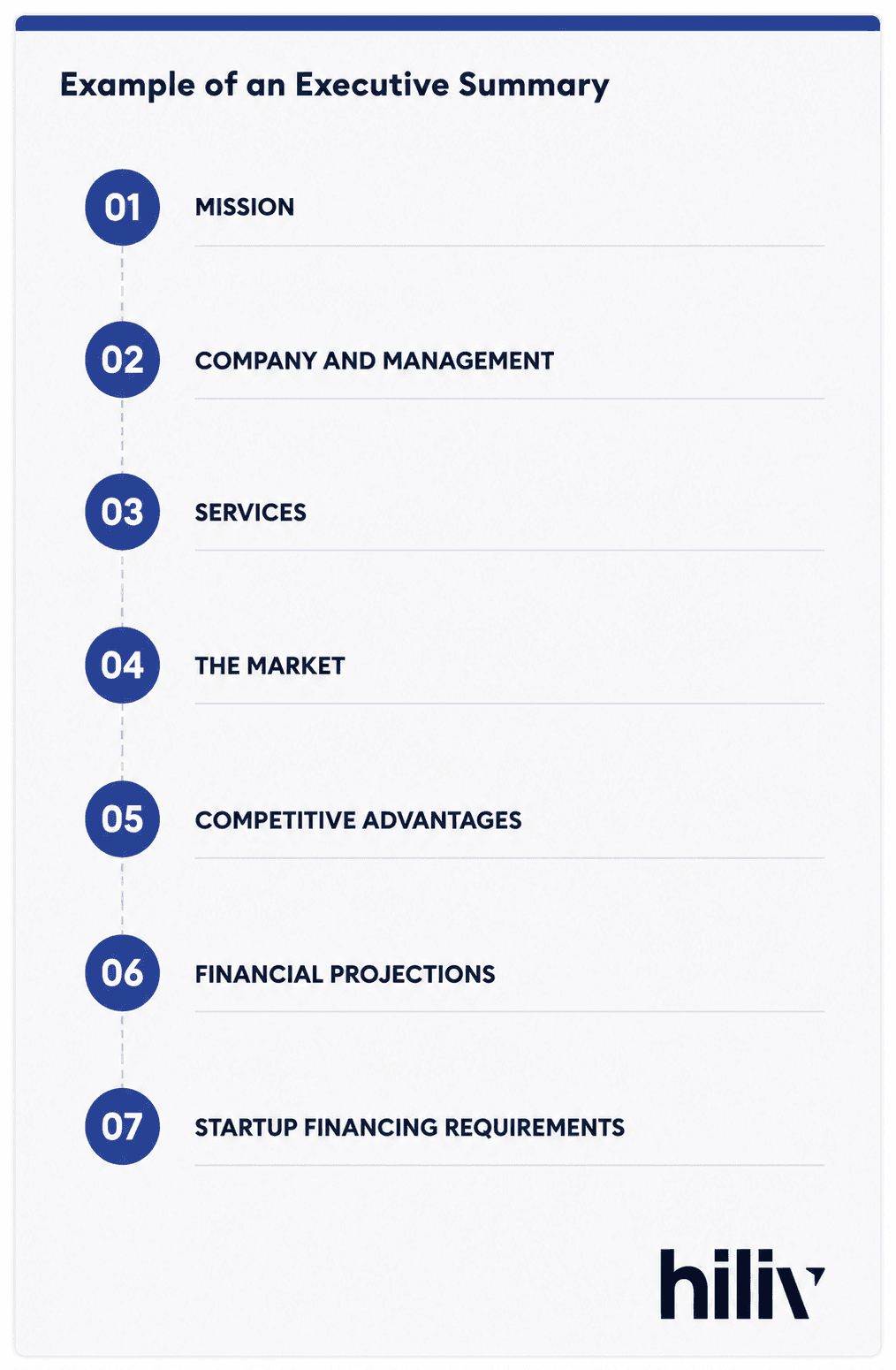
Draft a detailed business plan covering the company, market research, investment needs, and financial projections. If your project involves research or innovation, it is worth highlighting the company's research-related activities, as this strengthens the credibility and eligibility of your file. Submit this plan via the official platform to obtain a "real and serious project" viability attestation. This generally involves registering on Démarches Simplifiées and requesting an opinion, issued on behalf of the Ministry of the Economy (processed via the DRIEETS Île-de-France, which handles applications nationwide). Once approved, you receive an attestation valid for one year.
2. Gather the required documents
Collect all supporting documents for your visa application: the project attestation, proof of personal investment (bank statements or loan agreements), proof of income/resources, degree certificates or proof of experience, and pre-incorporation documents (even if the company is not yet formally created). Also prepare your passport, ID photos, and possibly a CV or cover letter. If needed, have your documents translated into French. This can speed up the process.
For a full checklist of visa documents, see our guide on essential documents for a France visa application.
3. Submit the "Talent – Business Creator" visa application
Submit your application via the France-Visas website or at the French consulate/embassy in your country of residence. Select the "Talent Passport – Business Creator" category. Attach all supporting documents, particularly the viability attestation and proof of financial resources. Pay the application fee (approximately €99) and, if required, attend an interview.
Once approved, the long-stay visa allows you to enter France for up to 4 years (renewable), depending on your project's duration. If your intended stay is under one year, you will instead receive a VLS-TS (long-stay visa acting as a residence permit) to validate online after arrival.
4. Arrive in France and register your company
After arriving, you will need to officially register your company, whether you are forming a new company in France or launching a new business. There is no fixed official deadline for this step, but registering as early as possible is strongly recommended, since proof of registration is generally required for your residence card application.
For a company (SARL, SAS, etc.), registration takes place with the Registre du Commerce et des Sociétés (RCS) via the Tribunal de Commerce or the Guichet Unique (INPI) platform. This gives your company a SIRET number and legal existence. Alternatively, you can opt for micro-entrepreneur (auto-entrepreneur) status for a simpler setup. In all cases, you will need to define the legal structure, register an address, and obtain any necessary licenses.
Opening a professional bank account in France at this stage is essential for depositing the capital invested in the company. See our guide on how to open a French bank account for practical steps. For broader company-creation guidance, refer to setting up a business in France.
Important deadline
5. Obtain the Talent Passport residence card
After registering your company, apply for the multi-year residence card ("Carte de séjour Talent – Créateur d'entreprise") at the préfecture, via the dedicated online platform (administration-etrangers-en-france.interieur.gouv.fr), within the first two months following your arrival in France. Submit all supporting documents again (passport, visa, attestation, proof of company registration, proof of resources, etc.).
Note that the long-stay visa acting as a residence permit (VLS-TS), where applicable, must be validated online within three months of arrival and is equivalent to a residence permit until your definitive card is issued. If a legal representative is involved in the process, you may need to provide documentation proving their mandate and authority.
Once approved, you receive a residence permit valid for up to 4 years, corresponding to your project's duration. Administrative costs apply: a tax of €300 plus a stamp duty of €50 (€350 total) for the first issuance of the card, based on the rates in effect since 1 May 2026. This figure is subject to periodic revision by the Loi de finances.
Key deadlines to remember
- VLS-TS validation: within 3 months of arrival (online)
- Residence card application: within 2 months of arrival at the préfecture
- Business activity: must begin within 1 year of permit approval
By following these steps, from certifying the business plan to registering with the préfecture, you can help your application go more smoothly.
Need help with your talent visa for France?
Our team of experts helps you obtain your talent passport and settle in France.
More than 100 talent passports obtained
After Arrival: Running Your Business
Once the legal formalities are complete, focus on operating your business in France:
As an entrepreneur, you can operate your business as a self-employed worker, which allows you to manage your company independently within France.
In addition, developing an innovative economic project in France can open up further opportunities, particularly in terms of public support and access to certain specific visas.
Registration
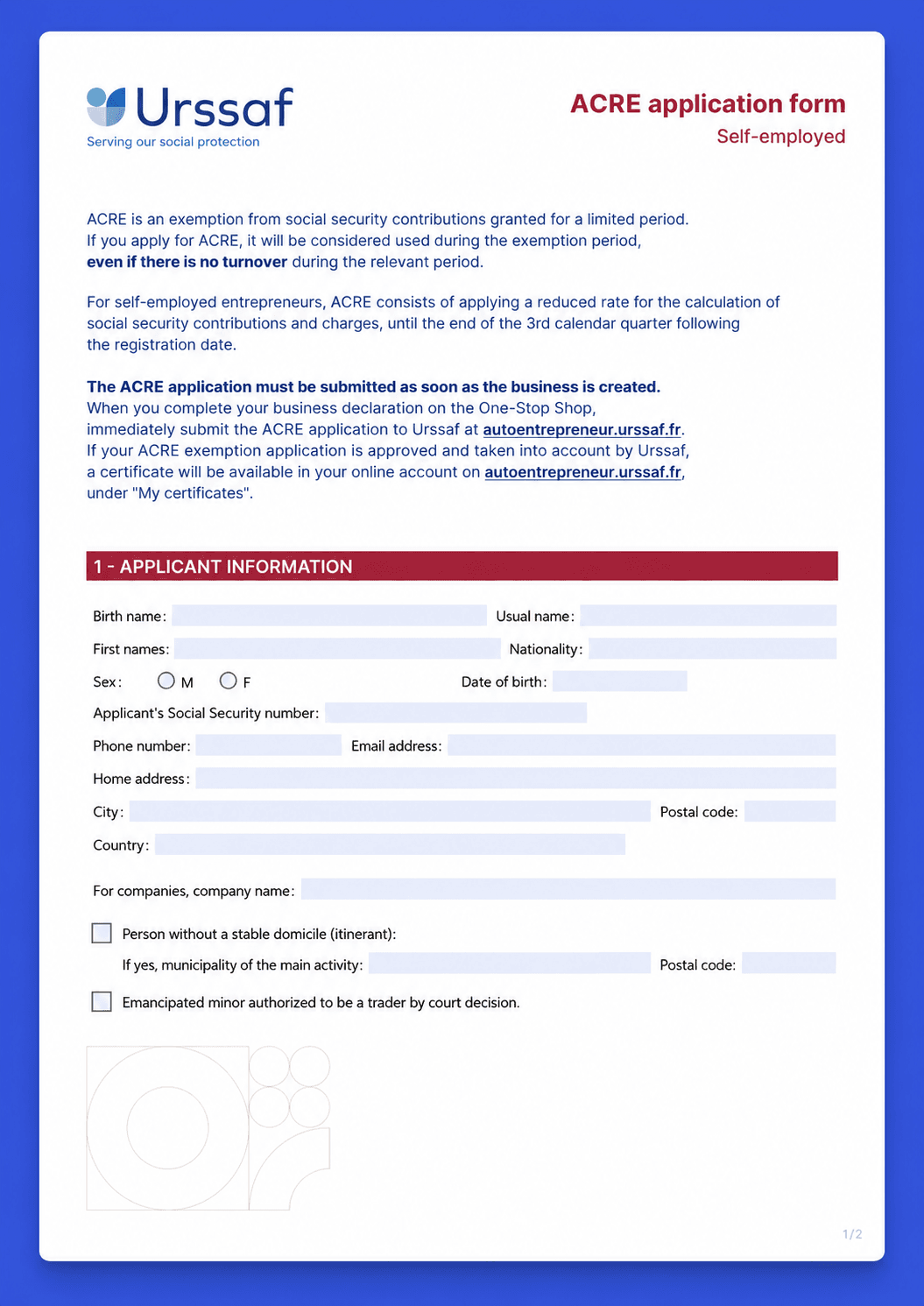
Make sure your company is properly registered. For a company (SARL, SAS), you must file annual accounts and comply with ongoing formalities. For self-employed workers, ensure you are affiliated with the relevant social security scheme (URSSAF or SSI) and, where applicable, commercially registered. Keep all documents (articles of association, K-bis extract, etc.) in case of any audits.
Taxation and Obligations
French companies pay corporate income tax. 25% is the standard rate, with a reduced rate of 15% on the first €42,500 of profit for qualifying small businesses (rates as of 2025/2026, subject to change with each annual Loi de finances) on their profits, and may also be liable for VAT, social security contributions, and local taxes. Micro-entrepreneurs pay a flat percentage of turnover.
You must also file regular declarations: corporate income tax, VAT (where applicable), and social security contributions. It is strongly recommended to work with a chartered accountant to navigate French rules and take advantage of available support schemes (e.g., the Research Tax Credit). Note: payroll costs and social security contributions in France are high. Budget for these costs in advance.
Hiring Employees
You can hire French or European employees without additional formalities. Any non-EU employee must obtain their own residence permit or work visa (e.g., Talent Passport – Qualified Employee, or a standard work authorization). In practice, each foreign employee needs a valid visa or residence permit, sponsored by the company. Hiring procedures for foreign employees include applying for the appropriate visa and meeting French employment criteria.
Note that innovative companies may benefit from specific schemes or visa programs that facilitate hiring international talent. Important: your employees cannot "benefit" from your visa, except for family members under the Talent – Family status. Comply with French labor law regarding contracts, working hours, and employee benefits, and declare all hires to URSSAF.
Meeting these obligations is essential: paying salaries through official payroll, complying with regulations, and filing regular tax and social declarations. Once these foundations are in place, you can focus on growing your startup in the French market.
Family and Dependents
Bringing your spouse and children
When you move to France under the "Talent Passport" residence permit, you have the opportunity to bring your spouse and dependent children with you, making the transition to life in France smoother for your entire family. Your family members will be granted a multi-year residence permit, allowing them to live, study, and travel with you in France for the same duration as your own permit.
This means your spouse and children can access public education and healthcare, supporting their well-being and integration into French society. To bring your family, you must demonstrate that you have sufficient annual financial means to support all accompanying family members. The reference threshold is income at least equal to the full-time gross annual French minimum wage (SMIC), approximately €22,404 per year as of June 2026. This figure is revised periodically and should be checked at the time of application.
This financial threshold helps ensure that your family can reside in France without financial hardship. The "Talent Passport" residence permit is designed to facilitate family reunification, making it easier for business creators and foreign talent to settle in France with their loved ones.
Rights and procedures for family members
Family members who join you in France under the "Talent Passport" residence permit have a range of rights. Spouses are eligible to work in France, generally without needing separate work authorization once they hold their residence card, and dependent children can enroll in public schools and access the French healthcare system. The residence permit for family members is linked to the main permit holder's status and is valid for the same maximum duration, up to four years on a multi-year, renewable basis.
If the main permit holder's residence permit expires, family members must apply for a new residence permit to continue their stay in France. The application process requires supporting documents, such as proof of family relationship (e.g., marriage or birth certificates), proof of sufficient financial means, a valid passport, and documents justifying your professional situation, such as an employment contract or business plan.
Administrative fees apply: €350 (a €300 tax plus a €50 stamp duty, based on rates in effect since 1 May 2026) for the spouse's residence card, and €99 per visa for each accompanying family member applying from abroad. Minor children are generally exempt from holding their own residence permit and may instead be issued a travel document (DCEM).
The "Talent Passport – Family" permit is specifically designed to support family reunification for foreign company founders, employees, and other foreign talent. It allows family members to live, work, and study in France, provided they have a genuine plan to stay and sufficient financial resources. This permit is renewable on a multi-year basis, depending on the nature of the underlying project and the main permit holder's ongoing professional activity.
In the event of divorce or separation, family members may be eligible to apply for a new residence permit, provided they can demonstrate sufficient income and stable accommodation in France.
To apply for a residence permit for family members, contact the French embassy or consulate in your home country, or the local préfecture in France if you are already present. Be prepared to provide all required supporting documents, including those justifying your professional situation and your family relationship. For related guidance, see our article on spouse visa and family reunification in France.
By meeting these requirements and following the correct procedures, you can help ensure that your family benefits fully from living, working, and studying in France alongside you as you build your business.
Practical Case: Switching from Visitor Status to Entrepreneur Status
If you are already in France on another visa or residence permit, it is often possible to switch to entrepreneur status.
Algerian nationals
Change of Status
The process should be initiated 2 to 4 months before your current permit expires. If you hold a valid permit (student, talent, seasonal worker, etc.), you can apply for the Talent – Business Creator card via the Démarches Simplifiées platform (the same one used for the viability attestation). You must meet all the usual criteria (degree/experience, investment, project attestation, etc.) and provide up-to-date documents to the préfecture. Once approved, you receive the Talent card without having to leave France.
Students considering this route may also find our guide on changing status from student to employee in France useful for understanding préfecture procedures, though the entrepreneur track has its own specific requirements.
Note for Visitors
If you are in France on a short-stay visa (Schengen or tourist) without a residence permit, you cannot change status from within France. You will need to return to your country of origin and apply for the Talent Passport at the relevant French consulate there. Holders of a short-stay visa are therefore excluded from this route. The entrepreneur visa requires a long-stay visa application from abroad.
If you currently hold a long-stay visitor visa with a valid residence permit, the change-of-status route described above may apply, provided you meet all entrepreneur criteria.
This flexibility allows people already settled in France (e.g., students or entrepreneurs early in their journey) to switch to the long-stay Talent permit, provided they meet all the criteria.
Conclusion: Launching Your Startup in France
France offers a favorable environment for foreign entrepreneurs. Its dynamic startup ecosystem (French Tech, incubators, tax incentives, and a large domestic market) makes it an attractive location for innovative projects. Paris, Lyon, and Toulouse host active tech hubs, and public schemes (Bpifrance, incubators) often support entrepreneurs and facilitate access to funding. Entrepreneurs can pursue development or investment projects in France, backed by the local ecosystem and dedicated initiatives.
To navigate the administrative and cultural complexity of relocating, specialized services can help. For example, Hiliv offers tailored relocation support for entrepreneurs, covering matters such as housing search, opening a bank account, social protection, and connections with legal and financial experts. Relying on these services can ease the transition and let you focus on your project. Business France, as a reference organization, also provides resources and support for visa procedures and integration into the French ecosystem.
By meeting the entrepreneur visa requirements and taking advantage of the French business environment (and Hiliv's support network), you can maximize your chances of successfully growing your startup in France. Whether you are preparing your viability attestation, gathering consular documents, or registering your company after arrival, Hiliv can guide you through each administrative step of your entrepreneur relocation, so you can concentrate on building your business.
Need help with your talent visa for France?
Our team of experts helps you obtain your talent passport and settle in France.
More than 100 talent passports obtained
Frequently Asked Questions
What is the official name of the France entrepreneur visa in 2026?
Following the immigration law of 26 January 2024 and a decree of 13 June 2026, the standard Business Creator track is officially labeled "Talent – Porteur de projet" (Business Creator). It remains widely known by its former name, "Passeport Talent – Création d'entreprise." Both labels refer to the same long-stay pathway for non-EU founders creating or taking over a business in France.
What is the minimum investment for the France entrepreneur visa?
You must make a direct economic investment of at least €30,000 in own or borrowed funds into the business project. This capital must be invested directly in the company's activity (share capital, reinvested profits, or loans between affiliated companies). Purely financial investments are not eligible.
How do I obtain the "real and serious project" viability attestation?
Draft a detailed business plan and submit it via the Démarches Simplifiées platform to request an official viability attestation. The opinion is issued on behalf of the Ministry of the Economy and processed nationwide by the DRIEETS Île-de-France, regardless of where your business will be based. Once approved, the attestation is valid for one year. Recognition by an approved incubator applies to the separate French Tech Visa track, not the standard Business Creator route.
What personal financial resources must I demonstrate?
You must have income or savings at least equal to the full-time gross annual minimum wage (SMIC), approximately €22,404 per year as of June 2026. This figure is revised periodically and should be verified at the time of application. The same threshold applies when supporting accompanying family members.
What are the current visa and residence permit fees?
The long-stay visa application fee is approximately €99 at the consulate. After arrival, the multi-year residence card costs €350 total (€300 tax plus €50 stamp duty) based on rates in effect since 1 May 2026. Family members pay €99 per visa from abroad; the spouse's residence card costs €350. Minor children may be exempt from holding their own permit and may instead receive a travel document (DCEM).
What are the deadlines after arriving in France?
If you hold a VLS-TS (long-stay visa acting as a residence permit), you must validate it online within three months of arrival. You must apply for the multi-year Talent Passport residence card at the préfecture via administration-etrangers-en-france.interieur.gouv.fr within the first two months following arrival. Register your company as early as possible, as proof of registration is generally required for the card application. Note that the permit can be withdrawn if the business has not begun any activity within one year of approval.
Can I bring my spouse and children under the entrepreneur visa?
Yes. Spouse and dependent children can join you under the "Talent – Family" status with a multi-year residence permit aligned to your own. Spouses can generally work without separate authorization once they hold their card. Dependent children can enroll in public schools and access healthcare. You must demonstrate sufficient financial means (at least SMIC-level resources) to support all family members.
Can I switch from a student or visitor permit to entrepreneur status in France?
If you hold a valid residence permit (student, talent, seasonal worker, etc.), you can apply for the Talent – Business Creator card via Démarches Simplifiées, ideally 2 to 4 months before your current permit expires, without leaving France. However, if you are on a short-stay Schengen or tourist visa without a residence permit, you cannot change status from within France and must apply from your country of origin.
Are Algerian nationals eligible for the Talent Passport entrepreneur visa?
No. Algerian nationals are governed by the Franco-Algerian Agreement of 27 December 1968, which excludes them from the Talent Passport scheme entirely. Their residence in France is governed exclusively by that agreement, with different documents and conditions. Consult the relevant French consulate or the Ministry of the Interior for details.
What degree or experience is required for the Business Creator visa?
You must hold a degree at Master's level or equivalent, or have at least 5 years of professional experience at a comparable level. The qualification or experience should relate to your sector or demonstrate equivalent managerial capability needed to manage and grow the project.
What corporate tax rates apply to businesses in France?
French companies pay corporate income tax at a standard rate of 25%, with a reduced rate of 15% on the first €42,500 of profit for qualifying small businesses (rates as of 2025/2026, subject to change with each annual Loi de finances). Micro-entrepreneurs pay a flat percentage of turnover. Budget for VAT, social security contributions, and local taxes as well.
Can my employees benefit from my entrepreneur visa?
No. Non-EU employees must obtain their own residence permit or work visa (e.g., Talent Passport – Qualified Employee or standard work authorization), sponsored by the company. Only family members under Talent – Family status can accompany you. Innovative companies may benefit from specific schemes to hire international talent.