Moving to France After Brexit: Complete 2026 Guide from the UK
Planning to move to France after Brexit? This complete 2026 guide for UK citizens covers visas, residence permits, retirement, healthcare (CPAM/Carte Vitale), banking, housing and more, with practical tips and expert assistance.

International Mobility Expert
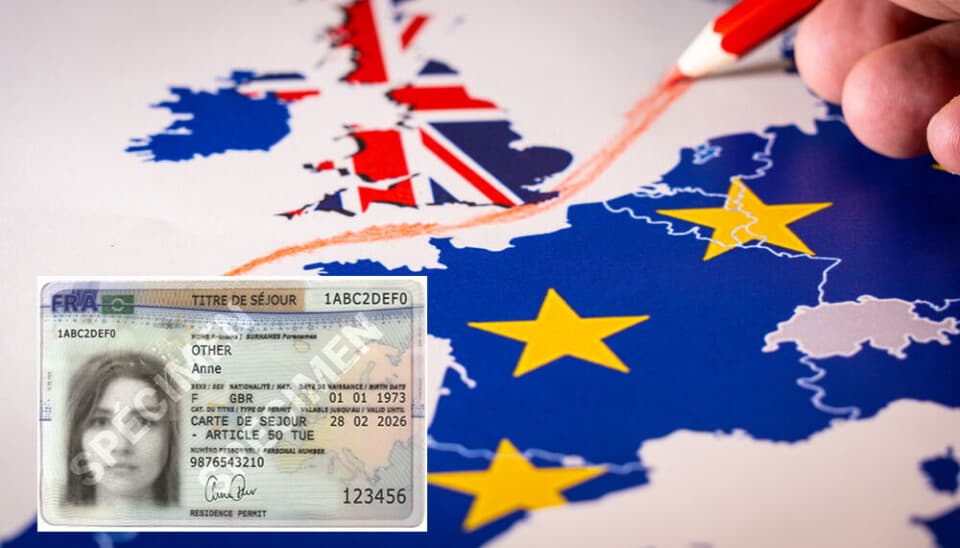
Brexit changed the rules, but yes, UK citizens can still move to France, it just requires more paperwork than before. British nationals no longer have automatic EU freedom-of-movement rights. Short visits (tourism or family visits) remain visa-free for up to 90 days in any 180-day period under Schengen rules. However, for any stay longer than 90 days, you must apply for a French visa in advance. In practice this means choosing the right long-stay visa and then obtaining a French residence permit once you arrive. French law now treats UK passport-holders like other third-country nationals, so planning ahead is essential. The key steps (visas, permits, healthcare, banking and housing) are covered below, with links to helpful services (including Hiliv support) where relevant.
Besoin d'aide pour votre demande de visa pour la France ?
Notre équipe d'experts vous accompagne dans toutes les démarches pour obtenir votre visa français, quel que soit le type.
Plus de 400 visas obtenus avec succès
Can British Citizens Move to France After Brexit?
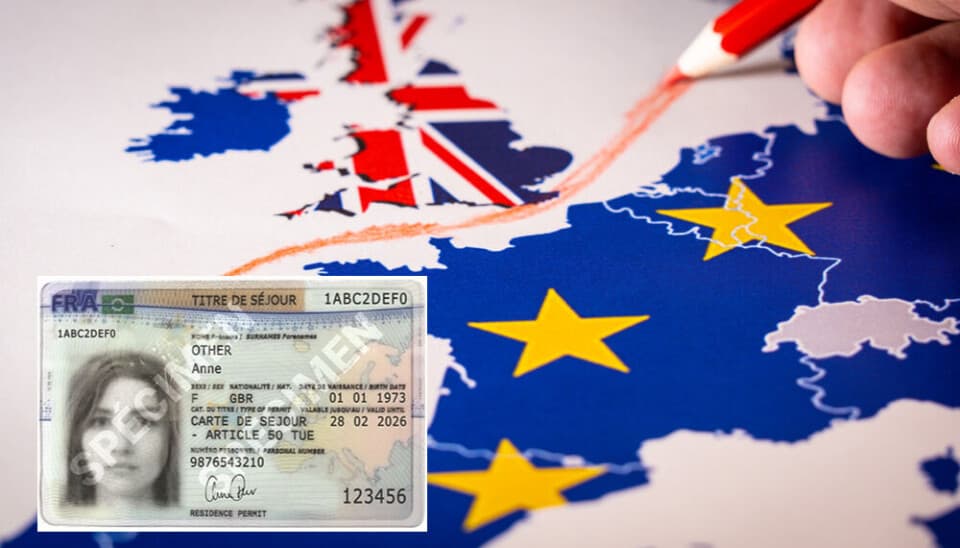
Yes, moving is still possible but the process is now similar to that of Canadians, Americans or Australians. UK nationals must meet France's visa and residency requirements. If you moved to France before 1 January 2021 and registered under the Withdrawal Agreement, you have protected status. But anyone relocating after that date must follow normal immigration rules. In practice:
- Short stays (≤90 days): No visa needed for tourism or visiting family. Your UK passport must be valid, and you cannot exceed 90 days in any 180-day period in the Schengen Area. Since 10 April 2026, the EU Entry/Exit System (EES) registers entries and exits with biometric checks; the ETIAS travel authorisation is not yet in operation, and no start date is confirmed.
- Long stays (>90 days): You must apply for an appropriate long-stay visa (visa de long séjour) before travelling.
Once in France with a valid long-stay visa, you will either validate it online (for visas valid up to one year) or apply for a residence permit ("titre de séjour") at the local prefecture (administrative office). French authorities require that your visa or permit be current when entering or leaving France. In short, British expats now plan moves much as other non-EU citizens do: choose the right visa type, secure residency, and then register locally. For an overview of categories, see our guide to French visa types.

When UK Citizens Need a French Visa
As noted, any stay beyond 90 days requires a visa. This applies whether you're going for work, study, retirement or family reasons. If you are only visiting for tourism or a short-term course (≤3 months), you can travel visa-free. But for longer stays:
- Visa requirements: The official France-Visas site states that for "any stay in France exceeding 90 days, you are required to apply in advance for a long-stay visa". Your UK passport alone won't suffice.
- Passport rules: Your passport should be valid for at least 3 months after your intended departure date from the Schengen area and issued less than 10 years before your entry. (These are standard Schengen rules.)
- When to apply: Start the visa application months ahead of your move. The process can take weeks, and appointment slots at consulates fill up. Use the France-Visas portal to determine the exact documents you need for your situation.
In practice, any British expat planning to live, work or study for more than three months in France must first obtain a visa from a French consulate or visa centre in the UK. The visa categories (below) depend on your purpose. Note that some visas (like the VLS-TS long-stay visa) act as a provisional residence permit and must be validated or extended after arrival. Official guidance for UK nationals is also published on GOV.UK (Living in France).
Plan your timeline early
French Visa Options for British Citizens
France offers several types of long-stay visas and residence permits, each tied to your purpose (work, study, family, etc.). Here are the main categories relevant to UK nationals:
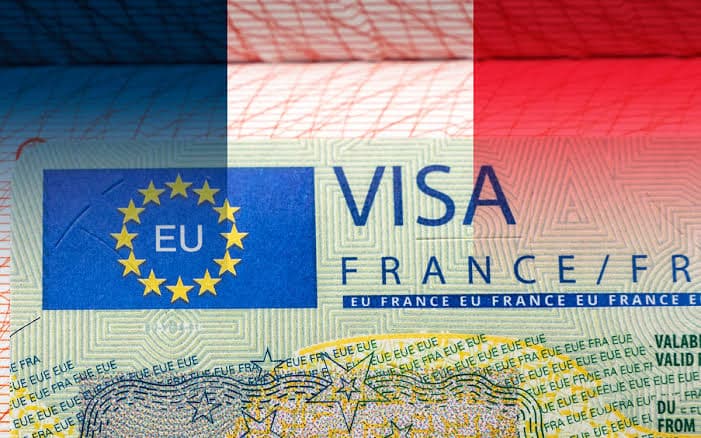
Long-Stay Visitor Visa
The long-stay "visitor" visa (visa de long séjour visiteur) is for UK nationals who want to live in France for personal reasons without working. This is commonly used by retirees, or people taking a sabbatical (whether remote work for a non-French employer is compatible with this visa is not clearly addressed in official guidance and should be checked with the consulate). Key points:
- Eligibility: You must prove you can support yourself with your own income (pension, savings, investment income, etc.), including any dependent family members if applicable, and you must agree not to engage in any paid work in France. In practice, you'll need to show stable income at least equal to the French net minimum wage (SMIC), which is €1,477.93 net per month since 1 June 2026, and sign a commitment not to work.
- Duration: The visa is valid for up to 12 months (a one-year visa is typical). It serves as a residence permit (VLS-TS) once you validate it online upon arrival. It can be renewed at the prefecture and, after several years of legal residence, you may be able to apply for a 10-year resident card, subject to conditions (stable resources, B1-level French and a civic exam since 1 January 2026); this is not automatic for visitor permit holders.
- Documentation: France-Visas notes you must provide evidence of financial means, health insurance coverage, and accommodation in France. For example, you will submit proof of pension or savings, a rental contract or letter of housing reservation, and health insurance covering your whole stay.
- Use: The visitor visa is popular for retirement. If you intend to retire in France, you would typically apply for this visa. Once in France, you can join the health system (see below) and settle as a resident. Hiliv offers a Retiree/Visitor Visa service to guide applicants through this process.
Talent and Work Visas
If you plan to work in France, you generally need a work visa or the prestigious Passeport Talent (« Talent Passport ») visa, which is designed for skilled professionals:
- Talent Passport (Passeport Talent): This multi-year visa is aimed at highly skilled employees, entrepreneurs or researchers. Under the Talent scheme, you can stay up to 4 years initially, and it simplifies family reunification. Categories include "salaried employee in an innovative company," "employee on assignment (salarié en mission)," "scientist/researcher," "artist," "blue card (EU)," and more. See our France Talent visa requirements guide for detail.
- Requirements: You need a signed work contract (typically longer than 3 months for a qualified employee, at least 6 months for the EU Blue Card), a gross annual salary above a defined threshold (in 2026, €39,582 for a qualified employee and €59,373 for the EU Blue Card; thresholds are revised regularly), or proof of founding an innovative company, or a hosting agreement for research, etc.
- Process: Apply for a long-stay visa stamped "Passeport Talent" at the consulate. After arrival, within 2 months of arrival you must apply, in most cases online via ANEF, for the multi-year carte de séjour or French residency permit. Your spouse and minor children can apply for accompanying family visas, and accompanying family members will also need the appropriate permit after arrival too, which in most cases allows them to work or study.
- Hiliv's help: We provide a Talent & Work Visa service to optimize applications for these categories.
- Ordinary Work Visas: Not everyone qualifies for Talent. If you have a French employer offering you a job (either contract CDI or CDD), that employer must usually seek a work authorisation for you first. You then apply for a "salarié" long-stay visa or a visa de long séjour lié au travail. The process can be complex (your employer applies online for the work authorisation), so plan early. In many cases, an employment visa allows an initial stay up to 1 year (as a VLS-TS, valid as a permit). For longer or permanent contracts, you'll follow up with a longer-term residency card. Read our work visa guide for the salarié route.
- Other Work-Related Visas: France also has visas for intra-company transfers (ICT), temporary assignments, internships, or seasonal work. For example, if a UK company sends you to work in its French branch as a manager or expert, you may be eligible for the "salarié détaché ICT" (intra-corporate transfer) permit, valid for up to 3 years in total. These cases are niche; in general the route is to discuss visa needs with your (future) employer.
Student Visa
UK nationals going to study in France for more than 90 days need a long-stay student visa (visa de long séjour pour études), also called a French study visa. Main points:
- Enrollment Required: You must already have an admission or acceptance letter from a French higher education institution (university, grande école, etc.). If you require a competitive entry exam ("concours") before enrolling, a special short-stay student visa is available just for the exam period.
- Visa and Permit: If your course or program exceeds 3 months, you will get a VLS-TS "étudiant" visa which acts as your initial residence permit. You'll validate this via ANEF after arrival. If the program is 3 months or less, you need a short-stay study visa instead.
- Documents and Fees: Common requirements include your enrolment certificate, proof of at least €877.50 per month or student loan funds, accommodation proof, and health insurance. Check the official portal for further details on supporting documents and French visa requirements. (France-Visas indicates a special €50 fee for countries under the "Études en France" scheme – the UK is on that list.)
- Working as a Student: Student visa holders in France can work part-time (up to 964 hours per year) as long as it doesn't jeopardise studies.
- Hiliv's Service: We offer a Student Visa service to streamline the application and appointment process. You may also find our studying in France overview useful.
Family Routes
If you have close family in France, you may qualify for a family visa or permit. Several scenarios include:
- Spouse or Partner of a French National: UK nationals married to (or in a civil partnership/PACS with) a French citizen can apply for a long-stay "vie privée et familiale" visa. For stays up to 90 days, a short-stay visa is issued; for longer stays or settlement, a long-stay visa is given, usually valid for up to one year as a VLS-TS to be validated online within 3 months of arrival, then followed by a multi-year residence card application before it expires. You must prove the marriage or partnership and that you live together in France. See spouse visa and family reunification.
- Children of a French National: Foreign children (under 21) or dependents of a French citizen can also apply for a similar long-stay visa. Proof of relationship and (for minors) legal custody is required.
- Other Family of French Nationals: Parents or grandparents of French citizens have special rules. For example, a parent whose French child supports them may get a specific "ascendant à charge" permit.
- Family of EU/EEA Citizens: Since the UK left, "EU family member" rights for UK citizens are complicated. If your spouse is another (non-French) EU national living in France, you may apply under the "family member of an EU citizen" rules. British spouses of EU citizens settling in France generally follow the EU free-movement route (no settlement visa is required under Directive 2004/38) and apply for a "family member of an EU citizen" residence card. For UK nationals living in France before the end of the transition period, and their family members, residence rights fell under the Withdrawal Agreement, and British citizens had to apply for a Withdrawal Agreement Residence Permit (WARP, "titre de séjour Accord de retrait") by 30 June 2021 (the online deadline was later extended to 4 October 2021); late applications are now made at the prefecture.
- General Family Reunification: If you have a non-French family member who is legally resident in France (for example, a non-EU relative with a French residence permit), you may be eligible for reunification (visa de regroupement familial). The request is made from France by the resident family member, usually after 18 months of legal residence, through OFII rather than at a consulate. These cases are quite specific.
Children covered by that status must apply for their own Withdrawal Agreement Residence Permit at age 18.
In all family cases, the key is to gather official documents: marriage certificate, birth certificate, proof of French nationality/residence, proof of relationship, etc. Once you have the right visa, you'll usually validate it or get a permit upon arrival. (For spouses of French, the "vie privée et familiale" long-stay visa leads to a multi-year residence card that lets you live and work in France.)
Besoin d'aide pour vos démarches administratives en France ?
Nos experts vous accompagnent dans toutes vos démarches de visa, titres de séjour et installation en France.
Moving to France for Retirement
Many British retirees dream of settling in France. The process is straightforward in terms of visa category, but you must meet the requirements:
- Visa: As mentioned above, retirees typically apply for the VLS-TS long-stay visitor visa. This allows up to 12 months in France and can be renewed. You need to state that you will not work.
- Financial Requirements: You must show steady income from your pension(s), savings or investments. The reference level is the French net minimum wage (SMIC), which is €1,477.93 net per month since 1 June 2026. For example, if you get a UK state pension (which you can continue to receive and which will be uprated each year as if you were in the UK) plus private savings, that usually suffices. Be ready to provide bank statements and pension statements to demonstrate funds.
- Health Insurance: Initially, you must have private health insurance covering your whole stay in France. Once you become a resident, you'll register with French social security (CPAM) and then get reimbursed through the national system (see next section).
- After Arrival: Once settled, after 3 months of stable residence you can apply for PUMa, and you will need to renew your residence permit at the prefecture before it expires. Many retirees choose to get private "mutuelle" top-up health cover after joining the public system.
- British State Pension: Under the Brexit withdrawal agreement, your UK state pension can generally be paid in France and will rise annually as it would in the UK. If you receive other UK benefits (some may stop or not increase after Brexit if you move now), check the latest rules to see whether you can claim UK benefits abroad, and seek professional advice on pensions, tax, and cross-border benefit coordination.
- Hiliv's Retirement Support: Hiliv's Visitor Visa service can guide retirees through the visa application step by step, ensuring all resources and insurance proofs are in order.
Need hands-on help with your move?
Relocating from the UK involves overlapping deadlines: visa appointment, insurance, housing proof, then ANEF validation and CPAM registration. Hiliv coordinates these administrative steps so you avoid gaps in coverage or status. Explore our France destination services or read our complete France relocation guide for practical moving tips beyond immigration.
French Residence Permits After Arrival
Getting to France is just the first step. Once you arrive with your long-stay visa, you must activate it and obtain the official French residency permit / carte de séjour, which serves as your official residence permit:
- Validating a VLS-TS: If your visa is a VLS-TS (visa long séjour valant titre de séjour) – common for students, visitors, some workers – you must validate it online on France's ANEF portal within the first 3 months. This involves paying a validation tax (€300 at the standard rate since 1 May 2026, with a reduced rate for students and some other categories) and creating an account on ANEF (Administration numérique des étrangers en France). After validation, you receive an electronic residence permit (confirm via email) which allows you to stay legally.
- Prefecture Visit: Some visas lead to a residence card application after arrival, and the prefecture may still ask for an in-person appointment. For example, Talent Passport holders must apply for their multi-year residence card within 2 months of arrival (in most cases online via ANEF), and some family visas must be followed by a residence card application.
- Extensions and Renewals: Your long-stay visa is usually valid for up to one year. If you need to stay longer, apply to renew or change status 2 months before expiration. Many temporary permits are renewed annually before any later move toward permanent residence. Many procedures can now be done online, but you may still need an appointment at your department's prefecture. Hiliv offers a Residence Permit assistance service to help with renewals and prefecture dealings. For complex status changes, speaking to an immigration lawyer may be worthwhile for professional advice. Our French residence permit guide and ANEF practical guide explain common workflows.
- Démarches numériques: France is moving to digital. Many foreign residents can apply or renew permits through the ANEF website. However, language can be an issue, and prefectures sometimes insist on in-person.
- Registration: There is no general obligation to register with the town hall (Mairie) after arriving; the prefecture process is the main step, and the mairie is mainly involved in specific procedures such as enrolling children in school.
Always keep copies of your visa and permit, and be able to show your passport and your visa or residence permit whenever required, particularly when travelling (a proof of address such as a utility bill is useful for administrative procedures but does not replace them). Staying legal after arriving is crucial: an irregular stay can lead to a refusal of your permit and a removal order (OQTF).
Healthcare and Social Security
Access to the French healthcare system is a key concern. Here's how UK expats integrate into France's system:
- Initial Coverage: Upon arrival, make sure you have health insurance. If you moved on a visitor visa without working, you needed private travel/health insurance to get the visa. If you have a UK-issued Global Health Insurance Card (GHIC), it covers only medically necessary care during a temporary stay, not a move to France. Long-term residents should not rely solely on GHIC after becoming French residents.
- Registering with CPAM: If you are not working, after 3 months of stable and legal residence you should register with the local health insurance fund (Caisse Primaire d'Assurance Maladie, CPAM) to obtain PUMa (Protection Universelle Maladie) status. This gives you a French social security number and entitlement to reimbursements. You can start this process online or via your local CPAM office. (If you work in France, you are generally affiliated from the start of your activity, with your employer's declaration; if not, you apply as a voluntary contributor or beneficiary.)
- Contributions: While employed or receiving a salary/pension in France, you pay social charges that fund your PUMa coverage. Non-working residents on low incomes who do not pay the usual social levies may be asked for a new contribution created by the 2026 social security financing law, whose amount was still awaiting a decree at last check. Exact rules vary by income and status, and not every resident is asked to contribute.
- Carte Vitale: Once registered and receiving care rights, you can apply for a Carte Vitale, the green French health insurance card. The Carte Vitale is free and usually takes several months to issue. It links you to CPAM and automatically handles most reimbursements when you visit a doctor or pharmacy. Keep in mind you often pay fees upfront and then submit feuilles de soins if you don't have the card yet.
- Reimbursements: French healthcare typically reimburses about 70% of the base fee for a GP consultation (€30, minus a €2 flat contribution) if you have declared a médecin traitant, and 80% of hospital costs, with a daily hospital charge of €23 since 1 March 2026 that the public system does not reimburse. Some situations, such as long-term illnesses (ALD), are covered at 100%. Most expats then take out a mutuelle (supplementary insurance) to cover the rest. About 96% of French residents use a mutuelle.
- Dual Coverage Options: If you drew a UK state pension or certain UK benefits, you might register an S1 form with CPAM to transfer UK healthcare contributions. S1 eligibility depends on holding a UK State Pension or a qualifying exportable UK benefit, including if you move after 2020; you request it from the NHS Overseas Healthcare Services. If you are not eligible, plan to join the French system through PUMa.
- GP and Specialists: Once you are affiliated (you do not need to wait for your Carte Vitale), choose a médecin traitant (primary doctor) to maximize coverage. Emergency services are accessible, but always carry your Carte Vitale or a copy of your entitlement certificate.
For assistance, Hiliv provides a dedicated Social Security (CPAM) service that guides British expats through registration and carte vitale applications, which can be invaluable given the French bureaucracy and language barrier.
Opening a French Bank Account
A local bank account is practically essential. Most landlords, utilities and employers expect a French IBAN. Here's how to proceed:
- Documents Needed: French banks typically require at least the following: passport, your long-stay visa or residence permit, proof of French address (e.g. a utility bill, rental contract, or an attestation d'hébergement if staying with someone), and proof of income or job offer. Some banks also want a tax residence self-certification or proof of pension. If you don't yet have a lease, a simple hotel invoice plus your new address might suffice temporarily.
- Which Bank: Major retail banks like BNP Paribas, Société Générale, Crédit Agricole, La Banque Postale and others offer accounts to foreigners. (The choice depends on your area.) Note that many bank staff may not speak English well, so it helps to bring a French-speaking friend or ask if there is an English service desk.
- Process: You often must open the account in person at a branch. They will have you fill forms and provide certified copies of documents. Some banks let you start online, but all require an initial deposit (often €10–€100). If a bank refuses to open an account, you can use the "droit au compte" procedure through the Banque de France.
- Alternatives: Non-resident accounts exist for short-term visitors, but for expats it's better to open a full resident account. You can also use online or international banks if you already have an account with one. Note: some UK banks may eventually close UK accounts when you settle abroad.
- Hiliv Support: Hiliv offers an Account Opening service that helps you open a French bank account remotely or upon arrival, simplifying the paperwork and language issues.
- Tips: Compare fees (some French accounts have monthly charges), and be prepared to use cheques or ATM cards. Online and mobile banking are widely available. See also our how to open a French bank account article.
Finding Housing in France
Securing accommodation is a priority. France's rental market has its own rules:
- Start Early: Begin your search well before moving. Websites like LeBonCoin, SeLoger or PAP list rentals, but competition can be fierce in big cities. You may want to arrange short-term lodging initially (Airbnb, gîte or hotel) while you look locally.
- Lease ("Bail"): Most long-term rentals are 1-year (renewable) contracts. A security deposit ("dépôt de garantie") is capped at one month's rent (excluding charges) for an unfurnished rental and two months for a furnished one. The "first and last month up front" practice found in some countries does not apply to standard French leases.
- Guarantor/Guarantee: Landlords commonly ask for a French guarantor – someone living in France who can cover rent if you don't pay. If you lack a guarantor, alternatives include a visale guarantee (a free guarantee for eligible tenants, notably people under 30 and employees under an income ceiling; check the eligibility conditions for your situation) or a deposit insurer. Some relocation agencies offer visa guarantees for a fee.
- Utilities and Residence: When renting, you'll need proof of French address ("justificatif de domicile") to do almost everything else (bank, CPAM, prefecture). Your lease or an attestation d'hébergement will serve this purpose.
- Buying Property: If you plan to purchase, be aware of notaire fees (around 7–8% for existing properties) and engage a notaire for the deed. Foreigners are generally not restricted from buying property, but securing a mortgage may require higher down payment if not earning in France.
- Regional Differences: Paris and the Côte d'Azur are very expensive; France compared with the UK can feel notably different on rent and day-to-day costs; smaller cities and rural areas cost much less. Consider lifestyle, language, climate and cost when choosing, and remember prices also vary widely compared with other European countries, not just within France.
- Hiliv Housing Service: Hiliv's Housing Search service can connect you with agents and landlords to find vetted listings, especially if you need help navigating the French market or language.
Finally, once you have an address, register with the local town hall if necessary (French communes don't require general registration like some countries, but you may need to register children in school or declare pets).
Besoin d'aide pour votre demande de visa pour la France ?
Notre équipe d'experts vous accompagne dans toutes les démarches pour obtenir votre visa français, quel que soit le type.
Plus de 400 visas obtenus avec succès
UK-to-France Moving Checklist
Before and after the move, use this checklist to cover all bases:
- Visa and Entry: Determine which visa you need (visit France-Visas to check). Apply early with all required documents (valid passport, photos, certificates, financial proof). A schengen visa is for short visits, while moving to France requires the appropriate long-stay visa.
- Documents: Gather originals and certified translations (if needed) of birth certificate, marriage certificate, diploma, and any professional certificates. These may be needed for residency, marriage, professional recognition, and meeting French visa requirements.
- Health and Insurance: If you have a GHIC or an EHIC, carry it for initial travel. Once in France, register with CPAM after 3 months of stable residence if you are not working. In the meantime, maintain private or travel insurance to avoid any gap.
- Pension and Finances: Notify UK authorities of your move and arrange for your pensions or savings to continue abroad. UK state pension will continue and be uprated.
- Tax Number: You receive a French tax number (numéro fiscal) when you file your first French tax return. Hiliv's Tax Number service can assist. You'll need it for tax declarations and for online tax services. See our French tax number guide.
- Bank Account: Open a French bank account soon after arriving (see above). Consider setting up online banking and ordering a debit card. Decide what to do with your UK account (some can be kept if you move to France).
- Housing: Arrange temporary stay and line up apartment/housing viewings. Have your down payment ready. Check your mobile phone contract and consider getting a French SIM or mobile plan.
- Driving: A UK licence issued before 1 January 2021 should be exchanged for a French licence when it has expired or is about to expire, while one issued since 2021 must be exchanged within 12 months of your arrival in France. The exchange is made without a test, online via ANTS (a €40 fee has applied since 12 May 2026); check the current rules before you apply. Details in our driving licence in France guide.
- Pets: If bringing pets, make sure they are microchipped and vaccinated against rabies (with a 21-day wait after the first vaccination), and get an Animal Health Certificate (AHC) from an official vet for each trip. UK-issued pet passports are no longer valid for entering the EU, and since 22 April 2026 GB residents can no longer use EU-issued pet passports either. Quarantine and blood tests are not normally required for pets arriving from Great Britain, but check the current rules on gov.uk and with the French Ministry of Agriculture before travelling. See our bring your pet to France article.
- Registering: Once settled, register with local authorities if needed: for example, if you buy a car, change address on any official documents, register as an overseas voter online at gov.uk if you wish to vote in UK elections, etc.
- Language and Culture: Plan to improve French. Being able to speak French can materially improve daily life and job prospects. Enroll children (if any) in school early. Learn about French social etiquette and laws (taxes, water/electric billing, waste sorting, etc.). Our adapting to French culture guide may help.
- Dual Citizenship (Optional): France allows dual citizenship. If you plan to stay permanently, you may later apply for a 10-year resident card (B1-level French and a civic exam are required since 1 January 2026) and, after about five years of legal residence, for French nationality (B2-level French and a civic exam are required since 1 January 2026), without having to renounce your British citizenship, subject to conditions. See French citizenship and residency.
- Emergency Info: Keep contact details for the British consulate or embassy in France handy for emergencies, and check official French government or French Ministry sources for further details on changing rules.
By following these steps, and considering professional help where needed (Hiliv's range of visa, social security, tax, banking and housing services can ease many transitions), you'll establish yourself in France legally and smoothly.
Frequently asked questions
Can UK citizens still live in France after Brexit?
Yes. British nationals can still relocate to France, but they no longer benefit from EU freedom of movement. Stays over 90 days require an appropriate long-stay visa applied for before travel, followed by validation or a residence permit after arrival. Those who moved before 1 January 2021 and registered under the Withdrawal Agreement retain protected status.
How long can Brits stay in France without a visa?
For tourism or short visits, UK passport holders can stay visa-free for up to 90 days in any 180-day period in the Schengen Area. Since 10 April 2026, entries and exits are recorded under the EU Entry/Exit System (EES) with biometric checks. Any stay longer than 90 days requires a long-stay visa in advance.
Which French visa do UK retirees need?
What is a VLS-TS and how do I validate it?
A VLS-TS (visa long séjour valant titre de séjour) acts as a provisional residence permit for up to one year. You must validate it online on the ANEF portal within three months of arrival and pay the validation tax (€300 at standard rate since 1 May 2026, with reduced rates for students and some categories).
Can British citizens work in France after Brexit?
Yes, with the right visa: ordinary salarié visas (often after employer work authorisation), Passeport Talent for skilled roles, EU Blue Card where eligible, or student visas with limited part-time work. A visitor visa formally prohibits paid work in France.
What salary thresholds apply to the Passeport Talent in 2026?
In 2026, indicative gross annual salary thresholds include €39,582 for a qualified employee route and €59,373 for the EU Blue Card category, subject to regular revision. Contracts, employer sponsorship, and category-specific rules also apply.
How do UK expats access French healthcare (CPAM)?
Can I use my UK driving licence in France?
A UK licence issued before 1 January 2021 should be exchanged for a French licence when it expires or is about to expire. Licences issued from 2021 onward must generally be exchanged within 12 months of arrival, online via ANTS (€40 fee since 12 May 2026). Check current rules before applying.