Self Employed Visa Spain 2026: Requirements for Freelancers and Entrepreneurs
Learn how to obtain a Spain self-employed (autónomo) visa in 2026. Check eligibility, required documents (NIE, business plan, funds), application steps, and post-arrival tasks (TIE, social security, taxes) for freelancers and small business owners.

International Mobility Expert
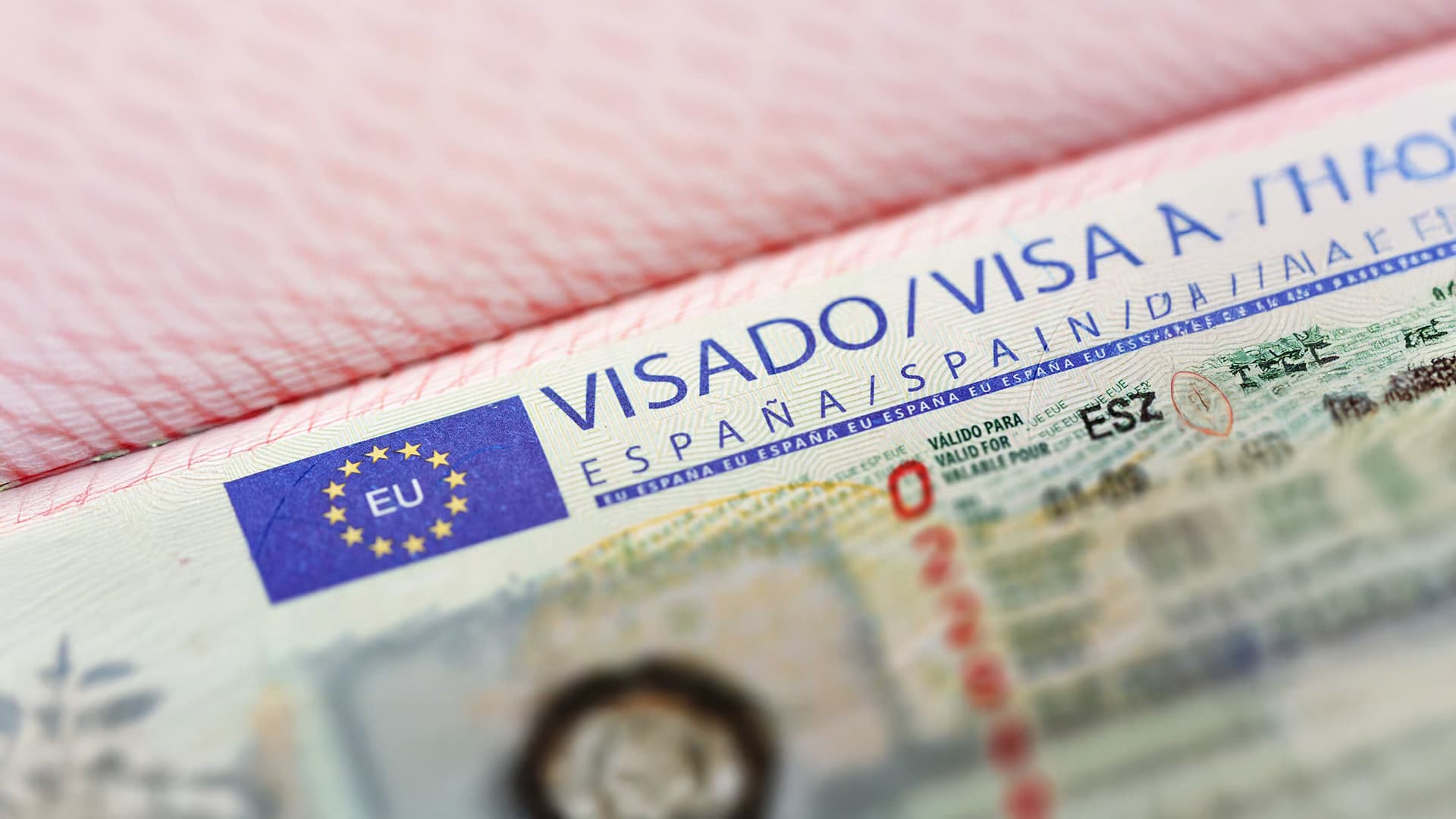
What Is Spain's Self-Employed Visa?Spain's self-employed visa (visado de trabajo por cuenta propia), often called the “autónomo visa,” is a one-year residence and work permit for non-EU nationals who want to live and work independently in Spain as freelancers, independent professionals, or small business owners. It authorizes you to legally establish yourself as an autónomo and run your own activity in Spain, provided you can show a viable business plan, relevant professional qualifications or experience, and sufficient funds.
If you want to move to Spain and work for your own clients or build a business there, this is the permit that determines whether you can do so legally and what you must prepare before applying. The visa is initially valid for 12 months and can be renewed (typically up to five years of continuous residence). In this guide, you'll learn the key eligibility rules, business plan and financial requirements, how the application process works, what to do after arrival (such as NIE, TIE, social security, and tax registration), and how this route compares with Spain's digital nomad visa.
How Hiliv can help
From consular document checks to your first weeks in Spain, Hiliv guides freelancers and entrepreneurs through NIE, Social Security (NUSS), and opening a Spanish bank account, so your autónomo project stays on track administratively.
Get your NIE Express 100% remotely
Obtain your white NIE without traveling to Spain thanks to our 100% online service with legal representation.
More than 200 NIE Express issued
Self Employed Visa Spain 2026: Requirements for Freelancers and Entrepreneurs
The rules for temporary residence and self-employment authorization are set out in Spain's immigration regulations (Real Decreto 1155/2024). Consulates apply them together with the official cuenta propia information sheet. The permit is distinct from employee work visas and from passive residency routes such as the non-lucrative visa.
Who Can Apply?
Freelancers
Independent contractors and freelancers, such as writers, designers, IT consultants, and digital creatives, can apply for the self-employed visa. If you offer services on your own (for example, to clients in Spain or internationally) without a local employer, this visa lets you operate as a legal autónomo. You will need to show how you plan to find and serve customers (for instance, contracts, a website, or market research). Purely passive income (like rental or investment income) does not qualify; the visa is meant for active, service-based work.
Independent Professionals
This category covers regulated professionals (engineers, architects, doctors, lawyers, etc.) and other self-employed professionals who want to work on their own in Spain. If your profession requires specific accreditation, you must prove your qualifications and legal right to work in Spain (for example, by having a foreign degree homologated or registering with a Spanish professional association). Authorities check that you meet Spanish standards. If your credentials are in order, you can apply as a self-employed professional and, as a self-employed individual under this route, serve clients (private practice or contracts) under the autónomo framework.
Small Business Owners
Entrepreneurs planning to start or run a small business in Spain (a café, shop, consulting firm, etc.) also qualify for this visa, making it a suitable route for applicants who want to run their own business in Spain. You must present a clear business plan demonstrating market demand and financial viability. Spanish officials will evaluate the project to ensure it can succeed and benefit the local economy (such as by creating jobs). In this case, you may register a company to set up your own company (or operate as a sole proprietorship) in Spain, but the visa itself is granted to you personally as the self-employed proprietor. (Note: If your business is a high-tech startup with innovative scope, you would apply instead for Spain's separate “Entrepreneur Visa.”)
Self-Employed Visa Requirements
Professional Qualifications
Applicants must have the training or certification needed for their chosen activity. For regulated professions, provide diplomas, licenses, or proof of degree recognition in Spain. For example, foreign doctors need a recognized medical degree, and engineers may need their foreign diplomas officially validated. For other fields, relevant work experience, degrees, or portfolio of past projects can support your application. In all cases, the goal is to show you are fully qualified to carry out the proposed work in Spain.
Business Plan
A detailed business plan is mandatory. Your plan should explain what services or products you will offer, who your target market is, and how you will attract customers. Include information on your marketing strategy, pricing, investment needs, and expected revenues and expenses. Spanish authorities will examine it closely: they want to see that your project is realistic and economically sound. Providing evidence (like letters of intent from clients, contracts, or market research) can strengthen your case. Overall, the business plan must convince officials that your self-employment activity will be viable in Spain.
Business plan tip
Align your plan with the criteria used by Spanish self-employed associations (ATA, UPTA, CIAE, OPA, UATAE). A favorable viability or valuation report from one of these bodies can support your financial case when immigration officers review your file.
Financial Viability
You must prove you have enough funds to launch and sustain your business. Unlike Spain's non-lucrative visa, the self-employed visa does not set a fixed IPREM-based threshold for personal living expenses; instead, you must demonstrate the sufficiency of your planned investment and the overall viability of your project, for example, through a valuation report from a recognized self-employed workers' organization (such as ATA, UPTA, CIAE, OPA, or UATAE). You should also have additional capital earmarked for startup costs (often several thousand euros, depending on the business). Confirm the exact expectations with your consulate. Self-employed workers later pay personal income tax at progressive rates from 19% to 47%. Monthly social security contributions are paid based on real income (see Social Security below). If family members will accompany you, the required funds generally increase by roughly +50% of Spain's IPREM per additional family member (based on 150% of the IPREM for a two-person family unit). Confirm with your consulate, as practice can vary. To demonstrate financial means, submit bank statements, savings, or investment documentation covering both your living costs and initial business expenses. Authorities also expect a criminal record certificate (showing no serious convictions, generally covering countries of residence over the past five years, though some consulates request a shorter period. Confirm with your consulate) and a medical certificate indicating you have no contagious or serious health conditions. Some consulates also require valid health insurance in Spain until you enroll in the national system.
How to Apply for the Self-Employed Visa
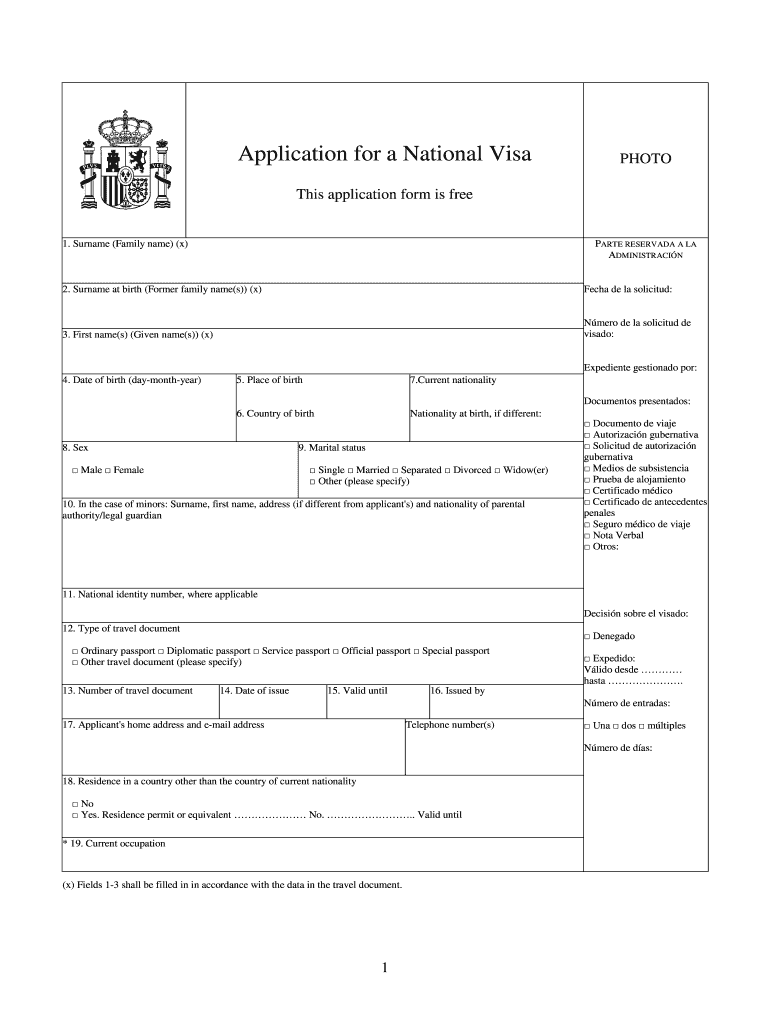
- 1Gather your documents. Complete the official Spanish visa application form (EX-07 for self-employment) and collect the required papers: a valid passport (with at least one year remaining), recent photo, criminal record certificate, health certificate, and any translations or apostilles. Also prepare your business plan, proof of academic/professional qualifications, evidence of funding (bank statements, investments, etc.), and a job contract or letters of intent if you have clients lined up. Prepare all the documents before booking your appointment.
- 2Submit your application. Book an appointment at the local Spanish consulate or the consular office responsible for your consular district, usually the nearest Spanish consulate covering your country of residence. Attend in person and submit your self employed visa application package, including the national visa application form. The official consular and work-authorization fees are relatively modest on their own (often under €200, though they vary by nationality due to reciprocity charges); once certified translations, apostilles, private health insurance, or advisor fees are added, the total commonly falls around €400 to €700. Confirm exact fees with your consulate. Some consulates outsource appointments through visa centers (e.g. BLS or TLS). Ensure all your paperwork is complete and properly legalized/transcribed. Applications can generally be submitted up to 90 days before your intended travel. Check requirements on Spain's official visa pages.
- 3Wait for the decision.The consulate will send your application to Spain's immigration authorities, who have a legal deadline of around three months to resolve the residence authorization; the consular phase for issuing the visa itself then carries a further legal deadline of about one month. In practice, total processing times can exceed these legal maxima depending on the consulate's workload. Be prepared to provide any additional information if requested.
- 4Receive your visa and enter Spain.If approved, you'll be notified to pick up your passport with the visa sticker (valid for short entry and residency processing). Travel to Spain before the visa expires (typically within 90 days). Once in Spain, you'll complete the remaining registration steps (see below). Our moving to Spain checklist can help you plan post-arrival tasks.
After Arriving in Spain
NIE and TIE
The visa grants you a NIE (Número de Identificación de Extranjero), Spain's foreigner ID number (often printed on the visa), and the national visa is the entry document you use before getting your physical card in Spain. As a self-employed applicant, you generally have up to three months from your entry into Spain to register with Social Security (see below), and then a further deadline, typically around 30 days from that registration, to apply for your physical TIE (Tarjeta de Identidad de Extranjero), which functions as the foreigner identity card for your residence permit in Spain; confirm the exact deadlines with your local Extranjería office, as timing can vary. To do this, visit the local Foreign Nationals Office (Oficina de Extranjería) or designated police station with your passport, visa, photos, and the EX-17 application form. The TIE card fee is currently €16.08. Once issued, the TIE card shows your legal status and NIE number. (Tip: Hiliv's remote NIE and post-arrival support can handle much of the paperwork, allowing you to obtain or manage your NIE before or right after you move.)
Social Security
As a self-employed autónomo, you must register in Spain's Spanish social security system under the special regime (RETA). This is important for accessing healthcare and building pension and disability rights. You'll receive a Social Security number (NUSS) and then pay monthly contributions based on a tiered system tied to your real net income: new autónomos typically benefit from a flat rate of around €80/month for the first 12 months, after which contributions scale up through income brackets (currently starting from roughly €205/month for the lowest bracket and increasing as net income rises). It's advisable to register immediately after arriving and register locally for social security purposes to avoid penalties. Hiliv's Social Security (NUSS) service can assist you in obtaining your registration and setting up payments. For background, see our Spain social security guide.
Tax Registration
You also need to register with the Spanish tax authorities (Agencia Tributaria). Submit Modelo 036 to declare your self-employed activity, as this registration is required for self employment work in Spain. This lets you legally issue invoices (facturas) and report taxes. You will choose your economic activity codes and set up quarterly VAT (IVA) and income tax (IRPF) filings, even if your clients are abroad; these obligations apply to self employed work and self employment work carried out as an autónomo. Additionally, open a Spanish bank account to manage your income and expenses more easily. Having a local account simplifies invoicing and tax payments. Hiliv's Bank Account Opening service can help you set up a Spanish business account remotely or after arrival, making financial management smoother. Finally, don't forget to register on the local padrón (municipal registry) at your town hall; this is a legal obligation for residents, and it's also useful for utilities and local services. Read more in our empadronamiento guide and taxes in Spain overview.
Post-arrival sequence
A practical order for many autónomos: RETA registration → tax registration (Modelo 036) → TIE appointment → empadronamiento → local bank account if not already open. Missing a step can delay healthcare access or invoicing.
Need help with your expatriation to Spain?
Our experts accompany you in all your administrative procedures and installation.
Self-Employed Visa vs Digital Nomad Visa

Digital nomad and self-employed visas serve different purposes, and the Digital Nomad Visa is not the main visa for Spain if your goal is to build a business tied to the Spanish market. The Digital Nomad Visa (introduced under Spain's Startup Law) targets remote workers who are employed by or contracted with foreign companies. By contrast, the Self-Employed (Autónomo) Visa, also commonly called the Spanish freelance visa or Spain freelance visa, is aimed at those building a local business or freelancing in connection with the Spanish economy. The main differences include:
- •Scope and Clientele: Digital nomads must work remotely for companies or clients outside Spain; autónomo visa holders can have Spanish or international clients and work physically in Spain, making it the route for a self employed person working independently in Spain.
- •Income Requirements:Digital nomads must prove a high stable income (around €2,850/month or €34,188/year in 2026, i.e. 200% of Spain's minimum wage). Self-employed applicants have no fixed income threshold, but must show enough savings and business funding sufficient to cover their planned investment and demonstrate project viability, as described above.
- •Documentation: Digital nomad applicants provide an employment contract or proof of freelance agreements with foreign entities and health insurance; they do not need a detailed Spanish business plan. Autónomo applicants must submit a full business plan, investment proof, and professional credentials.
- •Taxation and Benefits:Digital nomad visa holders often enjoy a reduced flat tax rate on Spanish-source income for several years (an extension of the so-called “Beckham Law”), whereas self-employed residents pay Spain's standard VAT, income tax, and full social security contributions.
- •Application Process: The digital nomad visa can sometimes be applied for from within Spain through a special Unidad de Grandes Empresas (UGE) or from abroad at consulates, and focuses on remote-work eligibility. The self-employed visa is applied for at a Spanish consulate abroad with pre-approval of a work permit and emphasizes business viability; for non-EU applicants, this route is a self employed work visa or self employed work permit, and may also be described as a freelance visa.
This residency visa is different from the entrepreneur route for innovative startups and is designed for self employed work in visa in Spain.
In summary, choose the autónomo visa if you plan to actively develop a business or freelance career connected to Spain. Choose the digital nomad visa if you will mainly work online for foreign companies and meet the high income criteria. Both routes lead to legal residency, but they have different obligations and benefits. If you are still comparing options, read our full digital nomad visa guide and how to work in Spain overview.
Frequently Asked Questions
What is the autónomo visa in Spain?
Can EU citizens apply for the Spanish self-employed visa?
No. EU, EEA, and Swiss nationals do not need this visa to work as self-employed in Spain; they register directly with Social Security and tax authorities. The autónomo visa route is for third-country nationals who must obtain prior authorization and a national visa before moving.
Is there a fixed minimum income or IPREM amount for the self-employed visa?
What documents are required for a Spain self-employed visa application?
Typical requirements include the EX-07 visa form, valid passport, photos, criminal record certificate, medical certificate, sworn translations and apostilles where required, a detailed business plan, proof of qualifications or experience, evidence of funding, and sometimes letters of intent or contracts from clients. Some consulates also require private health insurance until you join the public system.
How long does it take to get a decision on the autónomo visa?
What is the difference between the autónomo visa and the digital nomad visa?
Do I need a NIE and TIE after entering Spain on a self-employed visa?
How much are RETA social security contributions for new autónomos in 2026?
New autónomos typically benefit from a flat rate of around €80/month for the first 12 months under the tarifa plana, after which contributions scale through income brackets based on real net income (currently from roughly €205/month for the lowest bracket upward). Rates are updated annually in the BOE.
Which tax form do I use to register my self-employed activity in Spain?
Is empadronamiento mandatory for self-employed visa holders?
Can Hiliv help with NIE, social security, and banking after I get the visa?
Yes. Hiliv supports expatriates with remote NIE procedures, Social Security (NUSS) registration, and opening a Spanish bank account, so you can focus on launching your business instead of navigating every administrative step alone.
Can I bring my family on a self-employed visa?
Family reunification may be possible when you meet the economic and housing requirements for dependents. Required funds generally increase by roughly +50% of Spain's IPREM per additional family member (based on 150% of the IPREM for a two-person family unit), but consular practice varies; confirm with your consulate.