Moving to Barcelona: Living and Working in the Catalan Capital (2026 Guide)
Complete 2026 guide to moving to Barcelona: administrative procedures (NIE, empadronamiento), housing, neighborhoods, cost of living, work, healthcare and integration for expats.

International Mobility Expert

Moving to Barcelona: Living and Working in the Catalan Capital (2026 Guide)
Moving to Barcelona is a dream for many expats and internationals drawn by Mediterranean living. Life in the great Catalan metropolis by the sea means year-round sunshine, urban beaches, and a thriving cultural scene. Barcelona is an international city that attracts people from all over the world, and the French community is particularly well established there. This 2026 guide explains how to make your move to Barcelona a success: from administrative steps to housing, work, and local integration. This guide is also for anyone considering Barcelona or other destinations in Spain for their move to Spain.
Reading time: 12 minutes.
Barcelona, a top destination
Barcelona, the capital of Catalonia, brings together the qualities that make it a preferred destination for expats. Bordered by the Mediterranean and framed by hills, the Catalan city offers an exceptional setting: mild weather year-round, beaches within reach of the city center, and vast green spaces to recharge (Montjuïc, Park Güell, Collserola…). Cultural life is vibrant, with renowned museums, unique modernist architecture (from Gaudí to Montaner), and numerous music and film festivals. The city appeals through the richness of its cultural, historical, and artistic heritage, which strongly contributes to its attractiveness.
It is also a cosmopolitan, international city with a unique character reflected in the diversity of its neighborhoods and residents. You will meet people from all over the world, creating a rich cultural mix and a general open-mindedness. Barcelona attracts people from every background, drawn by professional opportunities and an exceptional quality of life. The French community is no exception: according to the latest consular figures (2026), nearly 20,000 French nationals are registered on Barcelona's official roll, and the actual French community, registration not being mandatory, is estimated at several tens of thousands, forming a dynamic network with its associations, French schools, and events. You will therefore easily find reference points and support among other francophone expats.
Finally, Barcelona has linguistic specificities that are part of its charm. Both Castilian Spanish and Catalan are spoken here, as the two official languages of the region. Barcelona residents are proud of their Catalan identity; learning a few words of Catalan will be warmly appreciated locally. Rest assured, however, everyone speaks Spanish and a large share of the population understands English. As an international newcomer, you will have no trouble communicating in Spanish in daily life, but making an effort to learn some Catalan will make integration even easier.
To learn more about Catalonia and its administrative specificities, visit the official website of the Generalitat de Catalunya and the city portal at barcelona.cat.
Administrative steps to plan for
To settle in Spain legally, a few administrative formalities are essential. Here are the main steps to anticipate as soon as you arrive in Barcelona:
Getting your NIE in Barcelona: The NIE (Número de Identidad de Extranjero) is the foreign identification number. It is the key document for living in Spain: you will need it to work, open a bank account or rent a home. It is therefore important to apply for your NIE as soon as possible after arrival (or even from your home country if you can, through the relevant Spanish consulate).
Need help obtaining your green NIE in Spain?
Our team of experts helps you obtain your green NIE (resident) quickly and efficiently.
More than 800 green NIEs obtained
Empadronamiento procedure: Once you have found housing, you must register on the city's population register (the municipal padrón). This registration at the town hall, called empadronamiento, officially records your residence in Barcelona. It is mandatory for all residents and gives access to local public services (social security, school enrollment for children, etc.). Go to the Ajuntament de Barcelona (city hall) in your neighborhood with proof of address (lease, rental contract) to complete this step. You will receive an empadronamiento certificate, useful in many administrative situations. (To learn more, see our complete guide to empadronamiento in Spain.)
Registration with Spanish social security: If you plan to work or stay long term in Spain, you must register with the Seguridad Social. If you are an employee, your employer usually handles this registration before your first day of work and obtains your Spanish social security number (NUSS); self-employed workers must do it themselves. This number, distinct from the NIE, lets you benefit from the public healthcare system and obtain the Catalan health card (CatSalut, TSI) to access health centers and hospitals, provided you are also empadronado. Once registered, you can choose a primary care doctor at a health center near you. See our guide on social security in Spain for more details.
Driving license: EU citizens can drive in Spain with their home country license for as long as it remains valid: contrary to a common belief, exchanging it for a Spanish license is not mandatory, according to the Dirección General de Tráfico (DGT). However, if your license has unlimited validity (the old pink format with no expiry date) or is long-term, you must renew it after two years of normal residence in Spain, which in practice involves a psychophysical fitness test and obtaining a license in the Spanish format. It is best to check directly with the DGT based on your license issue date to anticipate this deadline. See also our guide to driving licenses in Spain.
EU residence document: Good news: as an EU citizen, you do not need to apply for a residence card in Spain. Your NIE certificate (the famous "green NIE" for EU residents) serves as your proof of residence. There is therefore no additional residence card procedure for EU nationals, unlike non-EU expats. To learn more, see our article on the residence card in Spain.
In summary, focus first on the trio of NIE – Empadronamiento – Social security, which are the foundations for registering as an official resident. Once these steps are done, you will be in good standing and can enjoy your new Barcelona life with peace of mind.
Administrative procedures can seem complex at first. Hiliv supports expats and internationals through all these formalities (NIE, empadronamiento, health registration, etc.) to save you time and avoid costly mistakes. Our experts know the specifics of Barcelona and Catalonia for a stress-free move.
Finding housing in Barcelona
Finding a home in Barcelona is probably the trickiest step of your move, as the Barcelona housing market is quite tight. Demand is strong, driven by students, young professionals, and expats drawn to the city, while supply, especially in the city center, remains limited and prices are high.
When searching, it is essential to consider several factors such as safety, neighborhood atmosphere, and proximity to essential services. For more detail, see our guide on finding housing in Spain.
Barcelona housing market: budget and specifics
Rents in Barcelona are among the highest in Spain, comparable to Madrid, while remaining somewhat below Parisian levels. By late 2026, the average rent for a new contract in the city now exceeds €1,150 per month according to Incasòl (Institut Català del Sòl), a record level. In the most sought-after neighborhoods (near the sea or the historic center), a 50 m² apartment most often rents for over €1,000-1,200. Moving toward the outskirts or less popular neighborhoods, you can still find more affordable rents (€600-800 for a studio or small two-bedroom), though these levels are becoming rarer. Keep in mind that the market is tight: quality listings go fast, and you often need to apply as soon as an ad is published, with a solid dossier.
Landlords generally require 1 to 2 months' deposit and the first month's rent in advance. If you go through an agency, note that since the housing law (Ley 12/2023), agency fees for a primary residence are in principle paid by the landlord, not the tenant, unless you yourself commissioned the agency. In addition, Barcelona has regulated tourist rentals such as Airbnb in recent years, which has slightly freed up residential supply, but local demand remains very strong. Be ready to act quickly and stay flexible with your criteria.
Neighborhoods to live in in Barcelona
Barcelona is a city of neighborhoods, each with its own personality and energy, attracting talent, entrepreneurs, and expats thanks to its unique vibe. Here are some areas popular with expats for finding a home:
Beyond Sarrià-Sant Gervasi, other neighborhoods such as Sant Andreu stand out for their calm, friendly residential atmosphere, ideal for families seeking tranquility while staying close to amenities.
To choose the neighborhood best suited to your lifestyle, it is recommended to ask locals or expats who have already made that choice.
Eixample
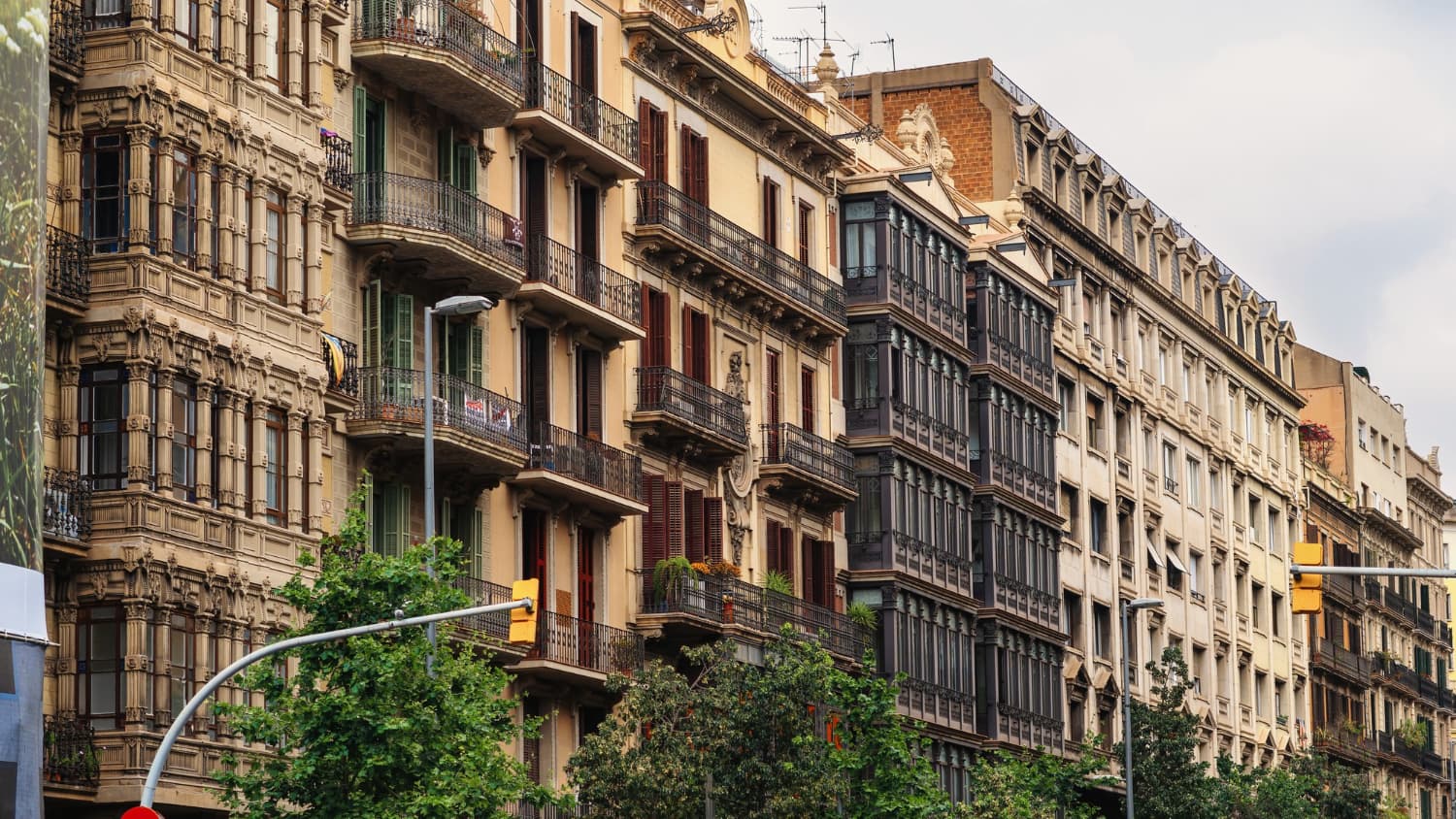
Eixample is the large central grid neighborhood, famous for its modernist buildings and wide avenues (Passeig de Gràcia, Rambla de Catalunya…). Safe and well organized, it is a highly sought-after area for young professionals and international families. You will find everything here: shops, restaurants, trendy cafés, and many offices. Apartments in Eixample are generally spacious (often in beautiful older buildings with high ceilings) and bright, although some lack modern interiors. Living in Eixample puts you at the heart of Barcelona life, in a unique architectural setting, with all services nearby.
Gràcia
A former village annexed to the city, Gràcia has kept a bohemian feel and a very lively neighborhood life. Its pedestrian alleys and squares full of terrace cafés (such as Plaza del Sol) give it a special charm. Gràcia attracts many expats looking for authenticity and a more relaxed lifestyle. Life here feels like a small village at the heart of the city, with local shops, markets, independent cinemas, and a vibrant cultural scene. In the evening, the neighborhood is lively but in a friendly atmosphere. Homes tend to be slightly smaller on average, often without elevators in older buildings, and rents remain high given the neighborhood's popularity.
Poblenou
Located by the sea in the Sant Martí district, Poblenou is a neighborhood in full transformation. Historically industrial, it has been redeveloped into a tech and creative hub through the "22@" project. Today, former warehouses house startups, design schools, modern lofts, and coworking spaces. Poblenou offers the advantage of being close to the beaches (Mar Bella, Bogatell) while providing a calm living environment, with wide avenues and pedestrian zones. You will find many new or recently renovated apartments, often in modern buildings with elevators, parking, etc. The neighborhood attracts many digital professionals and young international families. Living in Poblenou lets you enjoy both the sea and the city, in an innovative setting.
Sarrià-Sant Gervasi
This vast district in northwest Barcelona is the city's upscale, peaceful residential area. Perched on the first hills, Sarrià-Sant Gervasi includes several sub-neighborhoods with the feel of small affluent towns. Here, no tourists, but well-off Barcelona families and expats seeking tranquility and a green setting. Streets are clean and quiet, lined with upscale apartment buildings or family homes. You will find some of the city's best schools, including the Lycée Français de Barcelone (in the Pedralbes neighborhood). This makes it an ideal choice for expat families with children. The downside is rents among the highest in Barcelona, and a somewhat peripheral location (allow 15-20 minutes by transport to reach the center). But if quality of life is your priority, Sarrià or Sant Gervasi offer a privileged environment that is hard to beat.
Note: other neighborhoods such as El Born (in the Old Town, very trendy and nightlife oriented) or Sant Antoni (a central neighborhood undergoing a gastronomic revival) can also be interesting depending on your lifestyle. However, some areas are sometimes discouraged for living as an expat, at least without knowing them well. For example, El Raval, in the old town, has an alternative, bohemian side appreciated by some, but it remains noisy and can feel less safe at night (petty crime in some alleys). Likewise, Barceloneta by the beach is picturesque, but very touristy, and apartments there are small and poorly insulated (constant noise in summer). As for Barri Gòtic (Gothic Quarter), it charms with its history but suffers from crowds and pickpockets. In short, every neighborhood has its pros and cons: take time to visit them to find the one that best matches your expectations and lifestyle.
Need help with your expatriation to Spain?
Our experts accompany you in all your administrative procedures and installation.
Cost of living in Barcelona
Living in Barcelona offers an overall cost of living that is softer than in France, even though the city remains one of the most expensive in Spain. For an expat, plan on a monthly budget of around €1,500 to €2,000 for a single person living comfortably (the lower end of that range is closer to a tight budget), and over €2,000 for a couple (including housing). This budget, while substantial, remains somewhat lower than what you would need in Madrid, and is nowhere near Paris, where everyday life costs significantly more. For an overview, see our guide to the cost of living in Spain.
Here are some benchmarks for everyday expenses in Barcelona in 2026:
- Housing: The main expense, rent for a one-bedroom apartment in a central area now typically ranges between €1,000 and €1,400 per month (excluding utilities), with the average rent for new contracts having exceeded €1,150 by late 2026. In the outskirts, you can find two-bedroom apartments around €700-900. Utilities (electricity, water, internet) generally add €100-150 per month depending on the season (air conditioning in summer can increase the electricity bill).
- Food: Grocery shopping is on average cheaper than in France. Supermarkets offer reasonable prices, and local markets let you buy fresh fruit, vegetables, and fish at good prices. A budget of €250-300 per month per person is often enough for food when cooking at home. Eating out is also affordable: a full meal in a mid-range restaurant costs around €20-25 per person, and the menú del día usually runs around €11-14, or even under €10 outside tourist areas.
- Going out and leisure: Social life in Barcelona will not break the bank. A beer on a terrace costs around €2.50, a glass of wine €3-4, and nightclub entry €15-20 (often with a drink included). Cinema tickets cost €8-9. Municipal museums are free on certain days, and many outdoor activities (beach, walks, free festivals) let you have fun without spending too much.
- Transport: Barcelona public transport is both efficient and affordable. A single metro or bus ticket costs €2.65, but advantageous passes are available: for example, the unlimited monthly pass for one zone (T-usual) costs around €22 (thanks to a subsidy maintained by the transport authorities). The metro and bus network covers the entire city and runs early in the morning until late at night (and even 24 hours on Saturday night). Many expats also choose to get around by scooter or bike in Barcelona; the city offers a very popular bike-sharing service (Bicing), and many bike lanes have been added. More info on TMB Barcelona.
In summary, compared to France, some costs are lower in Barcelona (food, going out, transport), while others are similar or even higher than in provincial France, especially housing. With a local salary, your standard of living may feel slightly below what you had in France, since Spanish wages are on average lower. However, by managing your budget and taking advantage of the cheaper aspects (leisure, food), you can enjoy a very pleasant quality of life under the Catalan sun.
It is therefore essential to keep good budgeting habits and adapt your financial habits to life in Barcelona to stay in control of your day-to-day finances.
Working in Barcelona
Finding a job in Barcelona is a crucial step for working-age expats. The good news is that Barcelona is an economically dynamic city, offering multiple opportunities across various sectors. See also our guide on how to work in Spain.
The Catalan metropolis is above all a tourism hub, one of the city's major economic engines. Hospitality, restaurants, events, leisure… the tourism sector employs many people, with seasonal peaks. If you speak several languages (French, Spanish, English), you will have a profile valued for roles in contact with travelers (reception, guiding, customer service in tourism).
But Barcelona has diversified its economy well beyond tourism. It is now a leading tech and entrepreneurial hub in Southern Europe. The city has welcomed many startups and innovative companies through the Barcelona Tech City project and the 22@ tech district. International companies have also set up their tech or service centers in Barcelona. For example, the French group Schneider Electric established its international digital hub in Barcelona, Airbus has engineering offices there, and other major French names such as Danone, Sanofi, and Air Liquide have a presence in the region, as do video game studios such as Ubisoft (whose main studio is based in Sant Cugat del Vallès, in the Barcelona metropolitan area) or Gameloft. This economic vitality translates into job opportunities for qualified expats, especially in digital (IT, digital marketing, engineering), telecommunications, international trade, and finance (many headquarters and shared services covering Southern Europe are based in Barcelona).
For French speakers, there are also specific openings linked to the French language. Many call centers and multilingual customer services serving clients across Europe recruit native French speakers for customer advisor or technical support roles. These jobs, often in large outsourcing or shared services companies (BPO), can be a quick entry point into the local job market, even without perfect Spanish at first. In addition, if you are a French as a foreign language teacher or have experience in education, Barcelona has several language schools and international schools where French is taught, which can open opportunities in teaching.
It is strongly recommended to include a professional photo on your CV, as this matches local standards in Spain and can increase your chances of getting a job in Barcelona.
Of course, to progress in most careers in Barcelona, Spanish proficiency is an almost essential asset, and Catalan a valuable plus. In multinational companies or internationally minded startups, English is often the working language, which can make integration easier for non-Spanish speakers at first. Nevertheless, learning Spanish will considerably broaden your professional prospects (and open doors to local companies, administrations, etc.). As for Catalan, it is mainly required for public sector or public education jobs, but knowing the basics shows your willingness to integrate and will always be appreciated by Catalan colleagues.
In summary, Barcelona offers an attractive job market for international profiles, with a range of growing sectors. Whether you are a young graduate drawn to the startup scene, an experienced professional on assignment with an international group, or transitioning into teaching or tourism, you will find opportunities in the Catalan city. Do not hesitate to join professional expat networks (LinkedIn, French Tech Barcelona, Chambers of Commerce) to help with your job search and networking once you arrive.
Healthcare in Barcelona
Moving to Barcelona means choosing a city where health and well-being hold a central place in everyday life. Thanks to its mild Mediterranean climate, its many green spaces such as Parc de la Ciutadella, and proximity to the sea, the Catalan capital offers a setting conducive to relaxation and physical activity. This healthy lifestyle, combined with a local diet rich in fresh produce from the city's colorful markets, contributes to Barcelona's reputation as one of the most pleasant cities to live in Europe.
The healthcare system in Barcelona is recognized for its quality and accessibility. Residents benefit from a dense network of modern public hospitals, neighborhood health centers (CAP), and reputable private clinics. Among the reference institutions are Hospital Clínic, Hospital de Sant Pau (listed as a UNESCO World Heritage site), and Hospital del Mar, ideally located by the sea. Residential neighborhoods such as Sarrià-Sant Gervasi or Horta-Guinardó also have quality medical facilities, which reassures families and health conscious expats.
For expats, access to care is straightforward once you are registered with Spanish social security, a step covered in our guide to social security. Public healthcare is generally free or low cost, and service quality is praised by many expats living in Barcelona. However, it is advisable to take out supplementary health insurance, especially for faster access to certain specialists or services in private clinics, highly valued for their comfort and speed. The Catalan health system is managed by CatSalut.
Your choice of neighborhood can also influence your healthcare experience in Barcelona. Families often prefer calm, green areas such as Sarrià-Sant Gervasi or Horta-Guinardó, while young professionals and students opt for dynamic neighborhoods close to universities and medical centers, such as Eixample or Ciutat Vella. Wherever you live, the city's efficient public transport makes it easy to reach the main care centers.
Finally, living in Barcelona also means enjoying a lifestyle focused on well-being: walks on the beach, outdoor sports, yoga in the parks, and a vibrant cultural scene that contributes to balance between body and mind. The Mediterranean climate, with mild winters and sunny summers, encourages an active, social life year-round, a key factor for physical and mental health.
In summary, moving to Barcelona means choosing a city where health, quality of life, and cultural heritage come together to offer a unique experience. Whether you are an expat, student, or looking for a new adventure, Barcelona welcomes you in an exceptional setting where everything is in place to take care of you and fully enjoy Catalan life.
Local life and integration
Moving to Barcelona is not just about paperwork and work: it is also about adopting a new lifestyle and immersing yourself in local culture. Fortunately, quality of life in Barcelona is one of the great pleasures of expatriation.
Daily life in Barcelona follows a more relaxed pace than in France. Workdays often start a little later in the morning, and a generous lunch break (sometimes followed by a short siesta) is the norm. In the evening, Spaniards dine late: do not be surprised to see restaurants filling up only from 9 p.m. This rhythm may take some getting used to, but many expats end up appreciating this more relaxed tempo, where you take time to live. Barcelona residents make the most of outdoor spaces: after work, it is common to have a drink on a terrace, take a walk on the beach, or simply stroll along the ramblas and lively neighborhood squares.
Integrating in Barcelona naturally means opening up to local Catalan culture. Catalonia has its own traditions: Castells (human towers), La Mercè festival, the celebration of Sant Jordi (the festival of books and roses)… Immerse yourself in these events to better understand the Catalan spirit. On the language front, as mentioned above, showing interest in Catalan is a friendly gesture toward residents. Learning a few basic phrases (hello = bon dia, thank you = gràcies, goodbye = adeu) will be warmly appreciated. However, do not feel you must become fluent in Catalan to live here: most everyday exchanges can be done in Spanish without problem. Catalans also switch easily between languages and will not hold it against you for speaking Castilian Spanish, as long as you respect their identity.
To meet people and avoid staying in an "expat bubble," several options are available. On one hand, Barcelona has a historic French association, Barcelone Accueil, which organizes meetups, outings, and activities for new francophone arrivals. It is an excellent entry point for building a network in the first weeks: coffee meetups, cultural visits, conversation workshops, etc., all in a friendly atmosphere. On the other hand, many Facebook and WhatsApp expat groups exist (by nationality or interest) where people share tips and advice. For example, groups such as "French in Barcelona" or "Francophones in Barcelona" have thousands of members and can help you find information in a flash. Of course, the ideal for full integration is also to make friends with locals or people of other nationalities: take part in local activities (Spanish cooking classes, sports clubs, occasional volunteering at neighborhood festivals…) to practice the language and broaden your circle.
Another important aspect of local life concerns expat families. If you are moving with children, know that Barcelona has several renowned French schools and bilingual institutions. The Lycée Français de Barcelone (directly managed by AEFE, in the Pedralbes neighborhood) welcomes students from nursery through baccalaureate and follows the French curriculum, which eases the transition for children arriving from France. The Ferdinand de Lesseps school, an AEFE partner and over a century old, also offers French-language education for younger children (nursery and primary), in the Eixample neighborhood. In addition, many private bilingual schools (French-Spanish or French-English) are available. The presence of these francophone educational structures reflects the strong French presence in the region and offers real support for settling families. Barcelona is also recognized for offering excellent quality of life for families, thanks to its infrastructure, green spaces, and international schools.
On the cultural front, the city is full of iconic places to discover, whether with family or friends. Among the must-see spots, do not miss the Picasso Museum, a major reference for art lovers and a symbol of Barcelona's artistic richness. The diversity of cultural and iconic places, such as the Sagrada Família, Park Güell, or the Gothic Quarter, makes Barcelona an ideal destination for culture and history enthusiasts.
Ultimately, life in Barcelona has something for everyone: rich culture, beaches and nature at the city's doorstep, a festive atmosphere, warm residents, modern infrastructure… By staying curious, respectful of local culture, and open to meeting people, you will quickly feel at home in the Catalan capital. But in the end, is moving to Barcelona worth it? Integration and adaptation challenges exist, but the rewards and quality of life the city offers often meet expectations.
Final tip for a smooth move
Despite all this information, settling abroad can feel overwhelming when faced with paperwork and unfamiliar procedures. One final tip to make life easier: do not hesitate to turn to Catalan gestores or specialized support services. In Catalonia (and Spain in general), gestores are private administrative advisors who, for a fee, can handle many formalities for you (registering a car, filing local taxes, obtaining official documents, etc.). They are experts in local bureaucracy and will save you precious time if you feel lost in administrative maze.
In the same spirit, you can also use a professional relocation service for expats. For example, Hiliv offers full support for expats and internationals settling in Spain. Whether you need to obtain your NIE, find housing, open a bank account, or even enroll your children in school, the Hiliv team can handle most procedures on your behalf. One of our clients sums it up well: "Moving with our 2 children = maximum stress. Hiliv took care of EVERYTHING: paperwork, school, housing, bank… We were able to enjoy our new life from day one!" By using this type of service, you choose a stress-free move, with bilingual experts who know the local landscape perfectly. It is the assurance of not forgetting anything important and completing formalities in record time, so you can focus on what matters most: your new life in Barcelona.
Frequently asked questions
FAQ: moving to Barcelona
What are the first administrative steps to take when arriving in Barcelona?
Focus first on the trio of NIE, empadronamiento, and Seguridad Social registration. The NIE is essential for working, opening a bank account, or renting a home. Once you have an address, empadronamiento at the Ajuntament de Barcelona officially registers your residence. If you work or plan to stay long term, registering with the Spanish social security system gives you access to public healthcare through CatSalut.
What monthly budget should I plan for living in Barcelona in 2026?
Budget around €1,500 to €2,000 per month for a single person living comfortably (the lower end of that range is closer to a tight budget), and over €2,000 for a couple, including housing. Rent remains the main expense: a two-bedroom apartment in a central area typically costs between €1,000 and €1,400 per month, excluding utilities.
Do I need to speak Catalan to move to Barcelona?
No, it is not essential. Everyone speaks Castilian Spanish, and a large share of the population understands English. However, learning a few words of Catalan (bon dia, gràcies, adeu) is highly appreciated locally and makes integration easier. For work, Spanish remains almost indispensable in most sectors.
Which neighborhoods are most popular with expats in Barcelona?
Eixample (central and modernist), Gràcia (bohemian and friendly), Poblenou (tech hub and seaside), Sarrià-Sant Gervasi (upscale residential, ideal for families), El Born (trendy), Sant Antoni (food scene), and Sant Andreu (quiet and family-friendly) are among the most sought-after areas. Each neighborhood has its pros and cons: visit them before making a decision.
Do EU citizens need a residence permit to live in Barcelona?
No. As EU citizens, you do not need to apply for a residence card in Spain. Your NIE certificate (the so-called "green NIE" for EU residents) serves as your proof of residence. There is therefore no additional residence card procedure, unlike for non-EU expats who must follow a separate immigration process.
Can I drive in Spain with a foreign driving license?
Yes, EU citizens can drive in Spain with a valid license from their home country for as long as it remains valid. Exchanging it for a Spanish license is not mandatory according to the DGT. However, if your license has unlimited validity (older pink format) or is long-term, you must renew it after two years of normal residence in Spain, which involves a psychophysical fitness test.
How do I access the public healthcare system in Barcelona?
You must be registered with the Seguridad Social and empadronado (registered on the municipal padrón). Once registered, you receive your NUSS number and can apply for the Catalan health card CatSalut (TSI) to access primary care centers (CAP) and public hospitals. Many expats also take out private health insurance for faster access to specialists.
Which sectors hire expats the most in Barcelona?
Barcelona offers opportunities in tourism (hospitality, restaurants, events), digital and startups (22@ district, Barcelona Tech City), telecommunications, international trade, finance, and multilingual services (French-speaking call centers, among others). Profiles that are bilingual or trilingual (French, Spanish, English) are particularly in demand.
Are there French schools in Barcelona for expat families?
Yes. The Lycée Français de Barcelone (AEFE, Pedralbes neighborhood) welcomes students from nursery through baccalaureate with the French curriculum. The Ferdinand de Lesseps school (AEFE partner, in Eixample) offers French-language education for nursery and primary levels. Many private bilingual schools (French-Spanish or French-English) are also available.
How can Hiliv help with my move to Barcelona?
Hiliv offers full support for expats and internationals settling in Spain: obtaining the NIE, empadronamiento, housing search, opening a bank account, school enrollment for children, and many other administrative steps. Bilingual experts who know the local landscape let you focus on what matters most: enjoying your new life in Barcelona.
Is Barcelona more expensive than Madrid or Paris?
Barcelona is among the most expensive cities in Spain, with rents comparable to Madrid but lower than Paris. Overall living costs remain softer than in France: food, going out, and public transport are generally cheaper, while housing remains the highest expense. With a local salary, since Spanish wages are on average lower, your standard of living may feel slightly below what you had in France.
Which neighborhoods should I avoid or approach with caution in Barcelona?
El Raval (alternative but noisy, petty crime at night in some alleys), Barceloneta (very touristy, small and noisy apartments in summer), and Barri Gòtic (historic charm but crowds and pickpockets) can disappoint if you are looking for everyday peace and quiet. Visit these neighborhoods at different times of day before committing.
Your administrative plan to leave for Spain
Generate a personalized calendar of all your procedures for your expatriation for free.
Your data is protected and secure