Moving to Granada: Expat Guide to the Pearl of Andalusia
Complete guide to moving to Granada: formalities (NIE, empadronamiento), housing, neighbourhoods, cost of living, work and integration. Everything to succeed in your expatriation to Granada.

International Mobility Expert
Moving to Granada: Expat Guide to the Pearl of Andalusia
Granada is attracting more and more expats in search of exceptional quality of life, in a setting steeped in history and culture. Among the advantages of living in Granada: remarkable quality of life, cultural richness, great tranquillity and an authentic local way of life.
Nicknamed the pearl of Andalusia, this Andalusian city is an ideal destination for expats, students and families, thanks to its affordable cost of living, dynamism and warm welcome. It offers a blend of warm local life and a unique Moorish heritage.
In this comprehensive guide, discover everything you need to know about living in Granada: from the city’s charms to administrative procedures, housing, cost of living, work and day-to-day integration. The history and culture of Granada are inseparable from its exceptional cultural heritage, which attracts many visitors and new residents every year. More and more people are choosing Granada to settle and enjoy its many assets.
Need help obtaining your white NIE in Spain?
Our team of experts helps you obtain your white NIE (non-resident) without traveling.
More than 300 white NIEs obtained
"Julia est super efficace : NIE obtenu en quelques jours."
Marie
Espagne
Discovering Granada
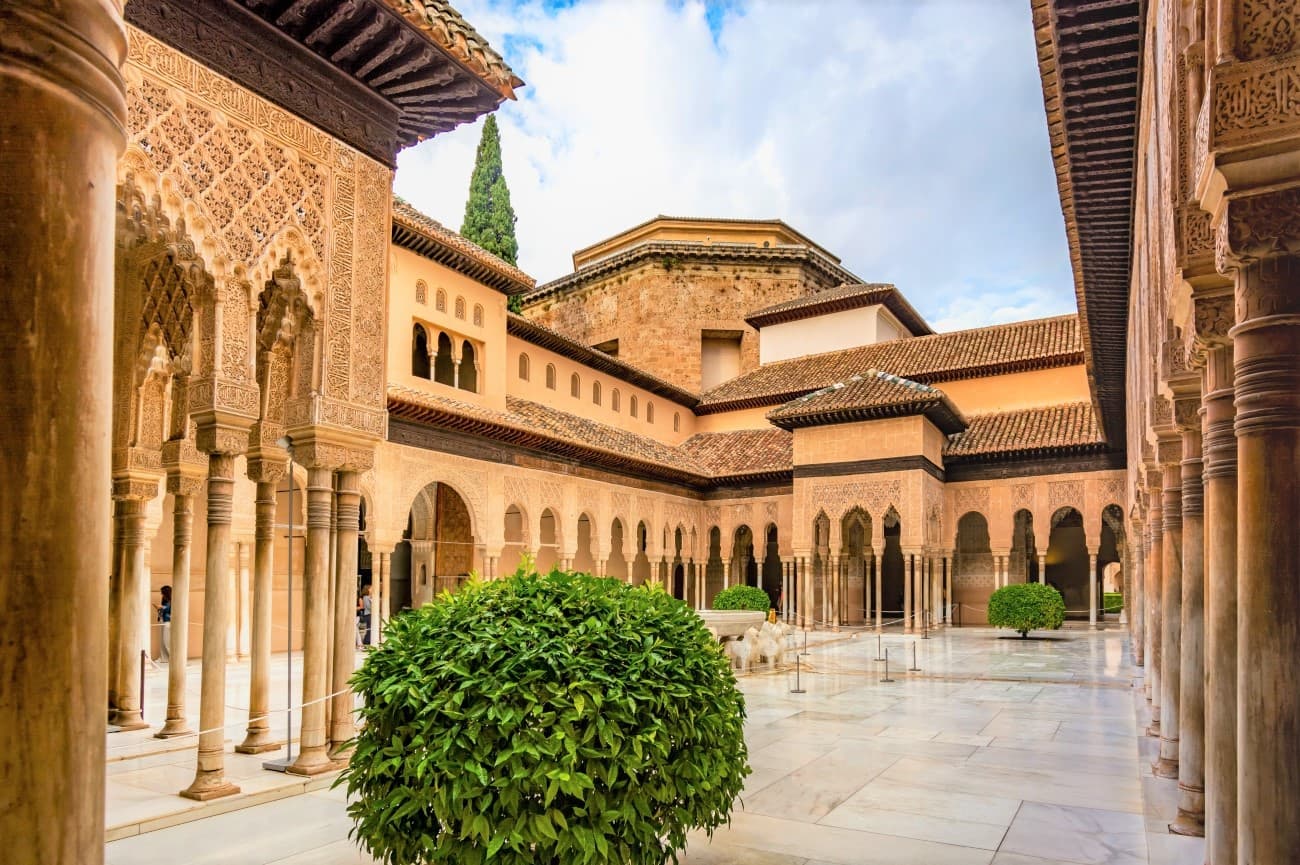
Granada is world-famous for the Alhambra, its sumptuous Moorish palace-fortress overlooking the city. At the foot of the Sierra Nevada (whose snowy peaks rise to over 3,000 m), the city enjoys a magnificent natural setting. It sits at around 700 m altitude, giving it a continental Mediterranean climate: very hot, dry summers (often over 35°C) and fairly mild winters by day but cool at night. This location is ideal: the ski slopes of the Sierra Nevada are less than an hour away and the Mediterranean (Granada’s tropical coast) is also just an hour by car. You can ski in the morning and relax on the beaches of the Costa Tropical in the afternoon.
Andalusia stands out for the diversity of its regions, between coast, mountains and inland, offering a wide variety of landscapes and climates to discover. To find out more about the region, the official Andalusian tourism website is a reliable resource.
In addition to its stunning historical heritage (Alhambra, old quarters, Andalusian and Moorish legacy), Granada offers a very appealing quality of life. The city remains human in scale (around 230,000 inhabitants), making it friendly and easy to get around. Its lively city centre, with its many squares such as the famous Plaza Nueva, is a real meeting place, close to the cathedral and main attractions.
It is home to one of Spain’s largest universities (founded in 1531) with more than 60,000 students, including many internationals. This makes Granada a dynamic student city and very cosmopolitan despite its medium size. There are countless tapas bars, cultural events and a youthful atmosphere all year round thanks to Erasmus students. The richness of Andalusian cuisine, renowned for its diversity and authentic flavours, appeals to both locals and visitors seeking culinary experiences.
Finally, the cost of living is relatively low compared to France or other major Spanish cities, a major advantage we will come back to. Whether you are considering a stay in Granada to live, study or simply visit, the city offers a unique and unforgettable experience.
Administrative formalities on arrival
To get your expatriation to Granada off to a good start, it is essential to complete a few administrative steps quickly (similar to any move to Spain):
- Obtain a NIE: the Número de Identidad de Extranjero is the identification number for foreigners in Spain, required for all procedures. In Granada, go to the Policía Nacional. See our guide on obtaining your NIE in Granada.
- Register (empadronamiento): registration is done at Granada City Hall (Ayuntamiento). See our article on empadronamiento.
- Open a Spanish bank account: most banks require a NIE and proof of address. Guide to opening an account in Spain.
- Register with the Andalusian health service: as a resident (EU citizen), you can register with the Servicio Andaluz de Salud to access the public healthcare system. Registration generally requires your NIE and empadronamiento. Many expats also take out private health insurance, but registering with the public system is strongly recommended to benefit from a local GP and the public hospital network.
Need help with your expatriation to Spain?
Our experts accompany you in all your administrative procedures and installation.
Housing in Granada
Finding housing in Granada is generally easier than in Madrid or Barcelona. The city, very much a student and tourist destination, has a plentiful supply of rental apartments, many of them furnished and available for varying lengths of stay. There is a wide range of housing options to suit different budgets, from affordable studios to more luxurious apartments. Rents are affordable: you can find a small studio from around €350 per month, while a large T3 apartment (two bedrooms and living room) is around €700 per month. As a rough guide, budget an average of €400 to €800 per month for comfortable accommodation. This reasonable housing cost allows expats to enjoy a higher standard of living on a lower budget than in France. Location is also a key factor, as it determines proximity to universities, activity centres and cultural sites.
Granada’s neighbourhoods offer very different atmospheres. Here are some areas to consider depending on your lifestyle and preferences:
Historic centre (Albaicín, Centro)
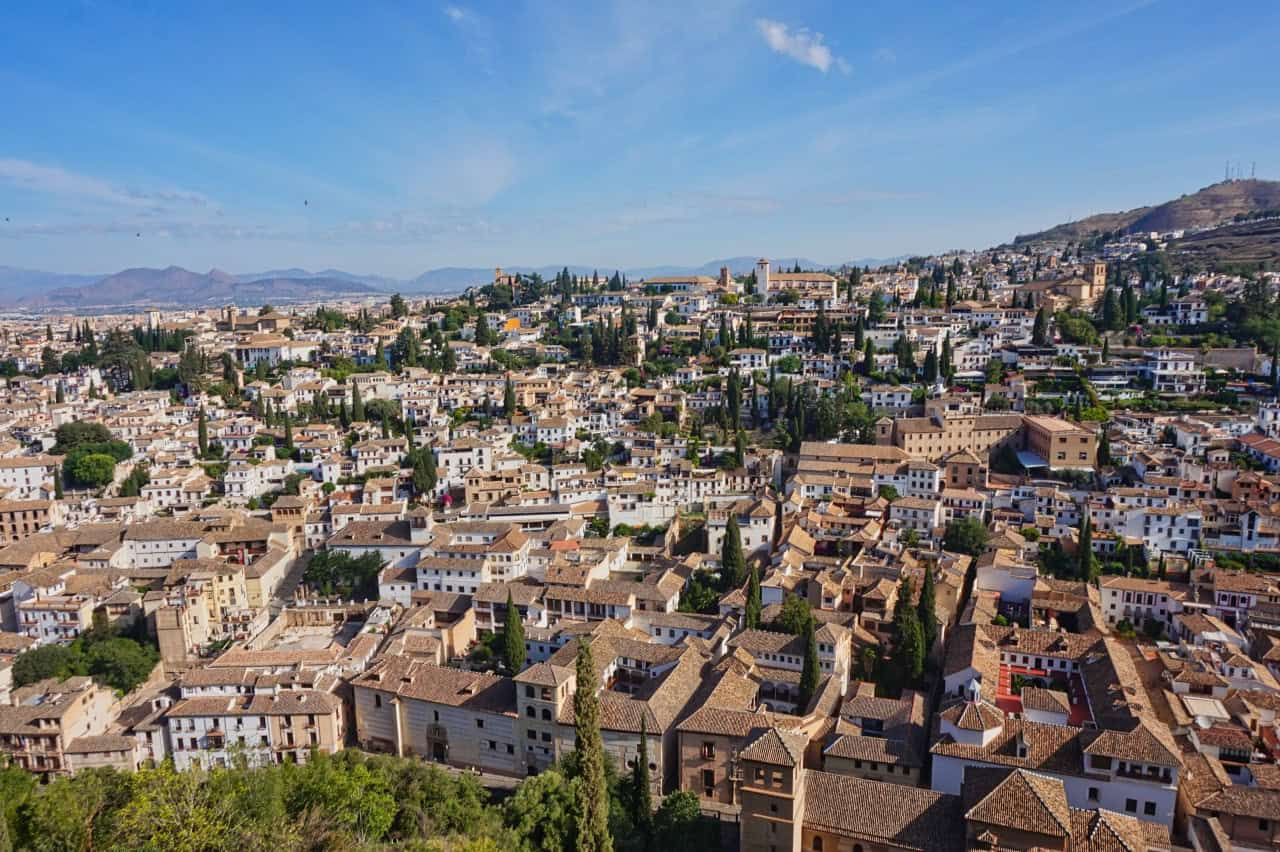
The historic heart is divided between the Albaicín quarter (or Albayzín) and the Centro around the cathedral. The Albaicín, clinging to the hillside facing the Alhambra, is a maze of cobbled streets, white houses with flower-filled patios and viewpoints with breathtaking views. This iconic quarter, listed by UNESCO, charms many expats and artists with its authentic Moorish and Andalusian character. Be aware, however: medieval streets mean difficult car access (or even impossible in some pedestrian alleys) and sometimes old housing with basic insulation. Parking is scarce and you should be prepared to climb stairs every day. This is part of the Albaicín’s charm, but it is worth bearing in mind.
The Centro, meanwhile, is the city centre around Granada Cathedral and streets such as Gran Vía or Reyes Católicos. It is the commercial heart with its shops, markets and lively squares. You will find more recent buildings (19th–20th century), renovated apartments while still being a stone’s throw from historic monuments. Living in the Centro means you can do everything on foot and enjoy the buzz of the city. It is a popular choice for expats who want to be at the heart of the action, with tapas bars and services right on their doorstep, while avoiding the topographic constraints of the Albaicín.
Realejo
Realejo is an emblematic historic and cultural neighbourhood of Granada, known for its bohemian vibe, its Jewish past and its wealth of artistic activity.
The former Jewish quarter of Granada, Realejo stretches over the slopes to the south-west of the Alhambra. Today it is a neighbourhood with a bohemian charm much appreciated by locals and foreigners alike. You will find pretty little squares, street art (the famous murals by El Niño de las Pinturas), and an authentic neighbourhood life. Realejo is renowned for its traditional tapas bars and trendy cafés, frequented by a cosmopolitan community of residents, students and artists. In the evening, the atmosphere is lively without being as touristy as the hyper-centre. The neighbourhood is partly pedestrian and on a slope, but more accessible than the Albaicín. It is an excellent compromise for those seeking a picturesque, lively and friendly place to live. As Realejo is right at the foot of the Alhambra, many homes also offer stunning views over the city or the palace walls.
Zaidín
To the south of Granada, Zaidín offers a completely different setting: it is the city’s most populous neighbourhood, with more modern urban planning. You will find wide avenues, recent buildings, parks and all modern amenities (shopping centres, supermarkets, sports facilities, etc.). This residential area is a sensible choice for families and those who want a quieter day-to-day lifestyle. Housing tends to be more spacious, often with parking or a garage, and rents remain very reasonable. Zaidín allows you to live “like a local”, mainly among people from Granada, while being 10–15 minutes by bus or bike from the historic centre. It is a practical neighbourhood, with schools, clinics, and even the local football team’s large stadium (Nuevo Los Cármenes). If you are looking for modernity and comfort without breaking the bank, Zaidín is an excellent choice.
Student areas (Cartuja, Camino de Ronda)
Granada also has areas particularly suited to students and young professionals thanks to even lower rents and a relaxed atmosphere. The main campus of the University of Granada is on Cartuja hill, north of the city. The Cartuja neighbourhood and its surroundings (Beiro district) are home to many student residences and shared apartments. The environment is not Granada’s most charming (1970s–80s construction, “peripheral campus” feel), but prices are unbeatable. If you want to live on a budget and close to the faculties (sciences, arts, etc.), it is ideal.
Another popular area is the Camino de Ronda axis, a wide avenue that runs around the city centre. Along and near Camino de Ronda you will find a multitude of shared apartments, small studios and rooms to rent. The atmosphere is lively, with neighbourhood life shaped by students: cheap bars, fast food, low-cost gyms, etc. It is not the quietest area, but for a young expat it is a way to immerse yourself quickly in Granada life and benefit from all transport (bus lines and light rail pass through Camino de Ronda).
In summary, whether you are looking for historic character, bohemian spirit, modern comfort or proximity to the university, Granada offers a range of neighbourhoods to suit every expat profile. Take time to discover them when you arrive, perhaps via a short-term rental first, to choose the location that suits you best.
Cost of living
Estimates of the cost of living in Granada vary with lifestyle, but you should budget on average between €900 and €1,200 per month for a single person, including housing.
One of Granada’s major assets is its cost of living significantly lower than in France or other major Spanish cities. On average, daily life in Granada is estimated to cost 20 to 30% less than in France. This translates into real savings on several expense items. See also our article on cost of living in Spain.
- Housing and utilities: as mentioned above, rents are very affordable and there is housing to suit all budgets. Common charges (water, electricity, internet) are generally lower than in France, partly thanks to mild winters that limit heating needs (a simple radiator can be enough from December to February in many cases).
- Food: grocery shopping in Granada costs less, especially for fresh local produce. Markets offer fruit, vegetables, olive oil, cheese and charcuterie at attractive prices. Eating out is also cheap: a set menu (starter-main-dessert) in a traditional restaurant costs around €12–14.
- Going out and leisure: Granada’s most famous feature is the tradition of free tapas. In the vast majority of bars, every drink ordered comes with a free tapa. By ordering a few drinks (€2–3 each on average for a glass of wine or beer), you will get something to nibble and often more—enough for a full meal by hopping between 3 or 4 bars. People in Granada call this the tapeo, a tapas crawl. With €10–15 you can spend a whole evening drinking and eating your fill, which is hard to beat in any other city. What’s more, many museums or monuments have free entry times each week, and outdoor activities (hiking, walking around town) are free.
- Transport: the city is not very large, so you can often get around on foot or by bike. Otherwise, the urban bus network is very well developed and cheap. A bus ticket costs around €1.40, and monthly passes are available (around €40 per month for unlimited travel). That is significantly cheaper than public transport in a large French city. If you have a car, fuel in Spain is generally 10–20% cheaper than in France due to lower taxes.
In short, living in Granada allows you to save money while enjoying an excellent quality of life. Your purchasing power will go further, allowing you to go out more, travel at weekends or simply save more. This low cost of living allows expats and residents to live within their means, whether their income is modest or higher. It is one of the reasons why many retirees and remote workers choose Granada as their sunny base.
Working in Granada
Before moving, many expats wonder about job opportunities in Granada. The local economy is mainly based on a few key sectors: tourism, the surrounding agriculture and the university. Granada is not a major industrial city or international business centre, so there are relatively few headquarters of large companies (compared to Madrid or Barcelona). However, that does not mean it is impossible to work there: you just need to know the right opportunities. Granada is also an attractive destination for professionals and entrepreneurs, thanks to its quality of life and cultural dynamism.
- Tourism and hospitality: Granada attracts millions of visitors every year, not least thanks to the Alhambra. The sector is a major source of jobs (hotels, catering, services linked to visits). Malaga airport, nearby, makes it easy for international tourists to arrive. If you speak French and English, you could find opportunities as a tour guide (demand for French-speaking guides for the Alhambra and city tours), hotel receptionist, or employee in an excursion agency. Contracts may be seasonal (high season April–October) but the flow of tourists is steady almost all year thanks to the mild climate.
- Teaching and university: the presence of the large University of Granada means jobs in education and research. Many expats teach languages in private academies (English or French to Spaniards). The university recruits academic and administrative staff, but competition is fierce and it usually requires a good command of Spanish.
- Agriculture and agri-food: the province of Granada is fertile (Genil plain, olive and almond groves, tropical fruit on the coast). Jobs exist in agri-food (agronomists, quality technicians, export). Some agricultural companies seek to export and value language and international skills.
- Entrepreneurship and freelance: for lack of many traditional employers, many expats in Granada choose to work remotely or be self-employed. Thanks to its low cost of living and pleasant environment, Granada is ideal for digital freelancers, consultants, etc. There are nice coworking spaces and cafés with wifi. The Andalusia region encourages entrepreneurship: regional support, help with business creation, Spanish self-employed status (autónomo) with greatly reduced social contributions in the first year.
- Remote work for employers abroad: more and more professionals are choosing Granada as a remote-work base while employed by a company in their country of origin. This is the case for many French, Belgian or other European nationals. Check the tax and legal aspects (tax residence, international remote work agreement). Spain facilitates this kind of situation, including the so-called “digital nomad” visa for non-Europeans.
In summary, working in Granada often requires flexibility and initiative. Unless you are transferred by a company, most active expats here are freelancers, entrepreneurs or remote employees. Local opportunities exist but in specific niches. The huge advantage is that if you have a stable income (even modest) while living in Granada, you will enjoy an extraordinary environment at lower cost, which quickly makes up for the absence of big-city salaries. Joining a local expat network or professional groups (Meetup, etc.) can help you find leads once you are settled. To optimise your professional or property steps in Granada, it is advisable to call on experts who can support you in your projects. To go further: How to work in Spain.
Fitting in to Granada
Moving to a new city goes beyond finding housing and a job: it is also about immersing yourself in the local culture and building a network. Granada, with its authentic Andalusian atmosphere, offers a welcoming environment, provided you make a few efforts to adapt.
Having at least basic Spanish will be crucial for successful integration. In Andalusia, and especially in Granada, locals speak less English than in Barcelona or Madrid, for example. People in Granada appreciate it when a foreigner tries to speak Spanish, even imperfectly: it immediately creates a warmer connection. Do not hesitate to take intensive Spanish courses when you arrive, or to take part in language exchanges. As a student city, Granada offers many language tandem events in bars (evenings where locals and foreigners meet to practise languages). These meet-ups, often advertised on social media or through student associations, are a great way to meet people and improve your language skills in a relaxed atmosphere.
People in Granada and Andalusians in general are known for their conviviality and sense of welcome. Expect spontaneous conversations with your local shopkeepers, neighbours or even strangers in the street curious to know where you are from. Granada attracts people from all over the world, whether students, expats or families, which contributes to the city’s diversity and human richness. An open, smiling attitude will open many doors. Do not hesitate to join in neighbourhood festivals, to frequent the same bars and cafés regularly to become a regular, and to say yes to invitations. Social life in Granada revolves largely around tapas outings, especially in the evening and at weekends—a great opportunity to make connections.
To immerse yourself in local culture, take part in the city’s major traditional festivities. Granada’s Semana Santa (Holy Week/Easter week) is a highlight: for a week, spectacular religious processions parade through the streets to the sound of drums and saetas, in an atmosphere that is both fervent and convivial. Whether you are religious or not, experiencing Andalusian Holy Week from the inside is a deep cultural experience. Another emblematic event is the Festival of the Crosses of May (Cruces de Mayo) at the beginning of May: giant flower-decked crosses are erected in squares and patios, around which locals gather in traditional costume to sing, dance and share wine and tapas. It is a colourful popular festival, ideal for feeling part of the local community.
If you are coming with your family, note that Granada has schools offering Spanish–English bilingual streams, and good international schools in Andalusia. There is, however, no French lycée in Granada itself (the nearest are in Malaga and Seville). For younger children, there are welcoming local nurseries and kindergartens: immersion in Spanish from an early age can be a real plus for your children. You will also find expat or parent associations to guide you through the local school system and connect with other families in your situation.
Education and healthcare system in Granada
In Granada, expats’ daily life is made easier by the quality and diversity of educational and health services. The city offers a wide range of public and private schools, known for their good teaching standards and openness to the international community. Expat families will easily find a school to suit their needs, whether for full immersion in the Spanish system or a bilingual track. The University of Granada, one of Spain’s oldest and most prestigious, attracts thousands of students from around the world every year. Thanks to exchange programmes and scholarships, integration of foreign students is greatly facilitated, contributing to the city’s cosmopolitan atmosphere.
On the health side, living in Granada means benefiting from an efficient public healthcare system, accessible to the whole population. The city’s hospitals and clinics are well-equipped and offer quality care at very affordable prices, a real advantage for budget-conscious expats. Private health services are also numerous, allowing everyone to choose the option that best suits their needs and budget. The low cost of living in Granada thus makes it possible to enjoy high-level medical and educational services without breaking the bank, making life in Granada particularly attractive for families and international students.
Nightlife and leisure
Nightlife in Granada is one of the city’s great assets, renowned throughout Andalusia for its festive and authentic atmosphere. As night falls, the city centre comes alive: pedestrian streets such as Calle Elvira or Calle Navas become the scene of real effervescence, where residents and visitors meet to share tapas in a convivial atmosphere. Bars and restaurants vie in creativity to offer Andalusian specialities, and it is not uncommon to extend the evening in a club or live music bar, especially in the lively quarters of the Albaicín and Realejo. These neighbourhoods, with their picturesque streets and busy terraces, offer a unique experience of Granada nightlife, between tradition and modernity.
But life in Granada is not just about the night: the city is full of leisure activities for all tastes. Heritage lovers can visit the unmissable Alhambra, the Generalife or Granada’s majestic cathedral, while nature lovers will enjoy walks in the gardens, parks and viewpoints with spectacular views over the city and the Sierra Nevada. Whether you are passionate about culture, gastronomy or nights out with friends, Granada will win you over with the diversity of its activities and the warmth of its atmosphere.
Safety and security in Granada
Granada is a city where it is good to live, and security is a major asset for expats and visitors alike. The crime rate remains low, and most neighbourhoods, including tourist areas, are well monitored by the local authorities. The police ensure the safety of residents and tourists, especially in the busiest parts of the city centre and around the main historic sites.
As in any large city, it is advisable to use common sense: avoid walking alone in deserted streets at night and always keep an eye on your belongings, especially in busy areas or during major events. Expats can also rely on the advice and services offered by local associations, which support new arrivals in their move and provide all the information needed to enjoy life in Granada with peace of mind. Thanks to the warm welcome of people in Granada and the quality of the services available, everyone can settle and live in Granada with confidence, in a city where conviviality and security go hand in hand.
Good to know
Before packing your bags for Granada, here are a few more practical tips and useful information to avoid surprises:
- Climate and altitude: although in Andalusia, Granada does not have a classic Mediterranean coastal climate. Its altitude (~700 m) and proximity to the mountains mean that winters can be cold in the morning and evening. It is not uncommon to see snow in the distance on the Sierra Nevada peaks until late spring, and even in the city winter nighttime temperatures can drop close to 0°C. So pack some warm clothes, a coat and a good duvet for winter, as Andalusian homes are sometimes poorly heated. Conversely, in summer the heat is intense in the afternoon (often over 35°C in July–August): air conditioning or a fan will be your friends, and respecting the siesta in the shade will soon feel essential. Fortunately, the air is dry, which makes the heat more bearable than in a humid climate.
- Health: in Granada you will find pharmacies on every street corner and several well-equipped hospitals (university hospital, private hospitals). The Spanish healthcare system works well: if you are registered with the Seguridad Social, you will be entitled to a family doctor (GP) at your neighbourhood health centre. Few healthcare professionals speak French, but some speak a little English. In any case, always have your European Health Insurance Card (for EU citizens in transition) or your Spanish social security number once assigned.
- Opening hours and habits: as mentioned, life runs at its own pace in Andalusia. Do not be surprised if you are invited to dinner at 9 p.m., if the bank only opens 8.30 a.m.–2 p.m., or if supermarkets close at 9 p.m. and are closed on Sundays. Adapt calmly to these local habits. Enjoy the central market in the morning, take a coffee break at 11 a.m. like the locals, then allow yourself a stroll in the late afternoon when the city comes back to life. This slower rhythm is ultimately very pleasant—you just need to see it in a positive light.
- Safety: Granada is a safe city. The crime rate is low; you feel safe even in the centre in the evening. You just need to take basic precautions in tourist areas (watch out for pickpockets at the Alhambra or on crowded buses, as everywhere). The northern outlying neighbourhoods (e.g. Almanjáyar) are less frequented by expats, but in general there are no “no-go zones” to worry about. People in Granada look out for each other and the local police are present, especially in the historic centre.
- “No pasa nada” mindset: embrace the local philosophy of “no pasa nada”, literally “it’s not serious” or “no big deal”. You will see—every problem has a solution; people put things in perspective a lot. If an administrative appointment is running late, if your contact arrives 20 minutes late or if something unexpected happens, keep smiling and tell yourself no pasa nada. This positive attitude will greatly help you to fit in and enjoy Granada life as it is, without constantly comparing it to what you knew before.
Support for your move
Moving to Granada means choosing a city with incredible charm and a resolutely human scale. Even if the city is less international than Madrid or Barcelona, an expatriation to Granada can go smoothly if you are well prepared, and possibly with personalised support.
The Hiliv platform is there to make your transition easier: we offer remote support for all the key steps of your move. Whether it is getting your NIE quickly, completing your empadronamiento, finding housing before you even arrive or guiding you through opening a local bank account, Hiliv takes care of everything. We have already successfully helped many expats to settle in Spain (Valencia, Madrid, Barcelona, etc.), saving them administrative stress and endless research. Our clients report a fast and efficient service: NIE obtained in a few days, apartment found without scams, administrative registrations handled—in short a simplified move and peace of mind.
Hiliv services naturally apply to a move to Granada. So you too can benefit from our local expertise and our network of on-the-ground experts to ensure everything is ready for your arrival in the Nasrid city. Our team of local experts supports you at every step, for professional, personalised support. While we handle the formalities and logistics, you can focus on what matters: preparing your new life, projecting yourself into your personal or professional projects, and perhaps even starting to learn a few flamenco steps or Andalusian recipes to celebrate your arrival!
In conclusion, moving to Granada means embracing a life of sun, culture, conviviality and incomparable flavours, all with a gentle cost of living. Granada is an ideal destination to settle, whether you are a student, an expat or looking for a new quality of life. With good preparation, an open mind and possibly the support of a specialised service like Hiliv, your expatriation to Granada will be all the more successful. So, ready to live your Andalusian dream between the Sierra Nevada and the Alhambra? Welcome to Granada, bienvenido a Granada, and no pasa nada: everything will work out!
Frequently asked questions
What are the first steps to take when moving to Granada?
Priority steps are: obtain your NIE from the Policía Nacional, register (empadronamiento) at Granada City Hall, open a Spanish bank account, and register with the Servicio Andaluz de Salud if you work or reside in Spain.
What monthly budget should you plan for living in Granada as an expat?
Count on average between €900 and €1,200 per month for a single person, including housing. The cost of living in Granada is estimated to be 20 to 30% lower than in France.
Which neighbourhoods in Granada are most popular with expats?
Albaicín (historic centre, UNESCO-listed), Centro (commercial heart), Realejo (bohemian, tapas bars), Zaidín (modern, families) and student areas (Cartuja, Camino de Ronda) offer very different vibes depending on your profile.
Do you need to speak Spanish to fit in to Granada?
Yes. In Andalusia, and especially in Granada, less English is spoken than in Madrid or Barcelona. Having at least basic Spanish is crucial for successful integration. People in Granada appreciate efforts to speak their language.
What are the job opportunities in Granada?
Key sectors are tourism and hospitality, teaching (language academies, university), agriculture and agri-food, as well as remote work and entrepreneurship. Many expats are freelancers or work remotely.
What is the climate like in Granada?
Granada has a continental Mediterranean climate: very hot, dry summers (often over 35°C), mild winters during the day but cool at night. The altitude (~700 m) can bring nighttime temperatures close to 0°C in winter.
Is Granada a safe city?
Yes. The crime rate remains low and most neighbourhoods are well monitored. As everywhere, it pays to be cautious in tourist areas (pickpockets) and to avoid deserted streets at night.
Where do you book an appointment to get your NIE in Granada?
You need to book an appointment at the Policía Nacional (foreign nationals office) in Granada. To save time and avoid mistakes, support such as that offered by Hiliv can simplify the whole process.