Retirement Visa Spain 2026: Requirements, Income and Application Guide
Planning to retire in Spain? See 2026 Spain retirement visa requirements, income thresholds, health insurance, tax rules and application steps.

International Mobility Expert

Key point for 2026
Spain is one of Europe's most popular retirement destinations, but there is an important point to understand before applying: Spain does not officially have a visa called the "retirement visa." What most people mean by the Spain retirement visa, Spanish retirement visa, or retiring in Spain visa is the Non-Lucrative Residence Visa, known in Spanish as the visado de residencia no lucrativa.
This residence route is designed for non-EU/EEA/Swiss nationals who want to retire or otherwise live in Spain without carrying out employment or professional activities and who have enough financial resources to support themselves. It is therefore particularly well suited to retirees living from pensions, investments or savings. If you are comparing your visa options, financial eligibility, health insurance, tax position, and the application process before moving, this is the route most people mean.
For 2026, the financial threshold remains linked to Spain's IPREM indicator. With the current IPREM at €600 per month, the main applicant needs to demonstrate financial resources equivalent to at least €2,400 per month, or €28,800 for one year, plus €600 per month, or €7,200 per year, for each accompanying family member. These figures follow the widely used 12-payment IPREM calculation; some consulates instead apply a 14-payment annualisation, which can produce a higher benchmark (for example, close to €33,600 for a single applicant). Always confirm the exact current figure with the consulate handling your application.
The figures above are the minimum legal financial thresholds, not necessarily a recommended retirement budget. Actual living costs can be substantially higher depending on where you live, your housing costs, insurance and lifestyle. You will also need to assess how Spanish health insurance rules, tax residency, post-arrival registration, and renewal conditions affect your long-term plans, especially if you are moving from the US or the UK. See our cost of living in Spain guide for practical budget planning.
Another important change for anyone researching the requirements to retire in Spain is that current renewal rules require holders of the Non-Lucrative Residence Permit to have resided actually and effectively in Spain for more than 183 days during the calendar year. Retirees planning to use Spain primarily as a seasonal or winter destination should therefore consider this carefully before choosing the Non-Lucrative Visa.
183-day rule
Need help obtaining your white NIE in Spain?
Our team of experts helps you obtain your white NIE (non-resident) without traveling.
More than 300 white NIEs obtained
"Julia est super efficace : NIE obtenu en quelques jours."
Marie
Espagne
Does Spain Have a Retirement Visa?
Not under that official name.
There is no immigration category formally called the "Spain Retirement Visa" or "Spanish visa for retirees." These are commonly used names for Spain's Non-Lucrative Residence Visa.
The Non-Lucrative Visa allows eligible non-EU nationals and qualifying accompanying family members to establish residence in Spain without needing employment or self-employment.
It is particularly relevant to:
- •retirees receiving private, occupational or state pensions;
- •people living from investments or other independent financial resources;
- •applicants with sufficient savings to support themselves without working; and
- •couples or families who can meet the additional financial requirements.
The official rules do not impose a minimum retirement age, nor do they require applicants to be receiving a pension. In other words, being legally retired is not itself a condition for this residence permit.
EU, EEA and Swiss nationals are in a different position. They do not need a retirement visa for Spain because they benefit from European free-movement rules, although registration and sufficient-resources or healthcare requirements can apply when establishing long-term residence.
Why Retirees Usually Apply for the Non-Lucrative Visa
For most retirees from countries such as the United States, United Kingdom, Canada or Australia, the Non-Lucrative Visa is the most directly relevant route because its central requirement is financial independence rather than employment.
The permit allows you to establish your main residence in Spain while supporting yourself through resources such as pensions and savings.
It does not, however, function as a remote-work visa. The current rules authorize residence without carrying out employment or professional activities. Applicants who intend to continue actively working online should not assume that receiving their salary from a foreign company makes the activity compatible with a Non-Lucrative Visa.
For retirees who have genuinely stopped working, this distinction is usually straightforward.
The initial residence authorization lasts one year from the date of entry into Spain. Subject to meeting the renewal requirements, subsequent Non-Lucrative Residence Permits are normally granted for two years. After five years of continuous legal residence, applicants may apply for permanent residency, subject to the rules applicable at that time.
Spain Retirement Visa Requirements
The core Spain retirement visa requirements are essentially the requirements for Spain's Non-Lucrative Residence Visa.
In 2026, an applicant generally needs to demonstrate that they:
- ✓are not covered by the EU/EEA/Swiss free-movement regime;
- ✓have sufficient financial resources for themselves and accompanying family members;
- ✓have qualifying health insurance;
- ✓do not have disqualifying criminal convictions;
- ✓do not represent a threat to public order, security or public health;
- ✓meet the medical-certificate requirement;
- ✓hold an adequate valid passport;
- ✓complete the required visa and residence application documentation; and
- ✓pay the applicable government and consular fees.
Foreign public documents may need to be apostilled or otherwise legalized, depending on the issuing country, and documents not already acceptable in Spanish may need an official Spanish translation. Applicants should always follow the checklist issued by the Spanish consulate responsible for their place of legal residence, because documentary requirements and appointment procedures can differ between consular districts.
The financial requirement attracts the most attention because it determines whether many retirees are eligible in the first place.
For 2026:
| Applicant | Monthly threshold | Annual threshold (12 months) |
|---|---|---|
| Main applicant | €2,400 | €28,800 |
| Each additional family member | €600 | €7,200 |
These figures correspond to 400% of the monthly IPREM for the primary applicant and another 100% of IPREM for each accompanying family member. Some consulates apply a different annualisation of the IPREM, which can raise this benchmark towards roughly €33,600 for a single applicant. Check the specific figure published by your own consulate rather than relying on €28,800 alone.
Importantly, this is a financial-means requirement, not strictly an "income requirement." The official rules do not say that every applicant must receive €2,400 of pension income every month.
Pension Income
For a retiree, pension income is one of the clearest ways to demonstrate sufficient recurring financial means.
Depending on the applicant, this could include qualifying evidence of:
- •a state pension;
- •an employer or occupational pension;
- •a private pension or annuity; or
- •other documented recurring retirement income.
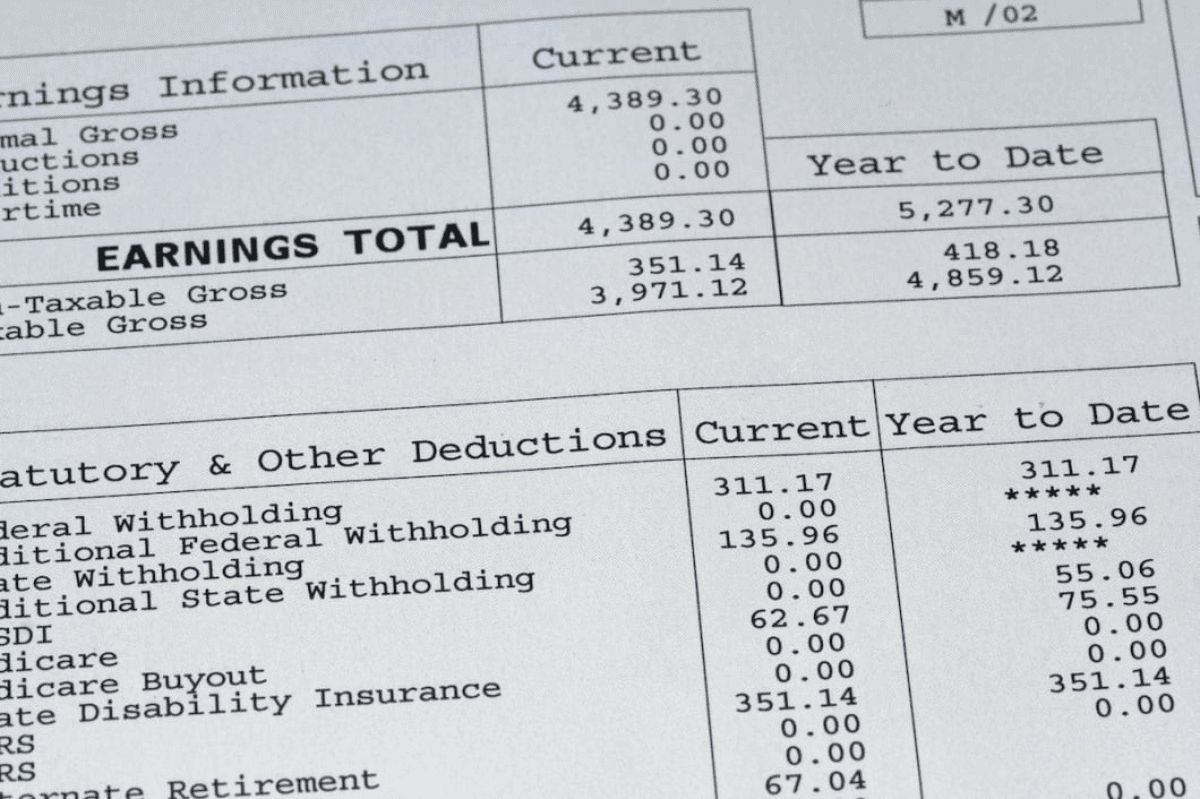
For a single applicant whose documented pension is at least €2,400 per month, the pension alone may be sufficient to reach the 2026 minimum financial threshold, assuming the consulate is satisfied with the evidence provided.
For example:
Example
A retiree receiving only €2,000 per month should not automatically assume that they are ineligible. The requirement concerns sufficient economic means, so other qualifying financial resources may potentially supplement the pension.
Applicants should provide clear, official and verifiable evidence. Depending on the consulate, this may include pension award letters, benefit statements, bank statements showing regular pension payments and supporting financial documentation.
The key distinction for SEO searches such as "Spain retirement visa income requirement" or "income requirements to retire in Spain" is therefore:
Income vs. means
Savings
Savings can also be relevant when demonstrating sufficient financial resources.
Spain's central immigration guidance allows economic means to be demonstrated through different forms of evidence rather than requiring one specific type of recurring income.
This is especially important for retirees who have substantial assets but comparatively low monthly pension payments.
For example, consider an applicant with:
- •€1,500 per month in pension income; and
- •substantial liquid savings.
The pension alone would fall below the €2,400 monthly benchmark, but the applicant may be able to establish sufficient overall financial means through their documented savings.
There is no central rule stating that the entire retirement visa Spain threshold must be generated every month as passive income.
That said, applicants should distinguish available financial resources from wealth that cannot easily be used for living expenses. A large balance in an accessible bank or investment account provides different evidence from simply owning a valuable house.
The Spanish authorities may assess the documentation as a whole, and individual consulates can request particular forms of proof. Applicants relying heavily on savings should therefore check the specific evidence expected by their competent consulate before submitting the application.
A common practical objective should be to make the source, ownership and availability of the funds easy to understand. Large unexplained transfers immediately before an application may raise questions that a long-standing balance with clear documentation would not.
Requirements for Couples and Dependants
The primary applicant must demonstrate 400% of IPREM, while each accompanying family member adds another 100% of IPREM.
Using the 2026 IPREM of €600 per month, the calculations are:
| Household | Annual minimum (12-month IPREM) |
|---|---|
| Single applicant | €28,800 |
| Couple (main applicant + 1 family member) | €36,000 |
| Couple + 1 dependant | €43,200 |
For example, a retired couple researching the income requirements to retire in Spain should work from a minimum of €36,000 for the first year, not €28,800 each.
Each accompanying applicant will also need the appropriate application documentation. Depending on age and circumstances, this can include passports, medical certificates, criminal-record certificates and evidence of the family relationship, such as marriage or birth certificates.
Documents proving family relationships that were issued outside Spain may also require an apostille or legalization and an official translation.
Remember that these amounts are immigration minimums. A couple who technically meets the €36,000 requirement could still need a considerably larger budget if renting in a high-cost location or maintaining significant healthcare, travel or other expenses.
Need help with your expatriation to Spain?
Our experts accompany you in all your administrative procedures and installation.
Health Insurance Requirements
Health insurance is one of the most important requirements for a retirement visa in Spain.
Applicants must have qualifying public or private healthcare coverage. Spain is known for excellent healthcare, and its public system ranks among the world's best, so where private insurance is used, it must be with an insurer authorized to operate in Spain and satisfy the standards required for the residence application.
Consular practice can be stricter than simply showing an ordinary international travel-insurance policy.
For that reason, retirees should generally look for a policy designed specifically to meet Spanish residence-visa requirements and providing comprehensive healthcare in Spain. Some Spanish consulates explicitly require coverage comparable to Spain's public healthcare system and reject policies with characteristics such as significant deductibles, copayments, waiting periods or coverage limits.
A travel policy intended for holidays is therefore not automatically suitable.
Before buying a policy, verify that the insurer can provide a visa-compliant certificate clearly describing the coverage.
Many retirees later seek healthcare access through the public system after one year of residence, where eligible, even though private cover is central at the visa stage.
The distinction is particularly important for older applicants because some private insurers impose age limits, exclusions or different premiums according to age and medical history, and premiums often rise significantly after age 60.
UK State Pension recipients have an additional possibility. Eligible British pensioners may qualify for an S1 healthcare entitlement, under which the UK funds their healthcare in Spain. Once properly registered with Spain's Instituto Nacional de la Seguridad Social, the S1 can provide access to the Spanish public healthcare system on the applicable terms.
Spanish consulates in the UK currently recognize an appropriately registered S1 for Non-Lucrative Visa purposes, although the exact evidence requested should be checked with the consulate handling the application.
An EHIC or GHIC used for temporary travel should not be confused with comprehensive residence healthcare entitlement.

Spain Retirement Visa for US Citizens
The Spain retirement visa for US citizens is, again, the Non-Lucrative Residence Visa rather than a separate visa available only to Americans.
A US citizen planning to move permanently to Spain without working can apply if they meet the same underlying conditions: sufficient financial means, compliant healthcare coverage, criminal-record requirements and the other residence conditions.
For a single US applicant, the 2026 financial benchmark is:
€28,800 per year
For a married couple applying together:
€36,000 per year
Because the legal threshold is denominated in euros, applicants holding their savings and receiving pensions in US dollars should leave some margin for exchange-rate movements rather than aiming for the exact euro equivalent on the day they prepare their documents.
US applicants should pay particular attention to their criminal-record documentation. Spanish consulates in the United States generally require an FBI criminal background check, and the document must be apostilled where required. The relevant documents must then comply with the consulate's Spanish-translation rules.
The exact application process depends on your US residence because Spain operates through different consular jurisdictions. Requirements published by Washington, New York, Chicago, Los Angeles, Houston, San Francisco and other Spanish consulates are not necessarily identical in every administrative detail.
Follow the checklist of your own competent consulate, not a generic checklist found online.
Healthcare is another important consideration. Some US consulates explicitly require private insurance providing 100% healthcare coverage in Spain without deductibles, copayments, waiting periods or coverage limits. A US domestic health policy should therefore not be assumed to satisfy the visa requirement simply because it provides some international coverage.
There is also a significant tax issue for Americans retiring in Spain.
Moving to Spain does not normally end a US citizen's US federal tax filing obligations. At the same time, becoming a Spanish tax resident can subject the retiree to Spanish taxation on worldwide income. The US-Spain tax treaty and applicable tax-credit mechanisms coordinate many areas of potential double taxation, but the interaction between Spanish taxes, US pensions, Social Security benefits, investments and foreign-asset reporting can be complicated.
For US citizens, cross-border tax planning should ideally happen before the move rather than after Spanish tax residency has already begun.
US tax planning
Spain Retirement Visa for UK Citizens
British citizens moving to Spain after Brexit generally need an appropriate Spanish residence visa when they intend to settle in Spain for more than the permitted short-stay period.
For retirees, that often means the Non-Lucrative Residence Visa. Spain has long been a major retirement destination for Britons, with over 400,000 British nationals retired there.
This does not apply in the same way to British nationals who already held qualifying residence rights in Spain under the EU-UK Withdrawal Agreement before the end of the Brexit transition period.
For a new British retiree moving in 2026, the same financial thresholds apply. Living costs in Spain can be around 30-40% lower than in the UK, depending on location and lifestyle.
Single applicant: €28,800 per year
Couple: €36,000 per year
British applicants are normally required to provide an ACRO Police Certificate for the UK criminal-record requirement. Spanish consulates in London and Edinburgh specifically identify the ACRO certificate for visa purposes. The certificate and other relevant UK public documents must comply with the applicable apostille and translation requirements.
Healthcare deserves particular attention for UK retirees.
People receiving a qualifying UK State Pension or certain exportable benefits may be entitled to an S1 form. After registering the S1 with Spain's INSS, eligible retirees and dependants can obtain Spanish state healthcare on the applicable basis.
For example, the Spanish Consulate in London currently accepts proof that an S1 has been registered with Spanish Social Security as evidence of medical coverage for the Non-Lucrative Visa.
Retirees who cannot use an S1 will normally need appropriate private healthcare coverage. Many British retirees are drawn to areas such as the Costa del Sol.
Taxation changes substantially as well. A British retiree who becomes Spanish tax resident generally becomes subject to Spanish tax rules on worldwide income.
Under the current UK-Spain double-taxation treaty, pensions arising from previous private-sector employment and paid to a Spanish resident are generally taxable only in Spain. Different rules apply to many pensions arising from government service: these are generally taxable in the UK, subject to the treaty's nationality exception.
The classification of a pension therefore matters. "UK pension" is not a single tax category. See our guide on taxes and taxation in Spain for further context.
How to Apply
The retire in Spain visa process begins before you move, and for most retirees this route is the Spain non lucrative visa. The initial Non-Lucrative Residence Visa is normally applied for through the local Spanish embassy or consular office responsible for your legal place of residence.
A practical application sequence looks like this:
- 1Confirm the competent Spanish consulate. Do this first. Your residence determines where you apply, and the documentary checklist may differ slightly between consulates.
- 2Check the consulate's current Non-Lucrative Visa checklist. Do not prepare your application solely from a generic internet checklist. The required documents can vary, including document age, copies, translations, financial statements, insurance certificates, appointments, payment methods, and sometimes proof of accommodation in Spain such as a rental contract if the consulate asks for it.
- 3Secure your financial evidence. Prepare documents showing that you meet at least the applicable 2026 requirement: €28,800 for the main applicant plus €7,200 for each additional family member.
- 4Arrange compliant healthcare. Obtain the required insurance certificate or, where accepted and applicable, evidence of qualifying public healthcare entitlement.
- 5Obtain your criminal-record certificate. The relevant country or countries depend on your residence history. The Spanish rules require applicants to address criminal records from countries where they have lived during the relevant preceding period.
- 6Obtain the medical certificate. The certificate must satisfy Spain's requirement concerning diseases that may have serious public-health implications under the International Health Regulations.
- 7Apostille or legalize foreign public documents where required. Apostille requirements should be handled before the Spanish translation where the consulate instructs you to translate the apostille as well.
- 8Arrange official translations. Foreign documents that require translation should be translated according to the Spanish authorities' rules, generally by an accepted sworn translator.
- 9Complete the application forms and pay the required fees. Visa and residence fees can depend on nationality, consular location and current exchange rates, so check the amount immediately before applying rather than relying on an old article.
- 10Submit the application through the designated consular procedure. Depending on local procedure, this may mean submitting through the relevant local Spanish embassy, the consular office itself, or an authorized external visa service provider.
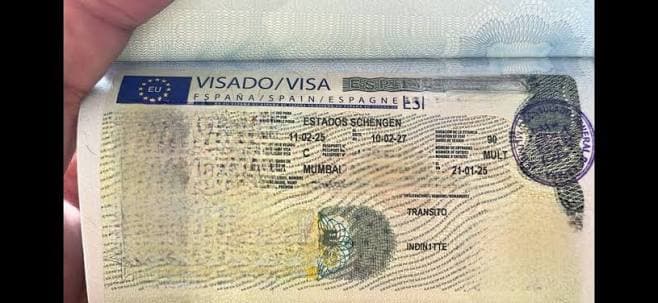
Once approval is granted, collect the visa within the period specified by the Spanish authorities. Under the central rules, an approved applicant generally has one month after notification to collect the visa.
After collecting it, you must enter Spain during the visa's validity period, which for this process cannot exceed three months.
Your initial Non-Lucrative Residence authorization is then valid for one year beginning on your date of entry into Spain.
Do not confuse that one-year residence authorization with the physical visa sticker used to enter the country. Once you have moved, your TIE residence card becomes the key physical document demonstrating your status in Spain.
Planning a retirement move to Spain involves coordinating visa application, healthcare, taxation and post-arrival administration as one process. Hiliv supports international retirees with practical steps including obtaining your NIE, Padrón registration, bank account opening, and housing search. See our moving to Spain checklist and retirement in Spain guide for a complete relocation roadmap.
Tax Residency When Retiring in Spain
A residence visa and tax residence are two different legal concepts.
Receiving a retirement visa in Spain does not itself determine every aspect of your tax position. Spanish residency for immigration purposes is separate from tax residence, which is assessed under Spanish tax rules and, where applicable, international double-taxation treaties.
Under Spain's domestic rules, an individual is generally considered a Spanish tax resident when, among other circumstances:
- •they spend more than 183 days during the calendar year in Spain; or
- •Spain is the main centre or base of their economic activities or interests.
There is also a rebuttable presumption connected with the habitual residence in Spain of a non-separated spouse and dependent minor children.
This is important because simply counting 183 days is not always sufficient to conclude that someone is definitely a non-resident.
Once an individual becomes Spanish tax resident, they may need to pay taxes in Spain on their worldwide income, subject to the relevant double-taxation treaty.
For a retiree, worldwide income can potentially include:
- •foreign pensions;
- •investment income;
- •dividends;
- •interest;
- •rental income;
- •capital gains; and
- •other foreign-source income.
Foreign assets can also create Spanish information-reporting obligations where the relevant conditions and thresholds are met.
A crucial point for anyone considering a Spanish retirement visa in 2026 is the relationship between immigration residence and tax residence.
Current Non-Lucrative Residence renewal rules require the holder to have resided actually and effectively in Spain for more than 183 days during the calendar year. At the same time, spending more than 183 days in Spain is one of the principal tests of Spanish tax residency.
In practical terms, therefore, someone planning to renew a Non-Lucrative Residence Permit should normally plan on the basis that Spanish tax residency is likely to become part of the move, rather than treating the visa as a way of living in Spain permanently while remaining automatically tax-resident only in another country.
Double-taxation treaties are designed to coordinate situations where two countries potentially have taxing rights, but they do not mean that foreign income simply becomes tax-free. Retirees should also consider their wider tax obligations, especially where more than one country may have taxing rights.
For UK retirees, for example, private-sector pensions are generally taxable in Spain once the recipient is Spanish resident under the UK-Spain treaty, whereas many UK government-service pensions receive different treatment.
For US retirees, becoming Spanish resident does not normally remove the US federal filing obligations associated with US citizenship. Spanish tax, US tax and treaty mechanisms must therefore be considered together.
Tax consequences can also depend on the timing of the move. Selling assets, realizing investment gains, taking pension lump sums or restructuring investments immediately before or after becoming Spanish resident can produce very different outcomes.
For retirees with significant pensions, securities, companies, trusts or property in another country, obtaining cross-border tax advice before establishing Spanish residence is usually much more useful than trying to restructure everything afterwards.
What to Do After Arriving
Receiving your visa is not the end of the relocation process.
The first weeks after moving to Spain generally involve establishing your physical residence, obtaining your residence card and setting up the administrative infrastructure you will use for everyday life.
TIE
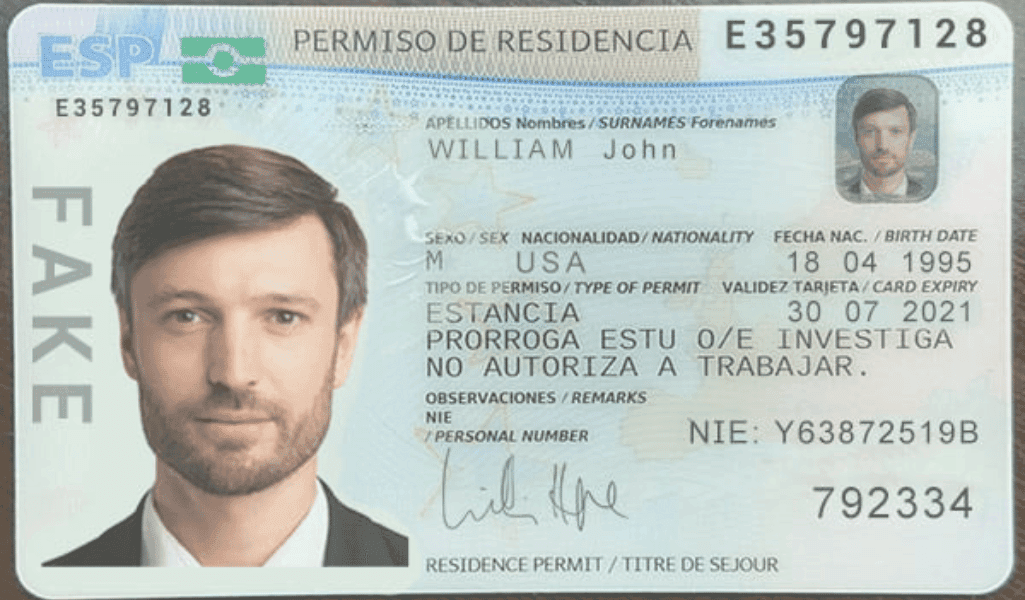
The TIE (Tarjeta de Identidad de Extranjero) is the physical residence card issued to non-EU residents in Spain.
For an initial Non-Lucrative Residence Permit, you must apply for the TIE personally within one month after entering Spain.
The application is normally made through the competent National Police office and requires a biometric appointment.
Your exact checklist should be confirmed for your province, but the procedure normally involves your passport and residence documentation, the applicable application form, photographs and evidence of payment of the relevant TIE fee. Address documentation may also be requested depending on the circumstances.
The TIE should not be confused with the NIE.
The NIE is your foreigner identification number. The TIE is your physical residence card and contains your NIE.
People who need a Spanish NIE before completing their relocation, for example for certain property, banking or administrative transactions, can also obtain one separately. Hiliv offers a remote NIE service for people who need to obtain an NIE without travelling to Spain specifically for that procedure.
Padrón
The padrón municipal, or empadronamiento, is Spain's municipal population register.
Once you establish your habitual home, you register with the town hall of the municipality where you live. The registration establishes your local address for administrative purposes and is frequently used when dealing with Spanish public administrations and local services.
The documents requested depend on the municipality and your housing situation. A tenant may, for example, need documentation connected with the rental property, while an owner can normally prove occupation through property documents.
Do not assume that every town hall uses exactly the same checklist.
Hiliv provides padrón registration assistance for newcomers who want support with the local registration process.
Bank Account
A Spanish bank account is not itself one of the central legal conditions for obtaining the Non-Lucrative Residence Visa.
It can nevertheless make life in Spain significantly easier.
A local account is commonly useful for paying:
- •rent;
- •electricity, water and internet bills;
- •insurance;
- •local taxes and charges; and
- •other expenses collected by Spanish direct debit.
Banks apply their own customer-identification and anti-money-laundering checks, so the documents requested can vary. Passport, NIE and proof of address or residence are commonly relevant, while banks can also request information concerning your tax residence, income and source of funds.
Retirees moving substantial savings from another country should keep documentary evidence showing where those funds originated.
Hiliv can assist with opening a Spanish bank account, including situations where the account needs to be organized before or shortly after arrival.
Housing
You do not need to buy Spanish property simply to qualify for the Non-Lucrative Residence Visa.
Retirees can rent a home in Spain, and buying property does not replace the visa's financial, healthcare or other residence requirements, so housing choices should be planned around permanent residence rather than holiday stays.
This is worth emphasizing because owning a holiday home and having Spanish immigration residence are legally different matters. Some applicants compare property ownership with the Spain Golden Visa or Golden Visa, but ownership alone does not satisfy the Non-Lucrative route.
When searching for housing, consider more than the advertised monthly rent. Long-term retirement planning should also account for:
- •whether the property can serve as your habitual address;
- •proximity to healthcare access;
- •accessibility and lifts;
- •heating and air conditioning;
- •public transport;
- •local municipal services;
- •seasonal differences in the area, and Costa Blanca appeals to many retirees for affordable living costs and a pleasant climate; and
- •the total cost of utilities, community charges or other expenses for which you are responsible.
Barcelona offers world-class museums and dining options, but generally higher costs than many smaller areas.
Northern Spain may suit retirees seeking cooler climates and lower costs.
Be particularly careful about paying deposits before the identity of the landlord or agent and the legitimacy of the property have been verified.
For people arranging accommodation from abroad, Hiliv's housing search service can help identify verified listings and trusted real-estate partners.
The most important takeaway is that the Spain retirement visa is not simply a matter of proving €28,800 in a bank account. Successful retirement planning involves immigration residence, healthcare access, taxation, housing and post-arrival administration as one coordinated process.
For 2026, however, the core rule remains straightforward: for most non-EU retirees who want to live in Spain without working, the relevant route is the Non-Lucrative Residence Visa, with a minimum financial requirement of €28,800 for the main applicant plus €7,200 for each additional family member, comprehensive healthcare coverage and compliance with the other residence conditions.
Frequently Asked Questions: Spain Retirement Visa 2026
Does Spain have an official retirement visa?
No. There is no immigration category formally called the "Spain Retirement Visa." What most people mean is the Non-Lucrative Residence Visa (visado de residencia no lucrativa), designed for non-EU nationals who want to live in Spain without working and who have sufficient financial resources.
How much income do I need for a Spain retirement visa in 2026?
The main applicant must demonstrate resources equal to 400% of IPREM: €2,400 per month or €28,800 for one year. Each accompanying family member adds 100% of IPREM: €600 per month or €7,200 per year. Some consulates apply a 14-payment annualisation that can raise the benchmark to roughly €33,600 for a single applicant.
Must all the money come from a pension?
No. The requirement concerns sufficient economic means, not strictly pension income. Savings, investments, rental income and other documented resources may supplement or replace pension income if properly evidenced. A retiree with €1,500/month in pension plus substantial liquid savings may still qualify.
What health insurance is required for a retirement visa in Spain?
Applicants need qualifying public or private healthcare coverage. Where private insurance is used, it must be with an insurer authorized to operate in Spain and must satisfy consular standards. Many consulates reject policies with significant deductibles, copayments, waiting periods or coverage limits. A holiday travel policy is usually insufficient.
Can UK State Pension recipients use an S1 form?
Eligible British pensioners may qualify for an S1 healthcare entitlement, under which the UK funds healthcare in Spain. Once registered with Spain's INSS, the S1 can provide access to the Spanish public healthcare system. Spanish consulates in the UK currently recognize an appropriately registered S1 for Non-Lucrative Visa purposes.
What is the 183-day renewal rule?
Current Non-Lucrative Residence renewal rules require holders to have resided actually and effectively in Spain for more than 183 days during the calendar year. Retirees planning to use Spain primarily as a seasonal or winter destination should consider this carefully before choosing the Non-Lucrative Visa.
Can I work remotely on a Spain retirement visa?
No. The Non-Lucrative Visa authorizes residence without carrying out employment or professional activities. Receiving a salary from a foreign company does not make remote work compatible with this visa. Applicants who plan to continue working should consider the Digital Nomad Visa instead.
What financial threshold applies to a retired couple?
Using 2026 IPREM of €600 per month, a retired couple should work from a minimum of €36,000 for the first year (400% IPREM for the main applicant plus 100% IPREM for one accompanying family member), not €28,800 each.
What criminal records must US applicants provide?
Spanish consulates in the United States generally require an FBI criminal background check, apostilled where required, plus compliance with the consulate's Spanish-translation rules. Requirements can vary by consular jurisdiction.
What is the difference between the NIE and the TIE?
The NIE is your foreigner identification number. The TIE (Tarjeta de Identidad de Extranjero) is your physical residence card and contains your NIE. After entering Spain on a Non-Lucrative Visa, you must apply for the TIE personally within one month.
How long does the initial Non-Lucrative Residence authorization last?
The initial residence authorization lasts one year from the date of entry into Spain. Subject to meeting renewal requirements, subsequent permits are normally granted for two years. After five years of continuous legal residence, applicants may apply for permanent residency.
Will I become a Spanish tax resident when retiring in Spain?
A residence visa and tax residence are separate legal concepts. Spending more than 183 days in Spain during a calendar year is one principal test of Spanish tax residency. NLV renewal requires more than 183 days of actual residence, so Spanish tax residency is likely to become part of the move. See our guide on taxes and taxation in Spain for further detail.
Do EU citizens need a retirement visa for Spain?
No. EU, EEA and Swiss nationals benefit from European free-movement rules and do not need a retirement visa. Registration and sufficient-resources or healthcare requirements can still apply when establishing long-term residence.
What must I do after arriving in Spain?
Apply for your TIE within one month, register on the municipal Padrón, open a local bank account if useful, and secure suitable housing. Hiliv can assist with NIE, Padrón, banking and housing search services for international retirees relocating to Spain.
Is there a minimum retirement age for the Non-Lucrative Visa?
No. The official rules do not impose a minimum retirement age, nor do they require applicants to be receiving a pension. Being legally retired is not itself a condition for this residence permit.
Your administrative plan to leave for Spain
Generate a personalized calendar of all your procedures for your expatriation for free.
Your data is protected and secure